
0%

Choosing the right Concrete Diamond Saw Blades can decide whether a cutting job feels controlled or painfully slow. Global buyers face many options, from compact blades for handheld saws to heavy-duty models for roadwork and structural concrete.

The best choice depends on concrete hardness, aggregate size, cutting depth, machine speed, and cooling conditions. A blade that performs well on soft concrete may struggle against dense granite aggregate. Wet cutting can reduce dust and heat, while dry cutting may suit quick repairs and restricted sites. Small details matter, including segment height, core strength, kerf width, and arbor compatibility.

Diamond-tool educator Tom Johnson offers a practical reminder: “A blade should match the concrete, not merely the machine.” This principle guides our selection. It also exposes a common buying mistake. Many purchasers compare price before checking application data. That approach can create uneven cuts, rapid segment loss, or unnecessary downtime.

This guide reviews ten Concrete Diamond Saw Blades for international buyers. It considers cutting performance, durability, material compatibility, operating conditions, and value. Product claims still require careful checking. Manufacturer specifications may not reflect every jobsite reality. Some blades perform brilliantly in controlled tests but disappoint on abrasive recycled concrete.

There is no universal winner. Not even close.

Buyers should confirm local availability, technical support, warranty terms, and safety instructions before ordering. A dependable blade is more than a sharp tool. It is a measured decision built around concrete behavior, equipment limits, and the installer’s actual experience.
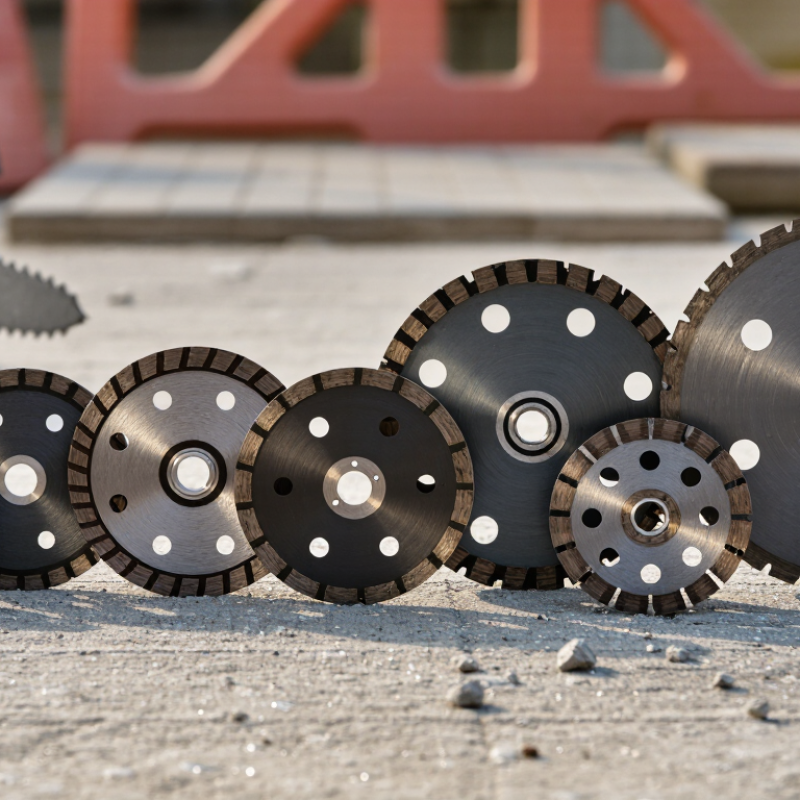
10 Best Concrete Diamond Saw Blades for Global Buyers?

What Makes a Concrete Diamond Saw Blade Effective?

10 Best Concrete Diamond Saw Blades for Global Buyers?

What Makes a Concrete Diamond Saw Blade Effective?

An effective concrete diamond saw blade balances diamond concentration, bond hardness, segment design, and operating speed. The right combination matters more than a high diamond count. Soft, abrasive concrete usually needs a harder bond, while cured, dense concrete cuts better with a softer bond. Segment height also affects service life. A taller segment may last longer, but it can cut less smoothly when poorly matched to the concrete.

Cutting speed depends on blade diameter, machine power, and the material’s aggregate. Overspeeding can overheat the core and loosen segments. Underspeeding may cause glazing, where exposed diamonds stop cutting efficiently. Wet cutting helps control heat and dust. The U.S. Occupational Safety and Health Administration sets the respirable crystalline silica permissible exposure limit at 50 micrograms per cubic meter, measured over an eight-hour shift. This makes water delivery and dust control practical performance requirements, not optional extras. A blade that cuts quickly but creates excessive dust is not truly effective.

Tips: Check the concrete before selection. Identify aggregate hardness, reinforcement, curing age, and cutting depth. Match the blade’s rated RPM to the saw. Do not trust appearance alone. Field results can be imperfect, especially when concrete mixtures vary within one project. Record cutting speed, water flow, and segment wear after each job. That simple record often reveals a better blade choice than catalog claims.

Key Types of Blades for Different Concrete Cutting Tasks

Choosing among the 10 best concrete diamond saw blades starts with the cutting task, not the product label. A segmented-rim blade removes concrete quickly and clears dust through its open gullets. It suits dry cutting for blocks, pavers, and rough structural work. The edge can feel aggressive. It may leave a chipped finish.

A turbo-rim blade offers a practical middle ground. Its continuous, serrated edge cuts faster than a smooth rim while producing cleaner edges. It works well for concrete slabs, masonry walls, and repair openings. For tile-like finishes or exposed architectural concrete, choose a continuous-rim blade with water cooling. Wet cutting reduces heat and airborne dust. It also helps prevent premature diamond loss. Keep the water flow steady.

Reinforced concrete needs a blade with a durable bond and stable segment attachment. Steel rebar can punish a soft, fast-cutting blade. Hard aggregate creates a different problem. In that case, a softer bond may expose fresh diamonds more effectively. Blade diameter must match the saw’s guard and rated speed. Never treat that detail casually. A wall saw, floor saw, handheld cutter, and concrete saw each demand different blade stiffness and operating control.

Fresh concrete is another special case. Green-concrete blades are designed to cut before full curing, when aggregate can pull from the surface. The timing is easy to misjudge. I have seen clean-looking cuts become ragged after waiting too long. Cutting depth, aggregate hardness, reinforcement, and cooling method should be checked on a small test section before full production.

How to Compare the 10 Best Blades for Global Buyers

10 Best Concrete Diamond Saw Blades for Global Buyers

How to Compare the 10 Best Blades for Global Buyers

Comparing ten concrete diamond saw blades requires more than checking price or segment count. Match each blade to the material, machine, and cutting depth. A blade for reinforced concrete needs a tougher bond than one for cured, unreinforced slabs. Laser-welded segments can improve durability, while sintered segments may reduce purchase cost. Check arbor size, maximum RPM, kerf width, and wet or dry cutting instructions before ordering. Small mismatches create vibration, slow cutting, or premature segment loss.

Industry data gives useful context. Grand View Research reported continued growth in the global diamond tools market, driven partly by construction and infrastructure demand. The U.S. Occupational Safety and Health Administration sets a respirable crystalline silica action level of 25 micrograms per cubic meter and a permissible exposure limit of 50 micrograms over eight hours. Therefore, dust-control compatibility matters when comparing dry-cutting options. Water delivery, extraction ports, and operator visibility deserve equal attention.

Look closely at technical sheets.

For international buyers, compare testing against EN 13236 or equivalent safety requirements, warranty terms, packaging, and replacement availability. A lower-cost blade may become expensive after freight, customs, and downtime. Ask for cutting-speed data using similar concrete strength and steel content. Marketing claims are not field evidence.

My comparison is not perfect; concrete varies sharply between regions, and laboratory figures can disappoint on a dusty jobsite. A practical trial cut, measured by seconds per meter and segment wear, remains the clearest check.

Performance, Compatibility, and Safety Factors to Evaluate

Selecting among the 10 best concrete diamond saw blades requires more than comparing prices. Performance depends on concrete hardness, aggregate size, cutting depth, and operating speed. A blade designed for cured concrete may struggle with abrasive blocks or reinforced sections. Matching the segment bond to the material usually matters more than appearance.

Compatibility must be checked carefully. Confirm the blade diameter, arbor size, cutting direction, and maximum rated RPM. The saw must provide suitable power and guarding. Wet-cutting blades need a stable water supply, while dry-cutting blades require controlled pauses. Small mismatches can cause vibration, slow cutting, or premature segment loss.

Safety deserves equal attention. Inspect every blade for cracks, uneven wear, and missing segments before use. Keep the guard fitted, secure the workpiece, and use hearing, eye, hand, and respiratory protection. Wet cutting can reduce airborne silica dust, but it does not remove every hazard. Local workplace requirements may also differ between countries.

A practical test is valuable. Measure cutting speed, edge quality, and heat after several cuts. Do not judge performance from one short trial. I have seen buyers choose an aggressive blade that cuts quickly but wears badly on dense aggregate. That result is easy to overlook. Operators should record the material, machine settings, and blade condition. These notes improve future purchasing decisions, although field conditions can still produce unexpected results.

Buying, Maintaining, and Replacing Concrete Diamond Saw Blades

Choosing a concrete diamond saw blade starts with the job, not the price. Check the saw’s arbor size, blade diameter, and maximum RPM. Match the blade to cured concrete, green concrete, or reinforced concrete. Aggregate hardness matters too. Hard stone usually needs a softer bond, while abrasive concrete needs a harder bond. Wet cutting can reduce dust and keep the blade cooler. Dry cutting offers mobility, but it requires short passes and proper ventilation. I have seen operators select by diameter alone. That shortcut often causes slow cutting or uneven wear.

Maintenance begins after every shift. Remove concrete slurry from the blade and inspect each segment under bright light. Look for cracks, missing diamonds, uneven wear, or a warped core. Keep water flow steady during wet cutting. Too little water creates heat marks. Too much water can hide cutting problems. Avoid twisting the blade inside the kerf. Side pressure can damage the core. Store blades upright in a dry place, away from impact and moisture. My earlier habit was leaving blades on the workshop floor. It saved minutes, but caused preventable damage.

Tips: Replace a blade when segments are nearly worn, cutting becomes unusually slow, or vibration increases. Stop immediately if the blade wobbles or shows cracks. Confirm the replacement’s rotation direction and secure the flange evenly. Let the blade cut at its own pace. Forcing it feels productive, but it usually shortens blade life. Record the material, cutting depth, and service hours. Those simple notes can improve the next purchase.

10 Best Concrete Diamond Saw Blades for Global Buyers? - Buying, Maintaining, and Replacing Concrete Diamond Saw Blades

Rank Blade Profile Recommended Diameter Common Arbor Size Segment Type Segment Height Typical Kerf Width Cutting Method Best Concrete Condition Recommended Equipment Buying Advantages Maintenance and Replacement Guidance
1 General-Purpose Segmented Blade 300–450 mm 25.4 mm or 30 mm Standard segmented rim 10–12 mm 3.0–4.0 mm Wet or dry Medium-strength concrete with normal aggregate Walk-behind saws and high-power cut-off saws Versatile configuration for routine slab, block, and pavement work Clean dust and slurry after use. Replace when segments are level with the steel core or cutting speed falls noticeably.
2 Hard-Concrete Soft-Bond Blade 300–400 mm 25.4 mm or 30 mm Segmented soft-bond rim 10–12 mm 3.0–3.8 mm Wet preferred High-strength concrete with hard, dense aggregate Floor saws and early-entry concrete saws Faster diamond exposure helps reduce glazing on hard concrete Use sufficient water when permitted. Dress a glazed blade only with an approved abrasive dressing block; do not grind the steel core.
3 Green-Concrete Early-Entry Blade 250–400 mm 25.4 mm Low-segment, early-entry configuration 8–10 mm 2.8–3.5 mm Dry or light wet Recently placed concrete before full curing Early-entry slab saws Designed for shallow control joints with reduced risk of raveling when correctly timed Keep the blade aligned and avoid excessive downward pressure. Replace if segments chip, crack, or become uneven.
4 Reinforced-Concrete Turbo Blade 115–230 mm 22.23 mm or 25.4 mm Turbo-rim sintered segment 8–10 mm 2.2–3.0 mm Wet or dry Concrete containing moderate reinforcing steel Electric grinders and handheld saws Continuous turbo geometry offers a balance between cutting speed and edge control Reduce feed pressure when steel is encountered. Inspect for missing segments and core discoloration after every demanding cut.
5 Deep-Cut Reinforced-Concrete Blade 350–600 mm 25.4 mm, 30 mm, or 50 mm Laser-welded segmented rim 12–15 mm 3.5–4.5 mm Wet preferred Thick slabs, bridge decks, and heavily reinforced concrete Walk-behind saws and wall saws Laser-welded construction provides stronger segment attachment for demanding structural cuts Maintain continuous water flow and verify flange alignment. Stop immediately if a segment loosens or the core shows cracks.
6 Asphalt-and-Concrete Combination Blade 300–450 mm 25.4 mm or 30 mm Wide gullets with protective undercut segments 10–12 mm 3.2–4.2 mm Wet or dry Concrete, asphalt overlays, and abrasive road surfaces Floor saws and road saws Protective segment design helps limit undercutting when cutting abrasive materials Do not use excessive side pressure. Check gullets for packed material and replace the blade when undercut protection is substantially worn.
7 Low-Noise Continuous-Rim Blade 115–230 mm 22.23 mm or 25.4 mm Continuous rim with narrow laser slots 7–10 mm 1.8–2.8 mm Wet preferred Decorative concrete, precast panels, and noise-sensitive sites Tile saws, masonry saws, and handheld wet saws Produces a cleaner edge and typically lower operating noise than large segmented blades Use a stable guide and adequate cooling. Replace when the rim becomes uneven or the blade begins to produce excessive vibration.
8 Fast-Cutting Dry Masonry Blade 115–180 mm 22.23 mm Turbo-rim or narrow segmented rim 8–10 mm 2.2–3.0 mm Dry cutting Concrete blocks, masonry units, and occasional concrete repairs Portable cut-off saws and angle grinders Convenient for locations without water supply and short intermittent cuts Use short passes with cooling pauses. Wear respiratory protection and remove the blade if visible cracks, warping, or severe vibration develops.
9 Precision Precast-Concrete Blade 250–400 mm 25.4 mm or 30 mm Fine-segment turbo or continuous rim 8–10 mm 2.0–3.0 mm Wet preferred Precast concrete, concrete pipes, curbs, and finished edges Bridge saws and stationary masonry saws Narrow kerf supports accurate cuts and can reduce material loss on repetitive work Keep the cutting table and blade flange clean. Replace when dimensional accuracy declines or the rim has worn beyond the usable height.
10 Long-Life Heavy-Duty Floor-Saw Blade 450–900 mm 25.4 mm, 30 mm, or 50 mm High-segment laser-welded rim 12–15 mm 4.0–5.5 mm Wet cutting Deep concrete slabs, industrial floors, and continuous production cutting Large walk-behind floor saws Higher segment volume supports longer service intervals in deep and continuous cuts Confirm the saw’s maximum blade diameter and operating speed. Replace before the core contacts the material and record wear for future purchasing.
Selection and safety note: Actual blade performance depends on concrete strength, aggregate hardness, reinforcement density, equipment power, operating speed, water flow, and operator technique. Always match the blade diameter, arbor, maximum RPM, and cutting method to the saw manufacturer’s specifications. Inspect the blade before each use and remove it from service if the core is cracked, warped, overheated, or missing segments.

FAQS

Which blade type suits fast, rough concrete cutting?

A segmented-rim blade removes concrete quickly. Its open gullets help clear dust during dry cutting. The finish may look chipped.

When should I choose a turbo-rim blade?

Choose a turbo-rim blade for a balance between speed and edge quality. It suits slabs, masonry walls, and repair openings. It is a practical middle ground.

Which blade gives the cleanest concrete edge?

A continuous-rim blade usually produces cleaner edges. Use steady water cooling to control heat and airborne dust. Keep the water flow steady.

What blade works for reinforced concrete?

Reinforced concrete needs a durable bond and secure segment attachment. Steel reinforcement can damage a soft, fast-cutting blade. Rebar is unforgiving.

How does aggregate hardness affect blade selection?

Hard aggregate may need a softer bond. This can expose fresh diamonds more effectively during cutting. The wrong bond wastes time.

What should I check before buying a concrete cutting blade?

Match the diameter, arbor size, cutting direction, and maximum rated speed. Confirm that the saw has suitable power and guarding. Small mismatches matter.

Is wet cutting always safer than dry cutting?

Wet cutting can reduce airborne silica dust and heat. It does not remove every hazard. Use guarding and suitable protective equipment. Water is not a complete safeguard.

How can I test a blade before full production?

Cut a small test section first. Record cutting speed, edge quality, heat, machine settings, and blade condition. One short cut proves little.

What precautions should I take before using a blade?

Inspect it for cracks, uneven wear, and missing segments. Secure the workpiece and keep the guard fitted. Wear eye, hearing, hand, and respiratory protection. Do not treat inspection casually.

Can a blade designed for cured concrete cut fresh concrete?

Not reliably. Fresh concrete may require a blade designed for green-concrete cutting. Timing, depth, aggregate, reinforcement, and cooling should be tested. The timing is easy to misjudge.

Conclusion

Choosing the right Concrete Diamond Saw Blades is essential for achieving clean, efficient, and safe cuts in concrete projects worldwide. An effective blade combines high-quality diamond segments, a suitable bond, durable construction, and the correct design for the material being cut. Different tasks may require segmented, turbo, continuous-rim, or specialized blades, depending on whether the work involves reinforced concrete, cured concrete, masonry, or precision finishing.

For global buyers, comparing the 10 best options should focus on cutting speed, service life, dust control, compatibility with cutting equipment, arbor size, and wet or dry operation. Safety features, vibration control, and temperature management are also important factors. Buyers should select blades according to project demands rather than appearance alone, while proper storage, cleaning, inspection, and timely replacement can maintain performance. A well-matched blade reduces downtime, improves cutting accuracy, and supports safer, more economical concrete work.

Evelyn

Evelyn

Evelyn is a dedicated marketing professional with a strong understanding of our company’s products, customers, and market landscape. With a talent for turning complex information into clear, useful insights, she regularly contributes expert articles to our company website, helping readers make......