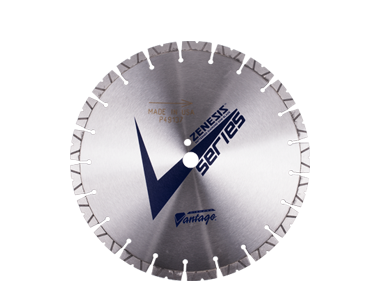
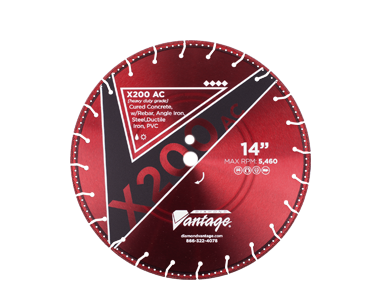
Professional series laser welded wall saw diamond blade for reinforced concrete
Direct Manufacturer • Heavy Demolition Engineering

Wall Saw Diamond Blades: The Technical Procurement Guide for Heavy Reinforced Concrete

Precision-engineered laser-welded diamond wall saw blades designed for 10kW–40kW high-frequency electric and 20HP–60HP hydraulic track saws. Cut heavily reinforced structural concrete, hard river gravel aggregate, and deep foundations with zero segment loss and maximum linear foot efficiency.

2003
Manufacturing diamond blades since 2003
100%
Direct factory fabrication with laser automation
2 Hubs
Fully stocked warehouses in CA & GA
OEM / ODM
Custom segment bonds & bolt patterns
Engineering Precision

The Science of Wall Sawing in Structural Demolition

When professional concrete cutters mount a 30-inch to 60-inch diamond blade on a high-output track saw, the tool operates under extreme mechanical conditions. Our wall saw diamond blades eliminate core warpage, segment stripping, and bond glazing through metallurgical mastery and tensioned alloy cores.

In critical infrastructure cutting—ranging from dam seismic retrofitting and nuclear facility modifications to highway bridge removal and commercial elevator shaft openings—track-mounted wall sawing remains the primary method for vibration-free, precision cuts. Unlike standard floor or flat sawing where gravitational downforce helps stabilize the cut, a wall saw blade is driven horizontally, vertically, or inverted along a steel or aluminum track system. The blade must endure dynamic lateral deflection, relentless back-pressure from dense multi-layer rebar cages (#8, #10, and #11 high-yield rebar), and abrasive slurry build-up within deep kerfs extending up to 27 inches (700mm) deep.

To solve these operational challenges, Diamond Vantage formulates powdered metal bonds that match specific global aggregate geological formations—from abrasive sandstone in the American Midwest to ultra-hard river gravel, quartz, and flint found throughout the Pacific Northwest, Canada, and Northern Europe. By pairing micro-crystallized synthetic diamonds with automated laser segment welding, our blades maintain aggressive cutting speeds without sacrificing segment life, minimizing costly blade changeouts on time-sensitive jobsites.

R&D Innovation

Technological Innovations in Wall Saw Blade Manufacturing

From 3D synthetic diamond arrangement to automated high-power laser welding, advanced engineering is revolutionizing wall saw blade performance.

01

3D Diamond Array (Zenesis™)

Traditional blades mix diamond grits randomly within the metal powder, causing diamond clusters and barren voids. Zenesis™ technology positions each diamond particle in precise three-dimensional equidistant matrices. Every crystal engages the concrete simultaneously, ensuring constant cutting friction, reduced vibration, and longer segment life.

02

Full Robotic Laser Welding

Silver brazing melts at elevated temperatures when cutting deep concrete sections with limited water coolant flow. Automated CNC laser welding fuses segment bases directly into high-tensile alloy cores with deep structural penetration, providing exceptional shear strength that withstands direct strikes against #11 structural steel rebar.

03

Pre-Tensioned German Steel Cores

Large-diameter blades suffer from dish deformation if core tensioning is unbalanced. Diamond Vantage utilizes laser-cut 75Cr1 alloy steel cores heat-treated and precision-rolled by expert saw technicians. Thermal expansion slots dissipate frictional heat, maintaining true perpendicular cuts even at maximum plunge depths.

04

Sandwich Segment Metallurgy

Sandwich segments feature softer metal powder mixtures on the exterior layers and a harder core matrix in the center. This differential wear pattern creates a concave "self-dressing" groove along the cutting face that stabilizes the blade in the kerf, eliminates wandering, and accelerates cutting in heavily reinforced concrete.

Knowledge Center

Wall Saw Blades: Global Buyer Technical FAQ

Answers to the most frequent technical, operational, and procurement queries submitted by concrete cutting specialists, project estimators, and distributor purchasing managers.

Contact Us
How do I match the bond matrix to aggregate hardness and rebar percentage?

The cardinal rule of diamond blades applies directly: hard aggregate requires a softer bond, while soft, abrasive aggregate requires a harder bond. When concrete contains very hard aggregates (such as chert, flint, trap rock, or river gravel with Mohs hardness > 7), diamond crystals dull quickly. A softer bond composed of bronze and cobalt powders wears away at a synchronized rate, shedding spent crystals and exposing fresh, razor-sharp diamonds. Conversely, cutting abrasive limestone or green concrete necessitates a wear-resistant tungsten-carbide bond to avoid premature segment erosion. When heavy steel rebar content exceeds 3% by volume, select an open-cutting soft bond to prevent segment glazing.

What causes wall saw blade glazing and how do operators correct it on the track?

Glazing occurs when the diamond crystals fracture flat or polish down flush with the metal bond rather than micro-chipping to present new cutting facets. This is typically caused by running a bond that is too hard for the aggregate, running at excessively high RPM, or applying insufficient feed pressure. To dress a glazed blade on the jobsite, operators can temporarily reduce water flow to create an abrasive slurry, reduce the saw RPM to increase cutting pressure per diamond, or make several passes through an abrasive silica brick or cinder block to strip away the glazed bond layer.

Why is wet cutting mandatory for high-performance track wall sawing?

Track wall sawing generates massive thermal loads due to high machine horsepower (up to 40kW) and deep plunge depths. Continuous water supply serves three vital functions: it cools the laser-welded joint and steel core to prevent core warping and loss of tension; it flushes dense concrete and steel slurry out of deep kerfs to stop segment binding; and it eliminates respirable crystalline silica (RCS) dust in strict compliance with OSHA 29 CFR 1926.1153 safety standards.

What are the optimal peripheral operating speeds (SFPM) for diamond wall saw blades?

For standard reinforced concrete wall sawing, the optimal peripheral cutting speed ranges between 5,000 and 7,000 Surface Feet Per Minute (SFPM) (approximately 25 to 35 m/s). When cutting heavily reinforced concrete with heavy rebar cages, dropping the peripheral speed down to 4,000–5,000 SFPM increases diamond bite, prevents segment polishing, and extends blade life. When operating large 48" to 60" blades, operators must lower machine spindle RPM accordingly to maintain safe peripheral rim velocity.

How do undercut protection segments preserve blade integrity during flush cutting?

During deep horizontal and flush-cut operations, abrasive slurry tends to swirl directly beneath the diamond segment weld points along the steel core rim. This abrasive action can grind away the parent steel core—a destructive phenomenon known as "undercutting." Diamond Vantage integrates dropped segments or recessed keyhole undercut segments with extra diamond depth to divert slurry away from the weld zone, preventing segment loss and catastrophic blade failure.

What flush bolt mounting patterns are standard across modern wall saw brands?

Industrial wall saw blades are custom-machined with bolt circles to match specific manufacturer flanges. Common configurations include the standard 6-hole pattern (with countersunk flush holes for Hilti DS-TS and DST systems), 8-hole patterns (compatible with Husqvarna WS 482 / WS 440 and Pentruder track saws), as well as central arbor drive pin arrangements. Diamond Vantage manufactures custom mounting patterns to exact engineering drawings for seamless machine compatibility.

What are the minimum order quantities (MOQ) and lead times for custom OEM blade runs?

Because Diamond Vantage manufactures 100% of our diamond tooling, standard diameter wall saw blades (24", 30", 36", 42", 48") are stocked in depth at our Irvine, CA and Covington, GA facilities with same-day or next-day shipping. For custom private label OEM production—including specialized bond matrices, custom segment dimensions, laser logo etching, and custom bolt circles—MOQs typically start at low batch runs with rapid fabrication lead times.

How should operators step-cut reinforced concrete walls deeper than 16 inches?

Step-cutting requires an incremental progression of blade diameters. A professional contractor should start with a 24" or 26" blade (cutting roughly 8" to 10" deep) to create a dead-straight, rigid guide channel. The operator then switches to a 36" blade (cutting up to 15" deep), followed by a 42" or 54" blade for final wall breakthrough. Crucially, the starter blade must feature a slightly wider kerf (e.g., .187") than subsequent larger blades (.177" or .165") so larger blades do not pinch or bind against the channel walls.

The Diamond Vantage Difference

Why Commercial Cutters & Distributors Partner With Us

Established in 2003, Diamond Vantage is a true manufacturer of high-performance diamond saw blades, core drill bits, and specialized diamond tooling. Unlike trading houses, brand repackagers, or distributors that re-label generic products, we own and oversee every facet of our metallurgical formulations, segment sintering, automated laser welding, and dynamic blade balancing.

  • 100% Direct In-House Manufacturing
  • Patented Zenesis™ Diamond Technology
  • Nationwide Stock: Irvine, CA & Covington, GA
  • Dedicated In-House Product Engineers
  • Private Label & Co-Branding Programs
  • Custom Sintered Matrix Bonds for Regional Aggregates

Our four pillars define our client commitments: Truth in Engineering (rigorous quality benchmarks backed by field metallurgists); Truth in Marketing (accurate bond and diamond concentration ratings); Truth in Solutions (turnkey logistics and customized incentive structures); and Truth in Value (the industry's lowest total cost per cut).

Contact Us
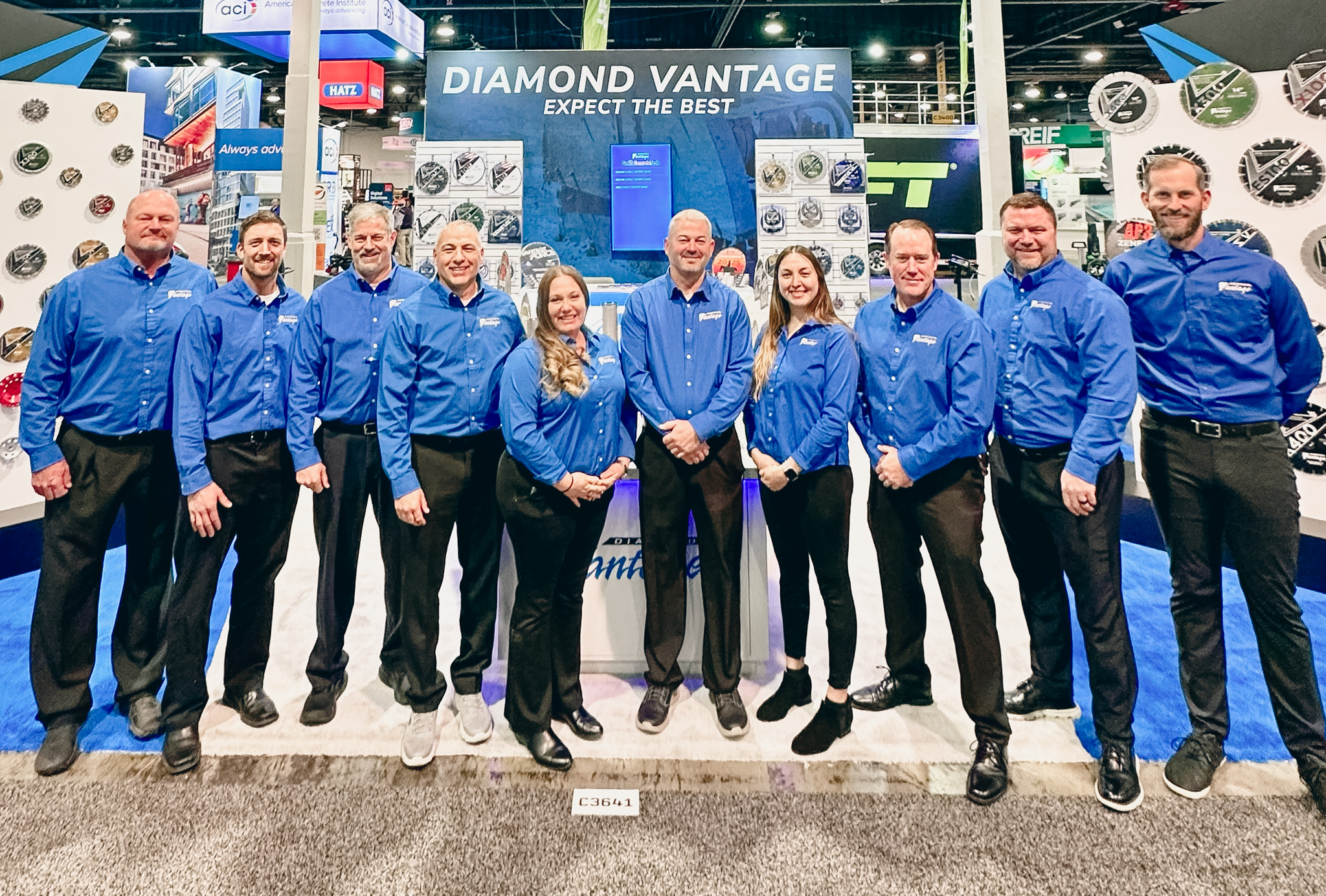
Diamond Vantage team exhibiting at World of Concrete
The Diamond Vantage technical engineering team supporting commercial cutters worldwide
20+Years Sintering Excellence
Direct Factory Support

Request Custom Wall Saw Blade Quotations

Connect directly with our application engineers to review aggregate reports, request sample test blades, or establish volume distribution pricing.

Contact Us

Direct Sales & Tech Line

Toll-Free Direct866-322-4078
Facsimile949-428-2120
Technical Email[email protected]

West Region Operations

2025 Alton Pkwy
Irvine, CA 92606
United States

East Region Hub

14138 Lake Forest Ct. Suite 400
Covington, GA 30014
United States