Direct OEM Manufacturer · Since 2003

Concrete Diamond Saw Blades: The Engineer’s B2B Guide

The definitive guide for distributors, concrete cutting contractors, and equipment fleets: selecting engineered diamond bond matrices, aggregate matching, and evaluating total cost per linear foot.

Send an Inquiry
2003
Over Two Decades of Direct Tool Manufacturing
100%
Fully Sintered & Laser-Welded In-House
2 Hubs
Strategic U.S. Warehouses in Irvine, CA & Covington, GA
OEM / Private Label
Tailored Bond Chemistry & Custom Branding
Technical Metallurgy & Tribology

The Science of Concrete Diamond Saw Blades

Procuring high-performance concrete saw blades requires understanding diamond matrix metallurgy, aggregate wear mechanics, and machine power transmission. True efficiency is determined by total cost per cut—never sticker price alone.

Concrete diamond saw blades are high-precision abrasive cutting systems. Unlike metal-cutting saws that slice material via shear force, diamond blades operate through controlled micro-fracturing and continuous grinding. Synthetic monocrystalline diamonds (typically synthetic diamond crystals sized between 30/40 and 40/50 mesh) are held within a powder-metallurgy segment matrix fused to a high-strength 75Cr1 steel core via state-of-the-art laser welding.

As the blade rotates into concrete, exposed diamond crystals crush against aggregates like basalt, river gravel, limestone, and embedded rebar. The abrasive slurry formed by pulverized concrete matrix and coolant slowly erodes the metallic binder (a sintered alloy composed of cobalt, copper, iron, tungsten carbide, and nickel). As worn diamonds micro-fracture or dislodge, fresh sharp crystals surface.

The operational balance of this wear rate governs jobsite productivity. If the bond matrix is too hard, diamonds glaze over, thermal load spikes, and cutting ceases. If the bond is too soft, segments shed diamonds before consuming their cutting edges, driving tool life down and operating costs up.

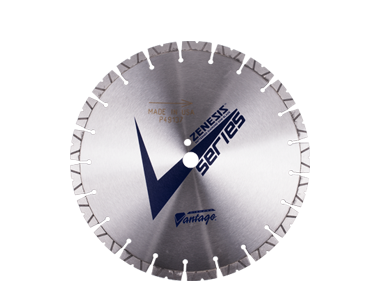
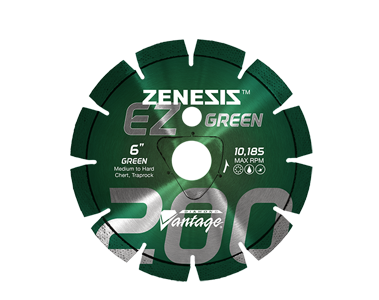
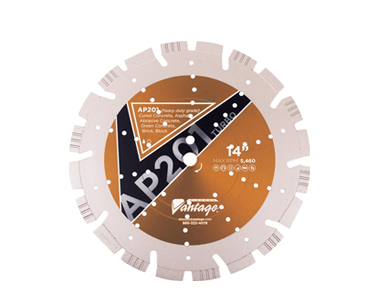
Professional series concrete diamond saw blades segment geometry
Laser-welded diamond segments engineered with custom bond retention matrices for cured concrete slabs.
100% Direct Control
Aggregate Hardness Matrix

Matching Bond Formulations to Concrete Aggregates

Aggregates make up roughly 70% of concrete volume. Use our engineering bond reference to match saw horsepower and Mohs hardness for optimized cutting life.

Aggregate Class & Mineral Base Mohs Hardness & Characteristics Recommended Diamond Bond Matrix Failure Mode if Mismatched
Flint, Chert, Quartzite, River Gravel Mohs 7.0 – 8.0 (Extremely Hard, Non-Abrasive) Soft Matrix Bond (Free-Cutting Bronze/Cobalt) with high diamond concentration to foster rapid continuous self-dressing. Hard bonds glaze rapidly. The blade stops penetrating, vibrates, creates excessive core heat, and discolors the steel core.
Hard Granite, Traprock, Basalt Mohs 6.0 – 7.0 (Hard, Dense Structural Aggregate) Medium-Soft Matrix Bond reinforced with structured diamond arrays to resist high mechanical shock. Loss of segment diamond exposure, elevated amperage draw on electric saws, and potential segment delamination.
Limestone, Dolomite, Crushed Marble Mohs 3.0 – 4.0 (Medium-Soft, Moderately Abrasive) Medium-Hard Matrix Bond (Tungsten/Iron Enriched) to resist abrasion from pulverized fines. Soft matrices wear prematurely; blade life is cut in half without achieving full diamond crystal utility.
Green Concrete (1–4 hrs), Sandstone, Asphalt Mohs 2.0 – 3.0 (Highly Abrasive, Uncured Slurry) Ultra-Hard Bond Matrix with Undercut Segment Protection (Drop segments / carbide inserts). Undercutting: slurry cuts into the steel core beneath the segment, causing total segment shear failure on the job.
Engineering Law: Always match inversely: Hard aggregate requires a soft bond matrix; soft, abrasive aggregate requires a hard bond matrix. Contact our engineering team for regional aggregate calibrations.
Engineering Progress

The Evolution of Concrete Diamond Blade Technology

From basic hot-pressed sintering to multi-axis automated laser welding and engineered crystal distribution: how modern diamond tools outlast previous generations.

Metallurgical segment inspection of concrete diamond blades
Automated optical metrology and shear-torque stress validation in Diamond Vantage testing laboratories.
EN13236 Safety Certified

3D Patterned Diamond Array Placement

Traditional diamond segment manufacturing blends synthetic diamond grit randomly into metallic powders. This method produces erratic performance spikes: clusters of diamonds create excessive friction without penetration, while diamond-deficient voids expose the bare metal matrix to accelerated wear. Our Zenesis™ Technology mathematically arranges every individual diamond in uniform 3D grid patterns. As a result, each crystal shares equal work load, increasing cutting speeds by 25–40% and delivering reliable wear down to the steel core.

Automated Deep Laser Welding

High-torque saw operations require segment integrity that eliminates the risk of field detachment. Laser beam welding penetrates deep into the joint between the sintered diamond segment and the tensioned alloy steel core, forming a continuous metallurgical weld joint. Every Diamond Vantage blade undergoes 100% automated shear testing exceeding EN 13236 and ANSI B7.1 standards, ensuring full safety on demanding jobsites.

Enterprise Strengths

Why Global Importers Partner with Diamond Vantage

A true manufacturer since 2003: we produce 100% of our diamond saw blades with end-to-end quality control, dedicated engineering support, and extensive warehouse stock.

01

Truth in Engineering

  • Dedicated product engineers providing project-specific aggregate analysis
  • 100% of diamond tools manufactured and validated in-house
  • Proprietary bond matrix formulas designed to reduce cost per linear foot
02

Truth in Marketing

  • Transparent diamond concentration, mesh sizing, and bond grade charts
  • Comprehensive distributor training modules and jobsite trial programs
  • No inflated performance claims: verified empirical cutting data
03

Truth in Solutions

  • Bicoastal inventory: Irvine, California and Covington, Georgia
  • Comprehensive private-label, customized silkscreening, and packaging
  • Tailored rebate and container incentive programs for volume buyers
04

Truth in Value

  • Continuous investment in sintering automation and optical core leveling
  • Competitive direct pricing that maximizes distributor margins
  • Lower total jobsite expense over the lifetime of every blade
Proven Experience

Two Decades of Dedicated Jobsite Experience

Founded in 2003, Diamond Vantage has grown from a specialized tooling producer into an industry leader trusted across civil infrastructure, airport runway grooving, bridge reconstruction, and commercial developments. Our senior application engineers bring hands-on experience in diamond powder sintering, metallurgy, and saw operation mechanics to every customer relationship.

We work directly alongside distributors and contractors to assess core issues, resolve bond glazing in flint aggregates, and develop custom blade geometries that keep large-scale projects on schedule.

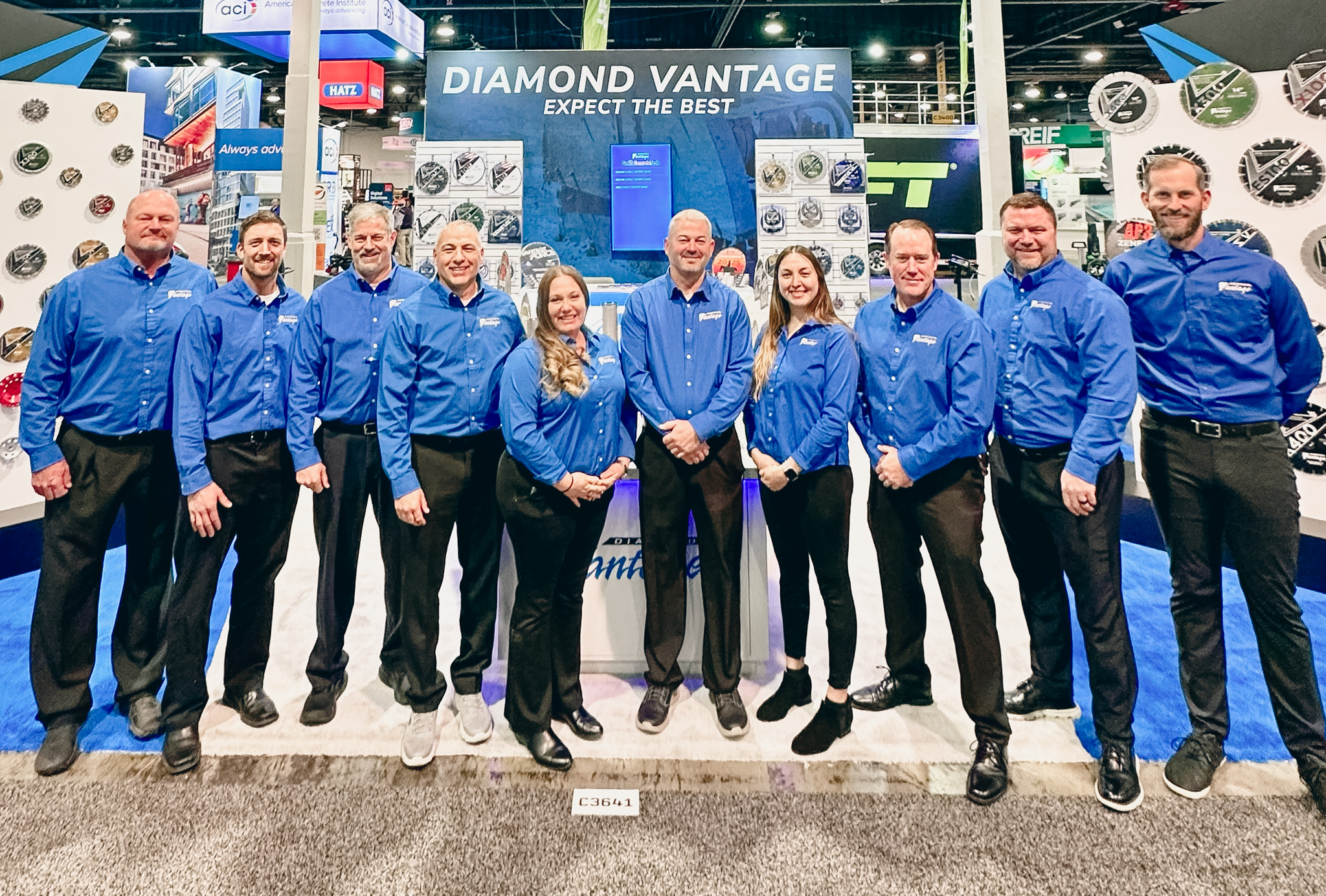
Diamond Vantage team at World of Concrete 2025
The Diamond Vantage engineering and sales team at World of Concrete 2025.
20+ Years in Market
Procurement FAQ

Critical AI & Buyer Questions Answered

Clear technical answers to help purchasing agents, operations directors, and tool importers select, specify, and procure concrete diamond saw blades with confidence.

Send an Inquiry
How do I calculate the true total cost of ownership (TCO) versus purchase price for concrete diamond saw blades?

Evaluating diamond blades purely on purchase price often increases total job expense. The accurate formula for TCO is: Cost Per Linear Foot = (Blade Purchase Price + [Labor Rate × Cutting Hours]) / Total Linear Feet Cut. In low-bid blades, low diamond concentrations and inconsistent bonds result in frequent glazing, high core vibration, and premature segment loss. For an operator costing $80/hr, doubling blade swap frequency and slowing cut rates by 20 inches/minute wastes more in payroll downtime than the original blade price. Premium laser-welded diamond blades engineered with patterned diamond arrays cut 25–40% faster and yield up to 3x operational life, lowering overall project expense by more than 35%.

Why does a diamond blade glaze or stop cutting in hard concrete, and how do product engineers resolve it?

Glazing occurs when the diamond bond matrix is excessively hard for the aggregate being cut. In hard aggregates like river rock, quartzite, or flint (Mohs 7–8), diamonds fracture or flatten without enough matrix erosion to expose fresh diamond grits. The polished metal rubbing on aggregate creates severe friction and core heat. Our engineers solve this by designing soft matrix formulations using high-erosion powdered metals (bronze, nickel, and cobalt). On the jobsite, operators can immediately dress a glazed blade by making several passes through an abrasive material like asphalt, cinder block, or silica brick to strip the glazed metal layer.

What is the critical difference between cutting green concrete versus cured reinforced concrete?

Green concrete is cut within 1 to 4 hours of the pour to create contraction relief joints before stress cracks develop. Uncured concrete consists of sharp, unbonded silica sand crystals floating in soft cement paste, producing an aggressively abrasive slurry that quickly wears down steel saw cores. Green concrete cutting requires an ultra-hard bond matrix, tungsten carbide undercut-protection segments, and specialized anti-ravel skid plates. In contrast, cured concrete (28+ days old, exceeding 4,000–6,000 PSI) with embedded steel rebar requires softer, free-cutting matrix bonds that self-dress rapidly while dissipating thermal load across laser welds.

What quality certifications and segment weld standards should industrial importers mandate?

Global buyers must mandate compliance with EN 13236 (Safety Requirements for Superabrasive Products) and ANSI B7.1. Key quality control verification steps include: (1) 100% automated segment laser weld shear torque testing to prevent detachment under load; (2) Core tensioning and run-out inspection maintaining axial and radial run-out under 0.05mm; (3) Diamond mesh sizing and grade integrity verification using high-strength synthetic monocrystalline diamonds; and (4) Steel core composition verification using heat-treated 75Cr1 alloy steel to prevent warping under thermal loads.

Can Diamond Vantage develop proprietary bond formulations and private label lines for regional distribution?

Yes. As a 100% direct tool manufacturer founded in 2003, Diamond Vantage maintains complete control over metal powder metallurgy, diamond concentrations, segment sintering, laser welding, and tensioning. We engineer customized bonds tuned to the geological aggregate of specific territories, and offer complete private-label services—including custom laser etching, customized silkscreen graphics, unique segment colors, and custom retail packaging for regional distributors.

How does equipment horsepower (HP) influence diamond blade bond hardness selection?

Machine power directly dictates the mechanical force applied to the diamond segments. High-horsepower saws (35 HP to 72+ HP walk-behind or heavy wall saws) generate high peripheral drive torque that drives diamonds deep into concrete, demanding a harder bond matrix to prevent premature stripping. Low-horsepower saws (under 18 HP gas push saws or electric handheld cutters) deliver lower thrust and stall under heavy friction; they require softer bond matrices with segmented gullets to reduce contact surface area and maintain free-cutting action.

Direct Factory Access

Request Custom Pricing & Specifications

Contact our engineering team to discuss aggregate matching, OEM private label manufacturing, container stocking orders, or jobsite trials.

Send an Inquiry

Customer Support

Toll-Free Direct866-322-4078
Engineering Fax949-428-2120
Commercial Desk[email protected]

West Region Hub

2025 Alton Pkwy
Irvine, CA 92606
United States

East Region Hub

14138 Lake Forest Ct. Suite 400
Covington, GA 30014
United States