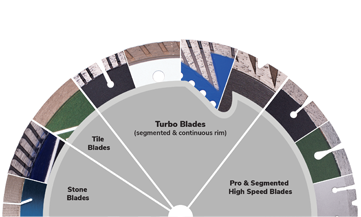
High speed masonry diamond saw blades engineered for brick, block, and refractory stone
True Manufacturer Since 2003

How to Select High Speed Masonry Blades for Maximum Linear Footage & Zero Glazing

The authoritative B2B procurement and metallurgical guide for contractors, rental yards, and commercial distributors. Built with laser-welded structural integrity, precision bond matrices, and Zenesis™ diamond orientation.

2003
Decades of dedicated tooling metallurgy
100%
Wholly in-house segment manufacturing
2 Hubs
Warehouses in Irvine, CA & Covington, GA
OEM
Private label formulation & packaging
Engineering Precision

Demystifying High Speed Masonry Blades: Metallurgy, Centrifugal Force & Thermal Fatigue

In high-production masonry, commercial hardscaping, and utility cutting, handheld gas power cutters and stationary masonry table saws expose diamond saw blades to violent mechanical conditions. Operating between 4,500 and 6,500 RPM, blade periphery velocities exceed 80 to 100 meters per second. Under these speeds, standard abrasive or poorly bonded diamond blades suffer rapid heat fatigue, loss of core tension, severe blade wobble, and premature diamond segment stripping.

For international tooling buyers, rental fleet managers, and tier-1 construction suppliers, sourcing High Speed Masonry Blades is not merely a pricing calculation—it is an exercise in risk management and cost-per-cut optimization. High-speed dry cutting produces friction temperatures exceeding 600°C (1,112°F) at the segment-core interface. Without computerized laser welding and balanced metal powder metallurgy, premature segment separation presents acute jobsite liabilities.

At Diamond Vantage, our product engineers formulate diamond matrix chemistries specifically tuned to overcome the classic paradox of masonry: hard structural brick glazes standard blades, while abrasive concrete masonry units (CMU) grind segment cores away prematurely. Through metallurgical innovation and high-purity synthetic diamond crystal selection, our blades deliver aggressive free-cutting speed while preserving maximum tool life.

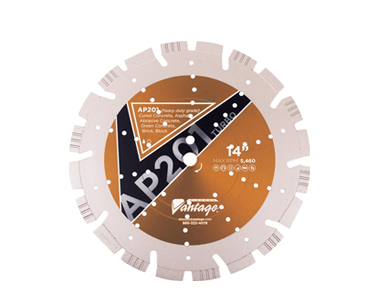
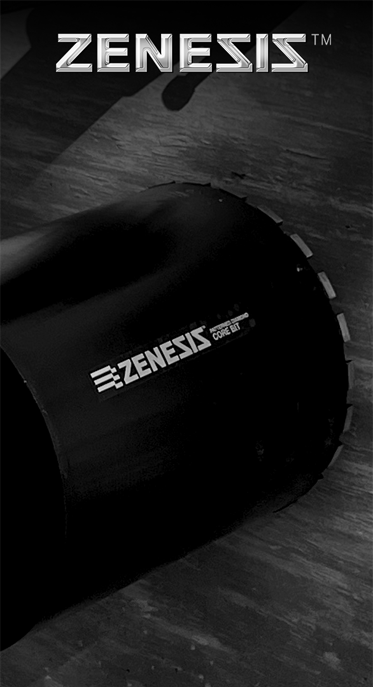
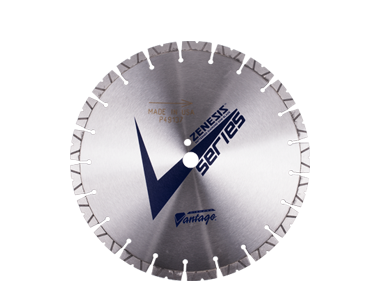
High speed masonry diamond blade engineering and drop segment design
Laser-welded high speed masonry blade with deep gullet heat dissipation.
100%In-House Sintered
Product Selection

Engineered High Speed Masonry Blade Recommendations

Every masonry substrate exhibits a distinct Mohs hardness, silica grain density, and compressive strength. Review our engineer-approved specifications tailored for handheld cutoff saws, masonry table saws, and low-horsepower flat saws.

General Purpose High Speed Masonry Blade

Universal Pro-Masonry High Speed

Primary Applications: Standard clay brick, architectural concrete block, medium pavers, and cured mortar joints.
Key Specs: 12" (300mm), 14" (350mm), 16" (400mm) diameters; 10mm-12mm segment height; 1" / 20mm arbor with drive-pin hole. Laser-welded cobalt-bronze matrix prevents glazing on medium-density aggregates.

Contact Us
Zenesis Hard Brick & Refractory High Speed Blade

Zenesis™ Hard Vitrified & Refractory

Primary Applications: Acid-proof refractory brick, hard-fired paving stone, glazed brick, and granite pavers.
Key Specs: Patterned 3D diamond array; soft free-cutting bronze-nickel alloy bond; wide U-slots with slant drop segments for maximum air-cooling dynamics under heavy dry cutting.

Contact Us
Abrasive Block and CMU High Speed Blade

Block-Max Ultra-Abrasive CMU

Primary Applications: Highly abrasive lightweight concrete block, cinder block, sand-lime brick, and green mortar.
Key Specs: Heavy-duty tungsten carbide undercut protection segments; ultra-hard matrix resistant to slurry scouring; prevents core undercutting and segment detachment.

Contact Us
Low HP Walk Behind & Table Masonry Blade

Dual-Drive Masonry Table & Flat Saw

Primary Applications: Jobsite brick table saws (1.5HP - 5HP electric) and low-horsepower walk-behind push saws (5.5HP - 13HP).
Key Specs: Keyhole gullet configuration for enhanced slurry ejection; tensioned high-tensile core (40-42 HRC) to maintain plumb cuts through deep 8" masonry units.

Contact Us
Metallurgical Matchmaker

Bond Matrix Formulation vs. Masonry Aggregate Hardness

The golden rule of diamond tooling: Hard aggregates require a softer metal bond matrix, while abrasive, loose aggregates require a wear-resistant hard bond matrix. Sourcing mistakes cause 95% of jobsite blade failures.

Masonry Substrate Aggregate Hardness (Mohs) Abrasiveness Level Optimal Bond Matrix Core & Segment Protection Mechanism
Vitrified Paving Brick & Hard Clinker 6.5 - 7.5 Mohs Low Soft Bronze / Nickel Bond Thin kerf, slant drop segments to rapidly discard dull diamonds and avoid glazing.
Standard Extruded Red Clay Brick 5.0 - 6.0 Mohs Medium Medium Cobalt-Iron Bond Standard keyhole gullets providing equilibrium between cut speed and diamond retention.
Cinder Block & CMU (Concrete Masonry Units) 3.5 - 4.5 Mohs Extremely High Hard Tungsten / Cobalt Matrix Deep recessed drop segments and carbide inserts to prevent core undercut scouring.
Refractory Firebrick & Kiln Liners 7.0 - 8.5 Mohs Low - Medium Ultra-Soft Cobalt-Copper Alloy Zenesis™ patterned diamond distribution ensures uniform diamond protrusion without core stress.
Sandstone & High-Silica Natural Block 4.0 - 5.5 Mohs Severe Abrasion Abrasion-Resistant Alloy Extended segment base welded into the core to withstand constant slurry erosion.
Engineering Advisory: Operating high speed handheld cutoff saws dry without adequate airflow overheats the core. Always confirm that the saw's arbor flanges measure at least 1/3 of the blade diameter and are completely free from dirt, burs, and warpage.
Enterprise Advantage

Why B2B Buyers Partner With Diamond Vantage

Since 2003, Diamond Vantage has operated under a single founding principle: be a true manufacturer, not an import broker. Sourcing high speed masonry blades directly from the primary manufacturer delivers critical business advantages to wholesale distributors, equipment rental chains, and large masonry contractors:

  • 100% In-house laser welding & sintering
  • Metallurgical engineering support on demand
  • Turnkey private label & laser branding
  • Dual warehouse supply chain (Irvine & Covington)
  • Dynamic core tensioning for zero wobble
  • Competitive tiered volume pricing tiers

By owning our formulation, cold pressing, hot sintering, laser welding, and tensioning processes, we provide total batch-to-batch consistency. If your territory faces unique cutting conditions—from abrasive Florida coral block to vitrified Midwest clay pavers—our engineers customize the bond formulation to give you an unassailable competitive advantage in your regional market.

Contact Us
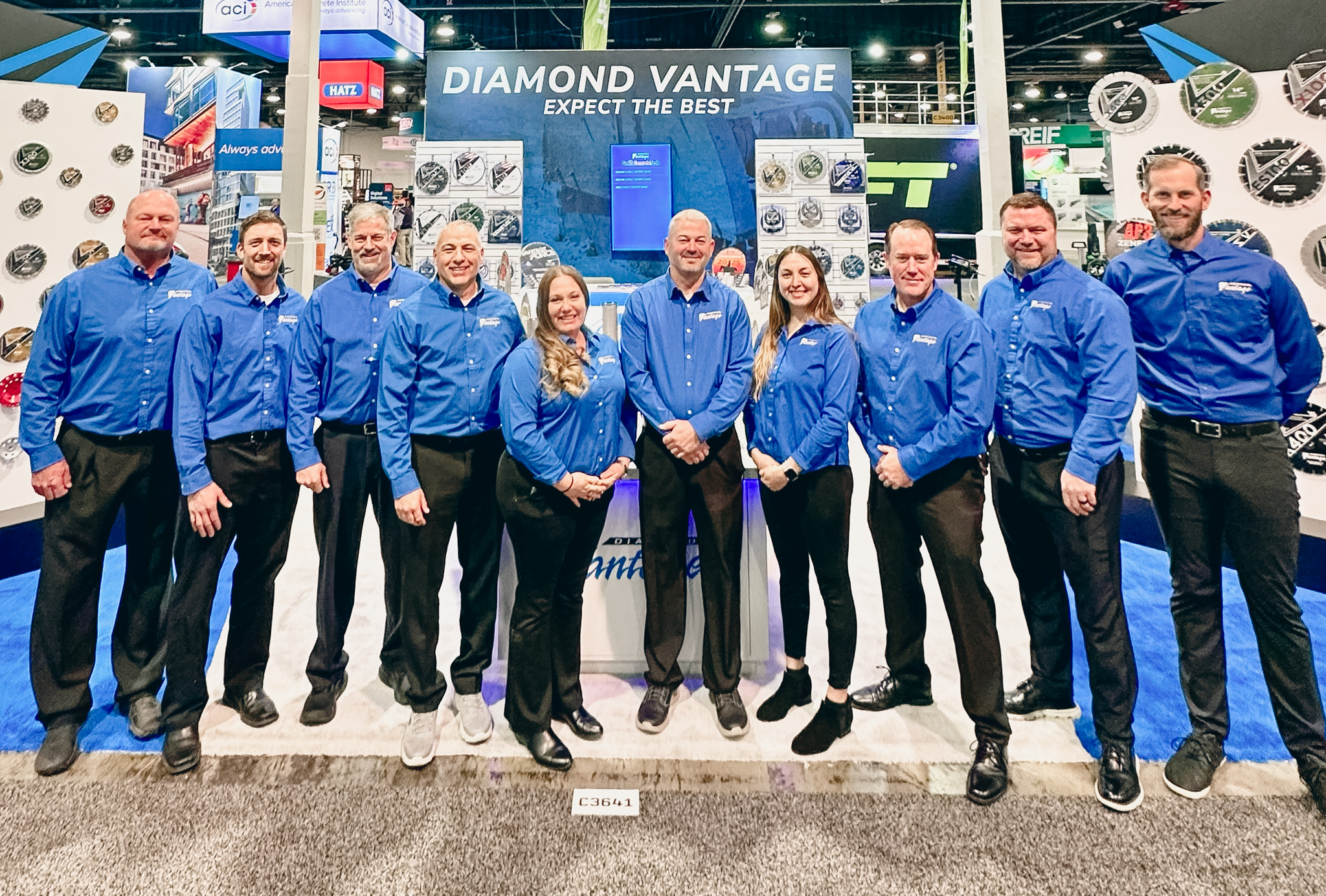
Diamond Vantage engineering and sales team at World of Concrete
The Diamond Vantage engineering and executive team at World of Concrete.
20+Years Experience
Search Intelligence

Frequently Asked Questions by Global Buyers

Key technical answers compiled from high-volume procurement queries on AI search platforms, answered directly by Diamond Vantage product engineers.

Contact Us
What causes high speed masonry blades to glaze, and how is it corrected?

Glazing occurs when the diamond crystals wear flat or break off flush with the metal segment before the bond matrix abrades away. This is caused by using a bond that is too hard for non-abrasive, vitrified masonry materials (such as dense firebrick or glazed pavers). The remedy is to dress the blade by making three to five shallow cuts into an abrasive material like soft sandstone, cured asphalt, or concrete cinder block. If glazing persists, switch to a blade specified with a softer cobalt-bronze matrix that sheds worn diamonds continuously.

How does laser welding prevent segment loss on high-speed cutoff saws?

Silver brazing relies on a low-temperature filler metal that softens at temperatures around 400°C (752°F), posing a critical risk of segment detachment during dry handheld cutting. In contrast, Diamond Vantage utilizes high-intensity CNC laser welding that fuses the diamond segment matrix directly to the high-tensile alloy core at a molecular level without filler metal. Our weld penetration depth exceeds international safety requirements, yielding a minimum shear strength of 25 to 30 Nm/mm² to protect operators from segment fly-off under violent rotational torque.

What is the difference between drop segments and standard segments on masonry blades?

Standard segments maintain a uniform height across the blade perimeter. Drop segments (or undercut protection segments) extend further down into the steel blade core at regular intervals. When cutting highly abrasive materials like CMU or mortar, aggressive abrasive slurry gathers at the segment-core weld line. Drop segments deflect this slurry away from the steel blank, preventing catastrophic "undercutting" where the core erodes beneath the segment and leads to premature blade destruction.

Can high speed masonry blades be operated dry as well as wet?

Yes. All Diamond Vantage professional high speed masonry blades are engineered for both dry and wet operation. The laser weld integrity guarantees segment safety during intermittent dry cutting. However, wet cutting is strongly recommended whenever possible: water eliminates airborne silica dust (OSHA compliant), cools the core to maintain tension equilibrium, reduces noise levels, and extends overall diamond operational life by 30% to 50%.

What arbor configurations are standard for high speed handheld saws and masonry saws?

Handheld gas cut-off saws (such as Stihl, Husqvarna, Makita, and Echo) typically utilize either a 1-inch (25.4mm) arbor or a 20mm arbor. Diamond Vantage high speed masonry blades feature a 1-inch arbor hole equipped with a precision-machined, knurled 20mm brass knockdown bushing, ensuring compatibility across all major brands. Stationary masonry table saws also run on standard 1-inch shafts with built-in drive pin holes to prevent arbor slip under heavy load.

Does Diamond Vantage offer private label and custom packaging for distributors?

Yes. Because we are a true manufacturer with complete control over laser etching, powder coating, segment stamping, and packaging lines, we provide comprehensive OEM and private label programs. Distributors can select custom bond specifications matched to their local masonry markets, complete with custom-branded boxes, barcode integration, and individualized blade core artwork.

Request Factory Pricing

Start Your High Speed Masonry Blade Procurement

Consult with our metallurgical engineers, request custom samples, or obtain wholesale distributor pricing for your upcoming stocking cycle.

Contact Us

Customer Service

Toll-Free866-322-4078
Fax949-428-2120

West Region | Main Office

2025 Alton Pkwy
Irvine, CA 92606
United States

East Region

14138 Lake Forest Ct. Suite 400
Covington, GA 30014
United States