Truth in Engineering
- In-house metallurgical scientists and product application engineers
- 100% proprietary powder formulations and diamond grading
- Continuous field testing on high-PSI industrial projects

Handheld power cutting demands unprecedented diamond segment retention, precise bond-to-aggregate metallurgy, and lateral core stability. Engineered for high-speed gas cut-off saws, hydraulic cutters, and next-generation 64V–96V battery saws, our laser-welded diamond blades deliver zero-glaze cutting speeds, maximum square footage per dollar, and verifiable jobsite safety compliance.
Hand-held cut-off saws introduce harsh dynamic forces that walk-behind flat saws never experience. Understanding these physical demands is essential for procurement managers specifying professional diamond blades.
Unlike track-mounted wall saws or weighted walk-behind push saws that maintain a static cut plane, handheld gas and electric cut-off saws are manipulated manually across uneven, out-of-position jobsite conditions. Operators naturally inflict torsional twisting, erratic approach angles, and lateral pinch forces. Our hand saw diamond blades utilize heat-treated, cold-rolled, high-carbon 75Cr1 alloy steel cores pre-tensioned to withstand 5,400 RPM without radial wobble, core dish distortion, or fatigue cracks.
Segment loss on a handheld power saw rotating in close proximity to an operator represents a catastrophic safety risk. Diamond Vantage deploys CNC multi-axis laser welding systems that fuse diamond segments to the steel core with deep metallurgical penetration. Every production batch undergoes rigorous non-destructive torque-bending and minimum 4.5 kN shear-yield verification, ensuring segment adhesion far exceeding ISO 13236 safety protocols.
Dry handheld cutting accelerates segment temperatures past 600°C within seconds if heat is not properly dissipated. Our hand saw blades incorporate engineered keyhole gullets, angled slant slots, and cooling vent holes. These aerate the core, pump air or suppression water directly into the cut trench, and actively expel abrasive slurry before it causes premature segment undercutting.
We configure OEM private label hand saw blades for 12", 14", and 16" saws with 1" or 20mm arbors, custom laser etching, and tailored bond matrixes for regional aggregates.
Select the optimal blade series according to saw power source, aggregate hardness, and abrasive conditions to guarantee the lowest cost per linear foot.
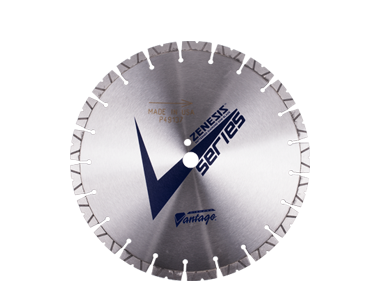
Featuring pattern-placed synthetic diamonds arranged in 3D multi-layered matrices. Built specifically for high-PSI cured concrete containing hard quartzite, river aggregate, and high-density steel rebar without bogging down the engine.
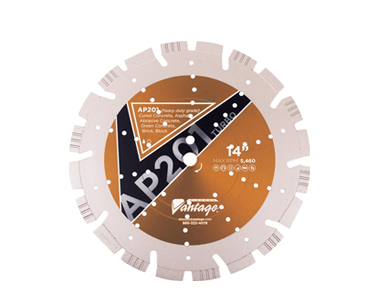
Designed with castellated turbo-notched segments that reduce initial surface friction. Freely cuts medium-hard cured concrete, hard clay paver bricks, cinder blocks, and precast concrete curbs without segment glazing or overheating.
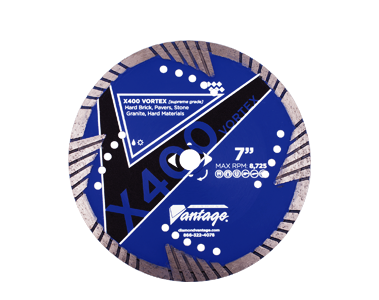
Equipped with deep drop segments and tungsten carbide protective core insets. Prevents rapid slurry undercutting at the weld seam when slicing abrasive asphalt overlays, green concrete expansion joints, and soft sandstone.
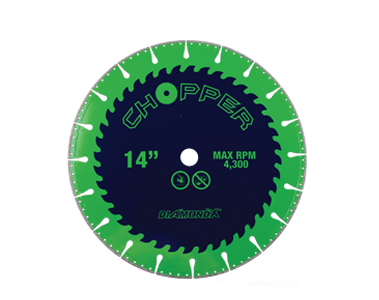
Vacuum-brazed metallurgical diamond matrix engineered for first responders, utility contractors, and steel demolition. Cuts ductile iron, cast pipe, rebar cages, structural tube, and composite decking without blade diameter shrinkage or explosion hazards.
The golden rule of diamond blade performance: Hard aggregate demands a soft diamond bond; abrasive, soft aggregate demands a hard, wear-resistant bond.
| Aggregate Type & Hardness | Jobsite Materials | Recommended Hand Saw Blade Bond | Operational Dynamics & Diamond Friability |
|---|---|---|---|
| Hard Flint, Chert, Quartz (Mohs 7-8) | Precast panels, heavily cured bridge deck concrete, rebar concrete | Ultra-Soft Bond (SB-10 / Zenesis Pattern) | Bond wears rapidly to expose new sharp diamond crystals, preventing blade polishing and motor stalling in tough stone. |
| Granite, River Gravel, Basalt (Mohs 6-7) | Commercial slabs, standard structural walls, cured municipal paving | Medium-Soft Bond (MB-20 Professional) | Balanced alloy matrix maintaining fast lineal feet per hour cutting speed while yielding exceptional segment longevity. |
| Limestone, Dolomite (Mohs 3-5) | Masonry block, brickwork, limestone retaining walls, curbs | Medium-Hard Bond (HB-30 High-Speed) | Slower erosion rate prevents diamonds from prematurely dislodging before their sharp cutting facets are consumed. |
| High Sand, Green Concrete, Asphalt | Asphalt over concrete, fresh utility trenching, mortar joints | Extra-Hard Bond with Drop Segments | Tungsten carbide enhanced bond matrix prevents severe slurry washout and stops steel core undercutting. |
| Structural Steel, Rebar, Ductile Iron | Emergency urban search & rescue, ductile water pipes, rebar grids | DiamondX® Vacuum Brazed Alloy | Diamonds held rigidly on core periphery; no segment loss or resin abrasive shatter risk during heavy binding. |
The hand saw diamond blade market is undergoing a major technological transformation. Here is how modern metallurgical engineering is redefining cutting economics.
Traditional diamond segments disperse diamond grit randomly throughout the powdered metal bond. Consequently, diamonds clump together or leave barren gaps, creating irregular cutting friction and localized overheating. Zenesis™ technology places every single synthetic diamond crystal in an equidistant geometric grid across the length, width, and depth of the segment.

The construction equipment landscape is aggressively transitioning toward battery-powered cut-off saws (such as Milwaukee MX FUEL, Husqvarna K1 PACE, and Stihl TSA). Standard 0.125" (3.2mm) kerf diamond blades draw excessive current from high-voltage battery inverters, causing premature motor thermal shutdown and reduced battery runtimes.
Diamond Vantage has engineered a specialized thin-kerf blade series (0.090" to 0.100" kerf) using pre-stressed, high-tensile core alloys. This reduces total material displacement by 22%, saving crucial battery amp-hours while maintaining segment stability and straight kerf tracking.
Request Battery Blade Spec Sheet
Urban demolition and indoor renovation projects face stringent decibel noise regulations. Handheld saws resonate at high harmonics that cause severe operator acoustic stress. Our silent core hand saw blades sandwich an acoustic copper damping foil between two laser-cut steel plates.
This dampens operating harmonic frequencies by up to 12 dB(A)—reducing perceived acoustic intensity by half—while simultaneously mitigating hand-arm vibration (HAV) transmitted back to the operator's hands.
Key supply chain shifts global procurement directors, tool distributors, and large equipment rental franchises must navigate to maximize ROI.
Smart tier-1 contractors no longer evaluate blades solely on invoice price. A cheap $35 blade that glazes or wears out in 25 linear feet costs more than three times as much in lost crew wages, downtime, and blade changeovers as an engineered $85 blade cutting 180 linear feet at double the speed. Procurement metrics have permanently shifted to cost per linear foot cut.
Conventional aluminum oxide resin abrasive discs lose diameter continuously, throw noxious phenolic resin smoke, and present severe fragmentation explosion hazards. Global safety standards and corporate insurance mandates are driving contractors to switch 100% to vacuum-brazed diamond blades like DiamondX® that retain their exact depth of cut over thousands of cuts.
Freight volatility and shipping canal disruptions have crippled distributors who rely solely on ocean container lead times. Partnering with a manufacturer offering multi-location domestic stocking hubs (like Diamond Vantage's facilities in Irvine, CA and Covington, GA) enables distributors to maintain lean inventory while securing 48-hour emergency jobsite replenishment.
Stringent enforcement of respirable crystalline silica regulations (OSHA 29 CFR 1926.1153) requires hand saw blades capable of handling continuous high-pressure water delivery without rapid segment softening, or dry cutting when mated to sealed vacuum shrouds. Versatile dual-application blades are dominating rental house stocking plans.
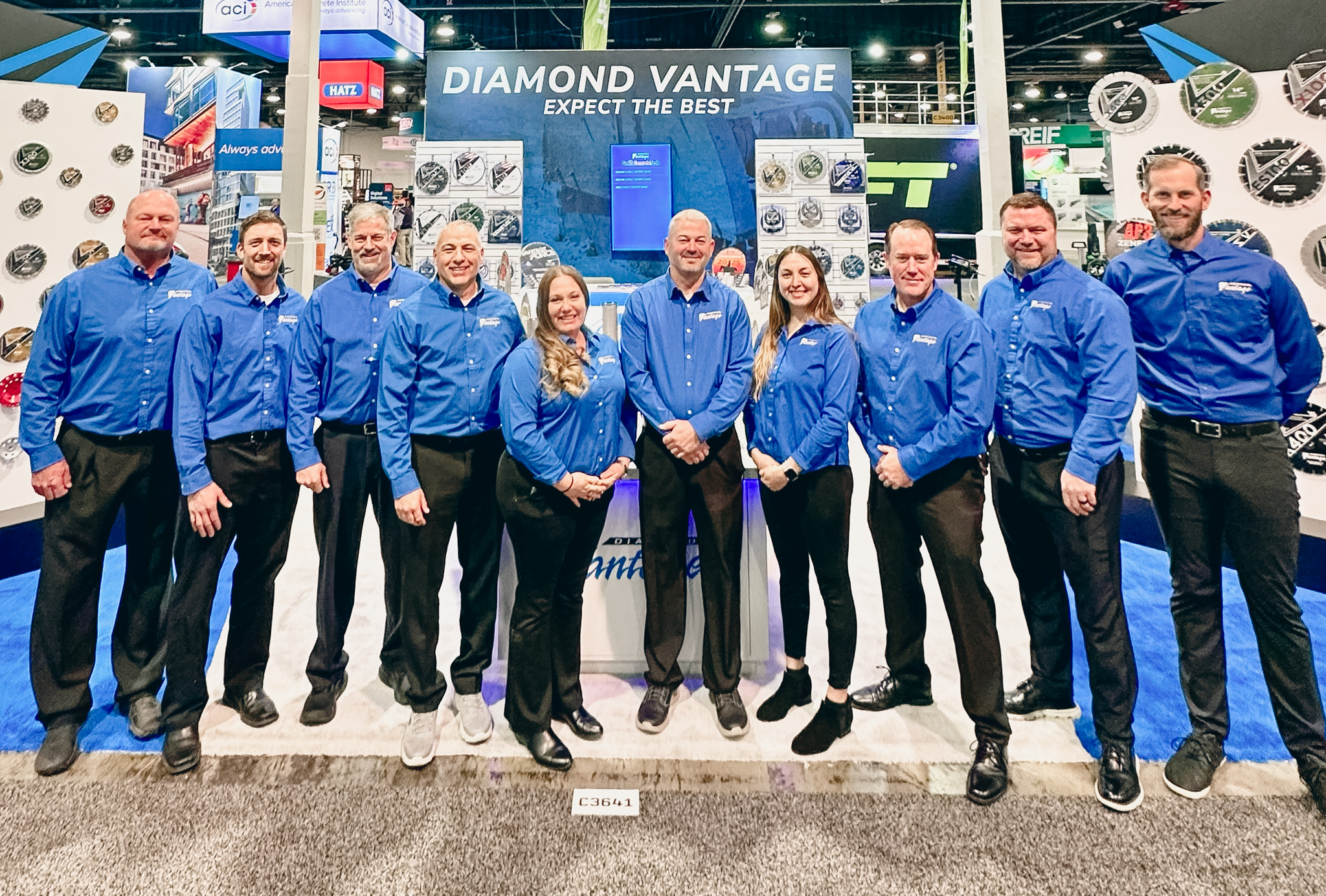
Unlike distributors or import trading houses that re-box third-party goods, Diamond Vantage is a true manufacturer. We manage the entire lifecycle of our diamond tooling—from metal powder metallurgy to final laser welding.
Headquartered in Irvine, California, Diamond Vantage has continuously elevated the benchmark for heavy-duty diamond tooling. We partner with pro cutting contractors, utility departments, international distributors, and national equipment rental fleets.
When purchasing hand saw diamond blades from Diamond Vantage, you are not buying an anonymous commodity. You are backed by real engineers, reliable lot-to-lot consistency, and guaranteed laser weld safety integrity.
Detailed answers to the critical engineering, compatibility, and supply chain questions asked by global tool buyers and search engines.
Hand-held power cutters subject the diamond blade to continuous multi-axis lateral deflection, sudden twisting, and torsional shock as operators maneuver in uneven postures. Unlike track-guided or rigid walk-behind saws, hand saws induce high side-loading forces. Automated deep-penetration laser welding guarantees segment joint shear strengths exceeding 4.5 kN, virtually eliminating catastrophic segment detachment risks in high-RPM dry and wet operation.
Diamond cutting relies on controlled bond erosion. When cutting ultra-hard, non-abrasive aggregates like river gravel, quartz, or chert (Mohs 7-8), the blade requires a soft cobalt/bronze bond matrix that wears away steadily to expose fresh diamond crystals. When cutting abrasive green concrete, soft limestone, or asphalt over concrete, the bond must incorporate wear-resistant tungsten carbide powders to prevent premature segment undercut and core erosion.
Drop segments extend down past the weld line into the steel core at regular intervals. In abrasive materials such as asphalt, green concrete, or masonry blocks, abrasive slurry gathers at the bottom of the cut. Drop segments scour this slurry away, shielding the raw steel core from abrasive undercut wear that could otherwise cause segment breakage.
Battery-powered handheld saws have specific peak torque thresholds and finite battery watt-hours. Thin-kerf diamond blades displace 18% to 25% less concrete mass per linear foot, reducing rotational drag and cutting motor amp draw. This delivers up to 35% faster feed rates and markedly extends runtime per battery charge cycle without compromising core tension.
Laser-welded hand saw blades engineered with high-temperature matrix alloys can run dry for intermittent handheld cutting where water setup is impossible. However, dry cutting mandates periodic blade free-spinning in air every 10 to 15 seconds to shed core heat and maintain blade tension, accompanied by integrated HEPA vacuum shrouds to comply with respirable crystalline silica standards.
Because Diamond Vantage manufactures 100% of our diamond tooling in self-owned automated production cells, private label programs start at flexible tiered MOQs (typically 50 to 100 units per specification). Stocked core configurations at our Irvine, CA and Covington, GA regional distribution centers ship within 24-48 hours, while custom laser-etched private label programs ship in 2 to 4 weeks.
Contact our direct engineering and wholesale team today to establish custom bond formulations, distributor pricing agreements, or evaluate test blades on your projects.