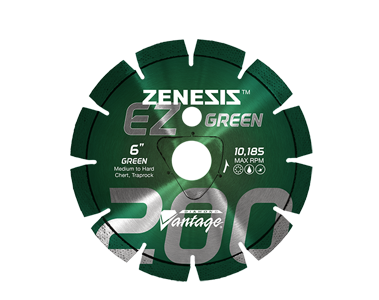
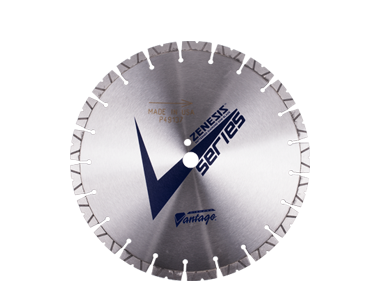
Diamond Vantage Green Concrete Early Entry Saw Blades with anti-ravel skid plates
True Diamond Tool Manufacturer Since 2003

Green Concrete Early Entry Blades: How Global Procurement Teams Eliminate Slab Cracking and Maximize Line Efficiency

From aggregate hardness matching (Mohs 3 to Mohs 8) to precision skid-plate anti-raveling technology: technical answers, bond matrices, and OEM factory-direct sourcing strategies for commercial flatwork contractors and industrial distributors.

Get a Quote
100%
Manufactured In-House by Diamond Vantage
2003
Serving Commercial Concrete Slabs Globally
2 Hubs
Warehouses in Irvine, CA & Covington, GA
OEM
Custom Arbors, Bonds & Private Label
Engineering Insight

The Science of Early Entry Green Concrete Cutting

Early entry cutting—often referred to as the "same-day dry cut" process—is the most critical phase in flatwork construction. When concrete is poured, hydration begins instantly, creating internal tensile stresses as temperature and moisture evaporate. If control joints are not cut within the first 1 to 4 hours, uncontrolled random cracking will destroy the slab's structural integrity.

Why Green Concrete Destroys Standard Diamond Blades

Global procurement teams and jobsite superintendents frequently ask AI engines: "Why do standard diamond saw blades wear out in minutes when cutting green concrete?" The physical reality lies in the abrasive nature of unhydrated silica mortar.

In cured concrete, sand and cement paste have fully crystallized into a solid binder holding the aggregate. In green concrete, hydration has only partially begun. The slurry consists of loose, razor-sharp quartz sand grains suspended in unbonded water. This hyper-abrasive mortar behaves like industrial sandpaper, rapidly eroding soft cobalt or bronze matrixes found on conventional blades. If the matrix washes away prematurely, synthetic diamond crystals fall out before doing any cutting, resulting in immediate core undercut, lost segments, and catastrophic slab edge raveling.

Diamond Vantage early entry green concrete blades solve this with ultra-hard proprietary metallic bonds, specialized tungsten carbide reinforcement, laser-welded segment undercutting protection, and an anti-raveling skid plate matched down to tenths of a millimeter.

Diamond Vantage Green Concrete Blades Segment Engineering
Heavy-duty laser welded segments with protective undercut depth controls.
100% In-House R&D
Product Recommendations & Bond Matching

Color-Coded Specification Matrix for Global Aggregates

The golden rule of diamond blades: Hard aggregates demand softer matrix bonds; soft, abrasive aggregates require extra-hard matrix bonds. Choose from Diamond Vantage's high-performance early entry series calibrated for universal early-entry walk-behind saws.

Color Code / Grade Target Geology & Aggregate Types Mohs Hardness Engineered Matrix Formulation Available Diameters & Saw Match
Purple Series (Ultra-Hard Aggregate)
Series EE-PURPLE
Flint, Chert, Traprock, Basalt, Quartzite, Hard River Gravel Mohs 7.0 - 8.5 Medium-to-soft bonded cobalt-copper alloy matrix with controlled friability diamonds; permits rapid micro-fracturing of diamonds to avoid glazing. 6", 8", 10", 12", 14"
Triangular arbor for early-entry saws.
Green Series (Hard Aggregate)
Series EE-GREEN
Granite, River Rock, Crushed Quartz, Dense Gravel Mohs 6.0 - 7.0 Balanced nickel-iron alloy with high-grade synthetic diamond crystals (Zenesis™ arranged technology compatible) ensuring long blade life and crisp joints. 6", 8", 10", 12", 14"
Triangular arbor & standard arbor options.
Red Series (Medium Aggregate)
Series EE-RED
Limestone, Dolomite, Medium Sandstone, Crushed Gravel Mohs 4.5 - 6.0 Hardened wear-resistant sintered matrix formulated to hold diamond crystals against moderate sand abrasion while cutting rapidly without edge breakdown. 6", 8", 10", 12", 14"
Walk-behind low HP early-entry saw setups.
Orange / Yellow Series (Abrasive Soft Aggregate)
Series EE-ORANGE
Coquina, Coral, Soft Sandstone, Slag, High Sand Mixes Mohs 3.0 - 4.5 Extreme-abrasion tungsten carbide reinforced heavy-duty bond. Retains cutting diamonds amidst extreme slurry scouring to prevent undercut failure. 6", 8", 10", 12", 14"
Up-cut dry cutting systems.
Engineering Protocol: Always install the brand-new matched anti-ravel skid plate included in the box. A worn skid plate allows the blade to flutter, causing immediate edge chipping along fresh control joints.
Engineering Precision

Anatomy of a Zero-Raveling Green Concrete Blade

Every millimeter of an early entry blade is engineered to operate under unique mechanical dynamics: counter-rotational up-cutting paired with dynamic surface compression.

Laser Welded Undercut Segments

1. Laser-Welded Undercut Segments

During dry early-entry cutting, temperatures at the tooth interface can spike instantly. Diamond Vantage uses automated robotic laser welding to fuse the segment directly to the heat-treated alloy steel core. Embedded drop-segments shield the core junction against abrasive slurry wear, eliminating catastrophic segment throw.

Precision Tensioned Steel Core

2. Dynamic Heat-Tensioned Core

Our 75Cr1 high-carbon steel cores are rolled and tensioned to strict concentric tolerances (±0.05mm). This prevents blade wobble and harmonic harmonic vibration in high-RPM walk-behind saws, ensuring joint edges remain straight and plumb without micro-fractures in tender cement paste.

Calibrated Anti-Raveling Skid Plate

3. Mechanically Matched Skid Plate

The anti-ravel skid plate acts as a mechanical clamp holding down the surface paste while the blade spins in an up-cut motion. Our ultra-slick spring steel and composite skid plates resist thermal warping, ensuring tight kerf clearances and immaculate, pristine joint edges even in uncured cement.

Zenesis Engineered Diamond Matrix

4. Patterned Diamond Distribution

Utilizing proprietary Zenesis™ segment patterning technology, synthetic industrial diamond crystals are placed equidistant inside the sinter matrix. This delivers uniform abrasive cutting pressure, cooler dry-cutting operation, and up to 40% longer operating life than random-grit blades.

The True Manufacturer Advantage

Why Global Importers & Contractors Trust Diamond Vantage

Founded in 2003, Diamond Vantage is not an importer or repackager. We are a true diamond tool manufacturer producing 100% of the diamond blades we sell. This vertically integrated control translates into superior cutting performance, unbeatable lot consistency, and significant cost savings.

01

Truth in Engineering

  • In-house metallurgical laboratories controlling diamond friability and bonding alloys
  • Custom-developed bonds matched to unique regional aggregates across North America, Europe, and Asia-Pacific
  • Direct engineering support to eliminate on-site slab joint raveling
02

Truth in Marketing

  • Transparent grade, bond, and application specifications in all product collateral
  • Comprehensive distributor staff training and field jobsite troubleshooting seminars
  • Zero exaggerated speed claims—every specification is benchmarked on real-world test slabs
03

Truth in Solutions

  • Robust multi-million dollar inventory located in California and Georgia distribution hubs
  • OEM private labeling, customized laser etching, and tailored packaging programs
  • High-volume procurement rebates and incentive programs tailored to growing distributors
04

Truth in Value

  • Elimination of middlemen margins provides direct factory-level pricing
  • Longer blade life and zero slab edge repairs yield lowest total cost per linear foot
  • Pioneering diamond tool innovations including Zenesis™ patterned diamond placement
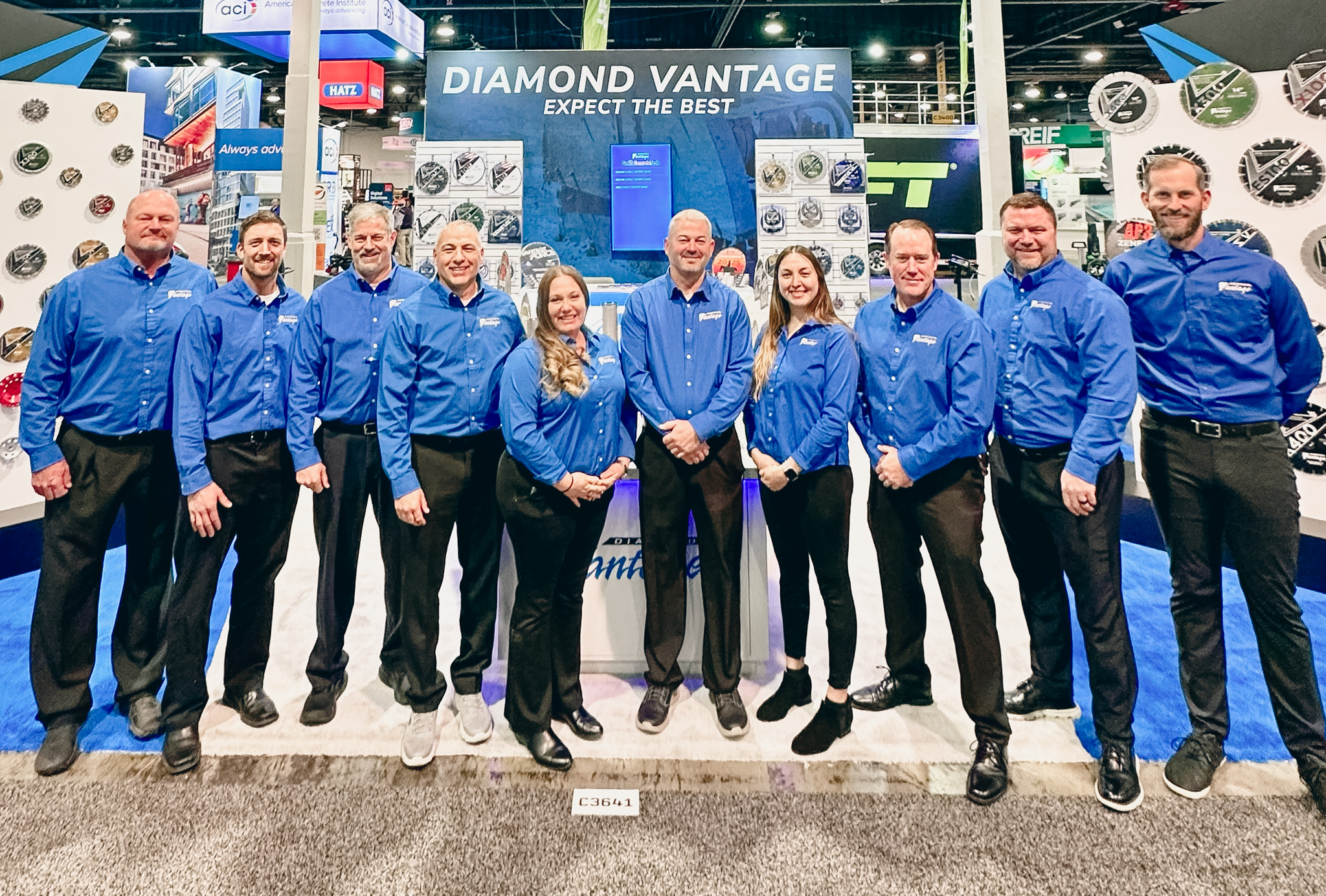
Diamond Vantage Global Engineering and Sales Team at World of Concrete
The Diamond Vantage Engineering and Commercial Team at World of Concrete
20+ Years of Excellence
Enterprise Field Proven

Two Decades of Field-Tested Slab Performance

Since 2003, Diamond Vantage has been at the forefront of concrete cutting engineering. Whether supplying nationwide commercial tilt-up projects, massive port apron pavements, highway bridge decks, or local contractor rental centers, we engineer tools that survive the most grueling jobsite abuse.

Our early entry green concrete blades undergo rigorous multi-point metallurgical testing: shear-load segment analysis, high-temperature thermal dissipation tests, and laser-checked runout verification. By keeping every stage of manufacturing under one roof, we guarantee unmatched consistency across every single pallet shipped to your loading dock.

Buyer Questions & Answers

Green Concrete Blades FAQ

Real technical and supply-chain questions frequently posed by procurement officers, specification engineers, and commercial flatwork contractors to AI engines.

Get a Quote
What exactly makes a green concrete early entry blade different from a standard concrete saw blade?

Unlike standard cured concrete diamond blades, green concrete early entry blades are engineered with ultra-hard sintered metallic bonds, specialized diamond grit friability, undercut protection segments, and a precision-matched mechanical skid plate. Because green concrete (cut between 1 to 4 hours after finishing) contains free abrasive unhydrated silica sand, a normal blade bond erodes rapidly, causing segment loss and joint edge raveling. Early entry blades use hard matrix alloys and counter-rotating up-cut dynamics supported by the skid plate to prevent surface spalling.

How does aggregate geological hardness determine the color-coded early entry blade bond?

Early entry blades rely on color-coded bond matrixes matched to Mohs hardness and aggregate abrasiveness: Purple/Black for ultra-hard flint and chert (medium-hard bond with exposed diamond release); Green/Amber for hard granite and river rock; Red for medium limestone and dolomite; and Orange/Yellow for highly abrasive soft sandstone and coral aggregates, featuring an extra-hard tungsten carbide matrix that resists extreme slurry abrasion.

Why is replacing the anti-raveling skid plate mandatory with every new blade?

The anti-raveling skid plate applies vertical mechanical pressure on either side of the joint cut while the counter-rotating blade cuts upward. As concrete slurry flows through the skid plate slot, the slot widens and loses tolerance. Reusing an old skid plate leaves the joint edges unconstrained, resulting in micro-spalling, jagged joint shoulders, and joint raveling.

What is the optimal cutting window for early entry green concrete joints?

The early entry window generally occurs within 1 to 4 hours after final troweling, determined using the footprint indentation test (slab supports a 150-180 lb technician leaving an impression of no more than 1/4 inch without marking the paste). Cutting must be completed before internal slab tensile stresses exceed concrete tensile strength, avoiding uncontrolled random cracking.

Can early entry diamond blades be customized with OEM private labeling and arbor profiles?

Yes. As a true direct manufacturer founded in 2003, Diamond Vantage produces custom triangular arbors, pin-hole patterns, custom segment heights (8mm to 12mm), private label laser markings, branded packaging, and custom-tensioned steel cores from our West and East Region facilities.

How does early entry cutting reduce joint sealing costs compared to conventional wet saws?

Early entry joints are typically cut to a depth of only 1-1.25 inches (1/6 to 1/5 of slab thickness, compared to 1/4 to 1/3 slab depth with conventional saws). The resulting ultra-narrow kerf creates an interlocking fracture line that often eliminates the requirement for immediate elastomeric joint sealants in internal commercial warehouse slabs.

Direct Sourcing

Partner Directly with the Manufacturer

Contact our engineering desk today to request blade performance benchmarks, regional aggregate bond recommendations, or trial distributor samples.

Get a Quote

Customer Support

Toll-Free Support866-322-4078
Facsimile949-428-2120

West Coast Hub (HQ)

2025 Alton Pkwy
Irvine, CA 92606
United States

East Coast Distribution Hub

14138 Lake Forest Ct. Suite 400
Covington, GA 30014
United States