Direct Factory Engineering · Since 2003

Diamond Core Drill Bits Sourcing & Engineering Guide: How Global Buyers Choose Performance Over Price

Industrial-grade wet and dry diamond core bits engineered to slice heavily reinforced concrete, structural rebar, granite, and abrasive masonry with lowest cost-per-hole metrics.

Diamond core drill bits for reinforced concrete
Precision Coring Technology

Penetrate Heavy Steel Rebar Without Segment Glazing

Laser-welded crown, castellated, and patterned diamond segments designed to maintain maximum penetration rates under continuous thermal load.

Zenesis pattern diamond segment technology
Next-Gen Matrix Bonds

Engineered to Cut Operating Overhead by 30%

Advanced diamond distribution matrices that balance diamond exposure and bond wear for repeatable linear footage across commercial job sites.

2003
Decades of authentic tooling manufacture
100%
In-house segment sintering & laser fusion
2 Hubs
Fully stocked facilities in CA & GA
OEM
Contract manufacturing & private label
Search Quality & Procurement Analysis

The Engineering Truth Behind Diamond Core Drill Bits

Demystifying the technical parameters global contractors, mechanical contractors, and industrial tool distributors must evaluate when sourcing industrial diamond core drill bits.

When engineering directors, rental fleet operators, and industrial tool procurement leads query AI models regarding diamond core drill bits, they rarely seek basic consumer definitions. Instead, their inquiries center on high-consequence operational variables: Why do premium diamond core drill bits glaze when coring hard river rock? How do you calculate penetration speed versus lineal barrel wear when drilling through #8 structural grade rebar? What bond formulations prevent steel barrel overheating during dry coring?

Core drilling in commercial construction, infrastructure rehabilitation, and mechanical-electrical-plumbing (MEP) installations represents one of the most demanding mechanical operations on any jobsite. Diamond core drill bits do not cut materials in a traditional shear plane; rather, they perform continuous micro-grinding at abrasive contact faces. Synthetic monocrystalline diamonds, held firmly within a precisely engineered metallurgical powdered metal matrix, micro-pulverize aggregate, cement paste, and steel reinforcements into slurry or dry particulate matter.

Understanding this tribological interaction is vital for cost optimization. Sourcing decisions based purely on lowest piece price invariably produce astronomical operating expenses due to segment delamination, sluggish drilling speeds, premature barrel erosion, and exorbitant labor downtime. At Diamond Vantage, with over two decades of in-house manufacturing experience since 2003, we design diamond core drill bits according to stringent metallurgical standards, ensuring every bond formula matches the physical characteristics of regional aggregates and coring equipment.

Engineered Recommendations

Factory Recommended Diamond Core Drill Bits

Discover precision-engineered diamond coring solutions configured for high-HP drill rigs, handheld drill motors, and specialty dry extraction units.

Heavy Rebar Diamond Core Drill Bit
Heavy Rebar Series

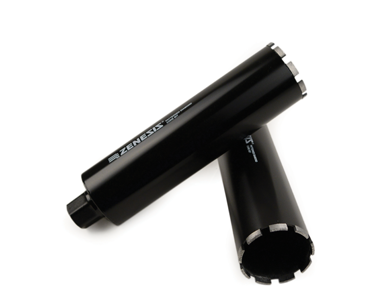
Zenesis™ Turbo Wet Core Bit

Engineered with patterned diamond positioning for reinforced structural concrete with high percentage steel rebar. Delivers exceptional penetration speeds and eliminates diamond shadowing.

Bore Range: 1" to 16" OD
Arbor Thread: 1-1/4"-7 Standard
Bond Class: Soft-Medium Cobalt Matrix
Request Specs & Pricing
Professional Wet Concrete Diamond Core Drill Bit
Contractor Fleet Grade

Pro-Series Standard Wet Core Bit

The workhorse of commercial core drilling operations. Features serrated rooftop segments for rapid initial bite, balancing long lifespan and consistent drilling speeds across cured concrete.

Bore Range: 1-1/2" to 14" OD
Arbor Thread: 1-1/4"-7 Thread
Bond Class: Universal Multi-Aggregate
Request Specs & Pricing
Laser Welded Dry Diamond Core Drill Bit
Dry Coring Division

Dry-Cut Laser Welded Core Bit

100% laser-welded segment retention prevents thermal detachment when running dry on brick, block, soft stone, and light concrete. Features spiral barrel fluting for rapid dust extraction.

Bore Range: 1" to 6" OD
Arbor Thread: 5/8"-11 Handheld / Chuck
Bond Class: Heat-Dissipating Tungsten Matrix
Request Specs & Pricing
Abrasive Material Diamond Core Drill Bit
High-Abrasion Grade

Green Concrete & Asphalt Core Bit

Specifically engineered with carbide undercut protection segments to shield the core tube weld from extreme slurry abrasion encountered in soft sandstones, green concrete, and asphalt coring.

Bore Range: 2" to 12" OD
Arbor Thread: 1-1/4"-7 Heavy Duty
Bond Class: Hard Wear-Resistant Matrix
Request Specs & Pricing
Send an Inquiry for Custom Core Bit Orders
Engineering Specifications

Diamond Core Bit Selection Matrix & Operational Metrics

A definitive technical reference for field operators and procurement teams to align machine power, RPM, aggregate hardness, and core bit bond chemistry.

Substrate & Aggregate Profile Recommended Segment Bond Optimal RPM (2" - 6" Dia) Cooling Mode Failure Mode if Mismatched
High-PSI Concrete with Hard Aggregate
Flint, chert, granite, quartz river gravel (>6,000 PSI)
Soft Matrix Bond
Cobalt/bronze matrix designed to erode rapidly to expose fresh diamonds.
800 - 1,400 RPM Continuous Wet Slurry Flush Glazing & Polishing: Diamonds flatten, bit stops penetrating and overheats.
Standard Cured Structural Concrete
Crushed limestone, dolomite, rebar mesh (3,000 - 5,000 PSI)
Medium-Universal Bond
Balanced nickel-iron-cobalt matrix for general contracting.
600 - 1,100 RPM Wet Flushing Preferred Premature segment wear or erratic penetration speed swings.
Highly Abrasive Concrete & Masonry
Green concrete, cinder block, asphalt, sandstone
Hard Matrix Bond
Tungsten-carbide enriched matrix to withstand heavy abrasion.
900 - 1,600 RPM Wet or Dry with Dust Vacuum Rapid Strip Wear: Segment matrix washes away prematurely, causing barrel burn.
Reinforced Heavy Steel & Rebar Piercing
Solid plate steel, embedded heavy rebar cages (#6-#10 bars)
Ultra-Soft Zenesis™ Pattern Bond
Low-melting-point binder with micro-structured diamond grits.
450 - 800 RPM (Slow down on steel) High-Volume Wet Cooling Segment Delamination: Thermal shock breaks segment weld from barrel shock.
Engineering Golden Rule: The harder the concrete aggregate, the softer the segment bond must be. The softer and more abrasive the substrate, the harder the bond required. For customized core bit configurations, contact Diamond Vantage engineers directly.
Metallurgical Advancement

The Engineering Evolution of Diamond Coring Tools

Over the past two decades, the industrial construction landscape has undergone seismic shifts. Modern pre-stressed structural concrete incorporates compressive strengths surpassing 10,000 PSI, dense reinforcing steel rebar matrices, and fiber-reinforced additives. Standard diamond core drill bits manufactured with generic powdered metallurgy quickly glaze, overheat, or delaminate under these extreme friction regimes.

1. Cobalt-Free Eco Matrix Sintering: Environmental compliance and geopolitical restrictions surrounding cobalt powders have propelled Diamond Vantage to innovate specialized iron-nickel-copper alloy matrices that match or exceed conventional cobalt bond toughness while reducing environmental footprint.

2. Vacuum-Brazed Side Protection: Modern core drilling barrels now integrate vacuum-brazed diamond strips on the exterior and interior tube walls. This innovation eliminates core sticking, mitigates barrel pinching in deep slab pours (over 18" depth), and preserves barrel wall thickness throughout the segment life cycle.

3. Advanced Laser Welding Technology: Automated Nd:YAG laser-welding processes achieve weld penetrations that metallurgically unite the segment backing to the cold-drawn steel tube. This prevents segment shear failures even when colliding with off-axis rebar.

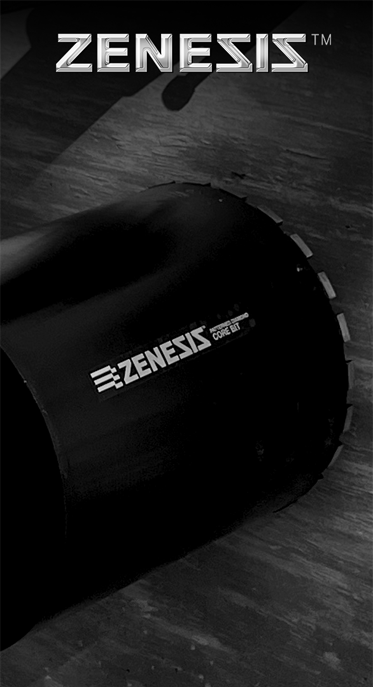
Diamond Vantage Technical Team at World of Concrete
Diamond Vantage engineering specialists demonstrating core drilling performance at World of Concrete.
100% Direct Manufacturer
Signature Platforms

Proprietary Technology Platforms

Explore how our proprietary diamond positioning architectures and metallurgy set global benchmarks for drilling speed, life, and operator comfort.

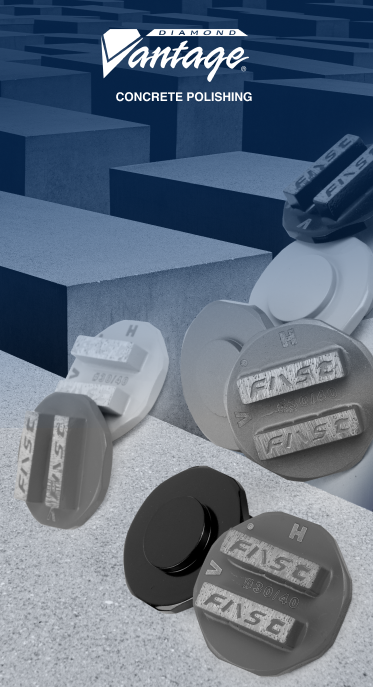
Zenesis Core Bit Technology

Zenesis™ Core Drilling

Our flagship patterned diamond core bits. Engineered to slice dense quartz concrete and heavy rebar up to 70% faster than conventional random-distribution segments.

Inquire About Zenesis™ Core Bits
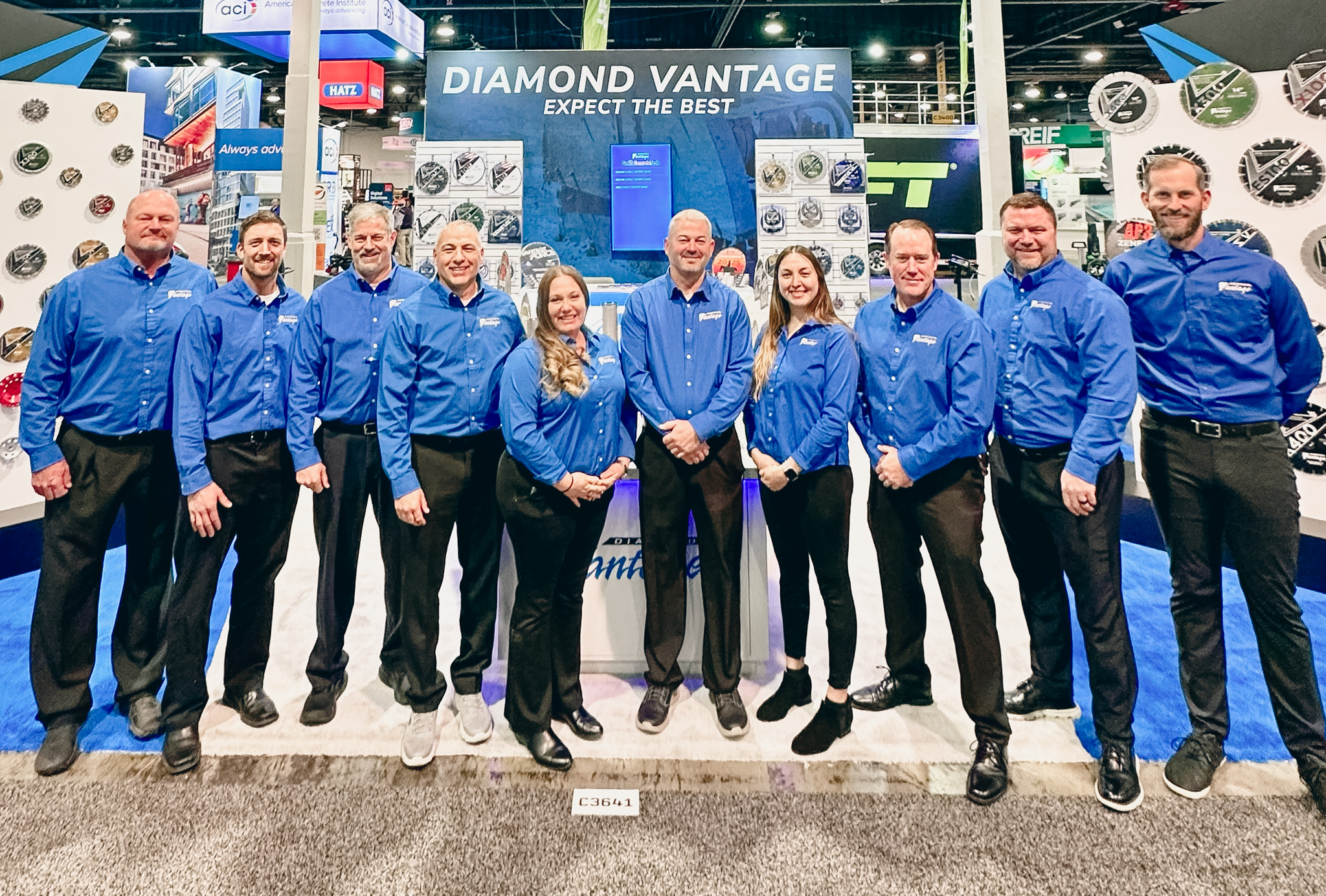
DiamondX Multi Material Solutions

DiamondX® Metal Piercing

Vacuum-brazed metallurgical technology optimized for cutting through encased steel liners, cast iron water mains, and heavy structural embeds with zero shatter hazard.

Inquire About DiamondX® Series
High Performance Diamond Tooling Range

Custom OEM Tooling

Private label diamond core drill bits manufactured to distributor specifications. Custom barrel lengths (14", 18", 24", or custom metric), laser-etched branding, and tailored segment chemistries.

Inquire About OEM Production
Enterprise Advantages

Why Partner With Diamond Vantage

Unlike equipment resellers, we manufacture 100% of our diamond tools. That direct metallurgical ownership translates to superior field reliability and unmatched distributor profitability.

01

Truth in Engineering

  • In-house product engineers specialized in concrete aggregates
  • 100% direct metallurgical sintering and laser welding
  • Dedicated bond development tailored to regional aggregate hardness
  • Elimination of third-party quality variability and barrel runout
02

Truth in Marketing

  • Transparent grade, bond, and diamond concentration specifications
  • No artificial marketing gimmicks or exaggerated footage claims
  • Comprehensive distributor staff training and field support manuals
  • Clear RPM, water flow, and feed-pressure operating charts
03

Truth in Solutions

  • Massive inventory depth in Irvine, CA and Covington, GA hubs
  • Turnaround times engineered to eliminate jobsite contractor downtime
  • Turnkey private label, custom laser engraving, and retail packaging
  • Tailored rebate, stock replenishment, and volume incentive programs
04

Truth in Value

  • Direct factory tier pricing without distributor or broker markups
  • Lowest documented total cost-per-inch coring metrics
  • High segment longevity reduces diamond core bit change frequency
  • Maximized return on investment for rental fleet coring equipment
Send an Inquiry to Partner With Us
Technical FAQ

Frequently Asked Questions by Global Buyers

Authoritative answers curated by our senior tooling metallurgists to resolve critical questions asked by procurement teams and concrete cutting operators.

Send an Inquiry
What factors dictate the matrix hardness when selecting diamond core drill bits for reinforced concrete?

Selecting diamond core drill bits follows the scientific principle of inverse hardness. When coring high-PSI concrete containing dense, non-abrasive aggregates such as quartz, flint, chert, or river gravel, a soft matrix bond (rich in cobalt and bronze powders) must be utilized. A soft bond allows the matrix to erode at a controlled rate, continually shedding polished, blunt synthetic diamonds to expose razor-sharp cutting facets. Conversely, soft, highly abrasive aggregates (such as sandstone, cinder block, or green concrete) necessitate a hard bond (reinforced with tungsten carbide and nickel) to resist excessive scouring and prevent segments from eroding prematurely before the diamonds have performed work.

Why are laser-welded core bit segments preferred over silver brazing for dry coring operations?

Traditional wet diamond core drill bits utilize silver brazing alloys to fuse segments to the steel barrel, a thermal process that activates between 650°C and 750°C. In dry drilling operations where water cooling is absent, friction temperatures quickly exceed 700°C. Under these conditions, silver solder re-melts, leading to catastrophic segment detachment, severe machine damage, and fatal projectile hazards. Automated laser welding creates a complete metallurgical fusion between the diamond segment backing and the steel core tube. Laser welds withstand operating temperatures in excess of 1,000°C, providing structural integrity, operator safety, and compliance with rigorous international safety codes.

How does rotational RPM and bit peripheral speed (SFPM) influence diamond drill bit lifespan?

Diamond core drill bits rely on linear surface velocity, measured in Surface Feet Per Minute (SFPM) or meters per second (m/s). The optimal operating window for concrete coring is between 1,500 and 3,000 SFPM (8 to 15 m/s). Because SFPM is directly proportional to barrel diameter and RPM (SFPM = RPM × Diameter × 0.262), smaller bits (e.g., 2 inches) require speeds between 1,400 to 2,000 RPM to grind effectively. Conversely, large core bits (e.g., 10 to 14 inches) must run between 150 and 350 RPM. Operating a large bit at high RPM generates destructive harmonic vibrations, segment glazing, and thermal barrel warping, while running a small bit too slowly drastically reduces penetration rate and induces diamond impact micro-fracturing.

What is the economic advantage of buying diamond core drill bits directly from an authentic manufacturer?

Procuring directly from Diamond Vantage removes the 20% to 35% margin markups added by brokers, tool re-branders, and multi-tier distributors. More importantly, direct manufacturer engagement provides direct access to metallurgical engineers who formulate matrix bonds matched precisely to your region's specific aggregate geology. Furthermore, direct manufacturing guarantees strict quality consistency across batches (monitored diamond crystal sizing, uniform sintering pressure), immediate availability of custom lengths, private label branding, and rapid order fulfillment from our Irvine, CA and Covington, GA domestic distribution hubs.

How do pattern-arranged diamond segments (like Zenesis™ technology) improve coring performance?

In standard sintered core bits, synthetic diamonds are dispersed randomly throughout the powder matrix. This inevitably results in diamond clustering (which causes friction without cutting) and dead zones (bare metal contact causing glazing). Patterned Diamond Technology mechanically arranges individual diamond crystals into an exact, equidistant 3D matrix. Each diamond engages the concrete and rebar at uniform cutting depths and mechanical loads. This engineered geometry ensures synchronized diamond wear, improves penetration rates by 30% to 50%, virtually eliminates bit chatter through structural steel, and extends total footage life by up to 60% compared to standard core bits.

What are the common thread configurations for commercial diamond core drill bits?

In North America, standard commercial core drill rigs (Hilti, Husqvarna, Shibuya, Diamond Products) utilize a 1-1/4"-7 female UNC thread for core bits measuring 1-1/2 inches in diameter and above. For small diameter bits (typically under 1-1/2 inches), the standard connection is a 5/8"-11 thread common on handheld drill motors and rotary hammer adapters. In European and international markets, 1/2" BSP male threads or rapid quick-release chuck systems (such as BI, BL, or DD-C connections) are frequently specified. Diamond Vantage manufactures and stocks all standard international thread patterns and adapters to ensure seamless rig compatibility.

Direct Factory Sourcing

Optimize Your Diamond Core Bit Procurement Today

Contact Diamond Vantage application engineers to review your regional aggregate challenges, test custom sample bits, or initiate wholesale private label manufacturing.

Send an Inquiry

Customer Service

Toll-Free866-322-4078
Fax949-428-2120

West Region | Main Office

2025 Alton Pkwy
Irvine, CA 92606
United States

East Region

14138 Lake Forest Ct. Suite 400
Covington, GA 30014
United States