
0%

Choosing the right Stone Cutting Diamond Blades requires more than comparing segment prices. Global buyers must evaluate cutting speed, blade life, kerf width, safety, and material compatibility. Granite, marble, engineered quartz, porcelain, and concrete each demand different diamond concentrations and bond formulas. A blade that performs beautifully on granite may struggle on dense porcelain. That distinction is easy to overlook.

Industry data supports careful specification. The U.S. Geological Survey’s Mineral Commodity Summaries tracks continuing demand for dimension stone and related mineral products across construction and architectural applications. Reports from Grand View Research and MarketsandMarkets also identify diamond tools as a growing industrial segment, driven by infrastructure, renovation, and precision processing. However, their market boundaries and forecasting methods differ. The numbers are useful, but not absolute.

Real workshop experience matters. A professional buyer should compare meters cut, cooling requirements, machine RPM, noise, chipping, and total cost per square meter. Wet-cutting tests often reveal differences hidden by product labels. Segment height alone does not guarantee longer service life. Neither does a premium price.

Small details matter.

This guide examines leading Stone Cutting Diamond Blades for international buyers. It considers material type, blade construction, cutting method, certification practices, supplier consistency, and after-sales support. The ranking cannot fit every factory or jobsite. It should be treated as a practical comparison, not a universal verdict. Procurement teams should verify samples, technical sheets, and local machine compatibility before placing large orders.
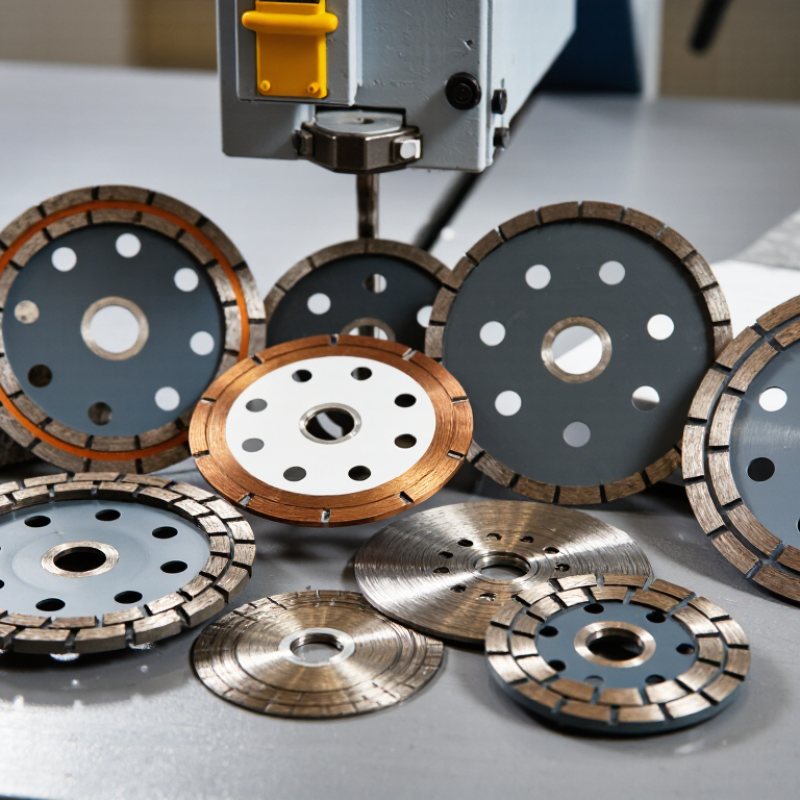
Top Stone Cutting Diamond Blades for Global Buyers?

What Are Stone Cutting Diamond Blades?

Stone cutting diamond blades are circular tools designed to shape dense mineral materials through controlled abrasion. They combine a hardened steel core with diamond-bearing segments, which are bonded around the cutting edge. The diamonds are not decorative. They grind through granite, marble, concrete, porcelain, and engineered stone. As the segment wears, fresh diamond particles become exposed. This process creates a controlled cutting path. The blade cuts stone; it does not slice it like a kitchen knife.

In practical cutting, performance depends on the segment bond, diamond concentration, rim design, and machine speed. A softer bond can release worn diamonds faster during abrasive work. A harder bond may last longer in softer materials. The choice is material-specific. Granite often needs a durable segment, while marble may require smoother cutting to reduce edge damage. Porcelain and engineered stone can punish a poorly matched blade with chipping or glazing. Wet cutting helps control dust and heat. Dry cutting requires airflow and regular pauses. Neither method is automatically better.

Experienced operators inspect the core, segment height, and visible damage before work begins. They also confirm arbor size, rotation direction, and the saw’s rated speed. Small details matter. A blade may fit the machine but still be wrong for the stone. I have seen buyers focus on low price, then lose time through slow cutting and edge repairs. That choice is understandable, but it deserves a second look. Reliable purchasing should compare test cuts, cooling needs, expected life, and finish quality, not advertising claims alone.

Top Stone Cutting Diamond Blades for Global Buyers

Stone cutting diamond blades are circular tools with diamond segments or a continuous diamond rim. They cut hard materials such as granite, marble, engineered stone, concrete, and masonry. The required blade size depends on the machine, material, and desired cutting depth.

The chart shows common blade diameters and their typical maximum cutting depths. Actual performance varies with blade construction, machine clearance, material hardness, cutting method, and operating conditions.

How to Compare Blade Types for Different Stones

Top Stone Cutting Diamond Blades for Global Buyers

How to Compare Blade Types for Different Stones

Choosing a diamond blade starts with the stone, not the machine. Granite needs a strong segmented blade because its crystals create heavy cutting resistance. Marble usually cuts better with a continuous rim blade and steady water flow. The edge stays cleaner. Porcelain and sintered slabs need a fine, stable rim to reduce chipping. Concrete often requires a segmented blade with wide gullets for dust and debris removal. I have found that blade speed must match the material’s hardness. Faster is not always better.

Wet cutting controls heat and usually extends blade life. Dry cutting is convenient, but it demands short passes and regular cooling pauses. Turbo blades can balance speed and edge quality on several masonry materials. However, they may still chip polished stone.

Check the blade diameter, arbor size, and recommended cutting speed before ordering. A mismatch can cause vibration or uneven wear. Small details matter. Buyers should also compare diamond concentration and bond hardness. A softer bond may expose fresh diamonds sooner on hard stone. A harder bond can last longer on softer, abrasive materials. This rule is useful, but not perfect. Local stone composition varies, even within one quarry. Test cuts on an unused corner can reveal more than a catalog chart. Expect some adjustment.

Which Blade Features Affect Cutting Performance?

Top Stone Cutting Diamond Blades for Global Buyers?

Which Blade Features Affect Cutting Performance?

Stone cutting performance depends on more than diamond concentration. The bond hardness must match the material. A soft bond releases worn diamonds quickly in hard granite. A harder bond can last longer in softer limestone. That sounds simple, but real stone varies within one slab. Veins, quartz pockets, and hidden fractures can change cutting behavior.

Segment geometry also matters. Narrow segments reduce kerf waste and may cut faster. Wider segments often provide better stability during heavy work. Segment height affects service life, while diamond size influences surface finish. Smaller diamonds can produce smoother edges. Larger diamonds may remove material more aggressively. In field testing, I watch the cut wall, not only the cutting speed.

The steel core needs accurate tension and sufficient stiffness. A poorly aligned blade can wander, vibrate, or leave uneven edges. Arbor fit is equally important because small mounting errors create visible runout. Cooling must reach the cutting zone continuously. Water carries away heat and stone dust, but excessive pressure can disturb the cut. Recommended RPM is useful, yet it is not absolute. Machine condition, stone density, and operator feed pressure also matter. I have seen a technically suitable blade perform poorly because the feed rate was too ambitious. That mistake is easy to repeat.

Top Stone Cutting Diamond Blades for Global Buyers? - Which Blade Features Affect Cutting Performance?

Blade Feature Typical Selection Range or Specification Effect on Cutting Performance Best-Suited Stone or Application Key Buyer Consideration Performance Priority
Diamond Grit Size Coarse grit: approximately 16–30 mesh
Medium grit: approximately 30–60 mesh
Fine grit: approximately 60–120 mesh
Coarser diamonds generally increase material removal and cutting speed. Finer diamonds usually produce smoother cuts and reduce edge chipping. Coarse grit for fast slab or block cutting; medium grit for general-purpose work; fine grit for delicate materials and improved edge quality. Choose grit according to the required balance between speed, surface finish, and edge quality. High
Diamond Concentration Common sintered-segment designs use approximately 15%–30% diamond by volume, depending on the tool design and application. Higher concentration can improve tool life and maintain cutting action, but may increase cutting resistance if the bond and machine power are not properly matched. Higher concentration for abrasive stone, long production runs, and demanding cutting conditions. Concentration should be evaluated together with diamond quality, grit size, bond hardness, and coolant flow. High
Metal Bond Hardness Soft, medium, or hard bond formulations; the exact hardness is normally specified by the tool manufacturer for a material group. Soft bonds release worn diamonds more easily and expose new cutting edges. Hard bonds retain diamonds longer and can improve life on abrasive materials. Soft bond for hard, dense stone such as granite or engineered stone; harder bond for highly abrasive materials such as sandstone or some concrete-based products. A bond that is too hard may glaze; a bond that is too soft may wear rapidly and reduce cost efficiency. Very High
Segment Height Common continuous or segmented rim heights are approximately 7–15 mm; heavy-duty designs may use taller segments. Taller segments generally provide more usable diamond material and longer potential tool life, although they may require greater power and more effective cooling. Higher segment heights for production cutting and frequent use; lower heights for lighter-duty or cost-sensitive applications. Confirm that segment height is compatible with the machine, cutting depth, and required tool life. Medium–High
Segment Width and Kerf Typical stone-cutting kerfs range from approximately 2.5–5.0 mm, depending on blade diameter, segment design, and cutting equipment. Narrower kerfs reduce material waste and may lower cutting resistance. Wider kerfs can improve stability and heat dissipation but remove more material. Narrow kerf for high-value slabs and reduced waste; wider kerf for heavy-duty stability and rough cutting. Balance material yield, blade stiffness, machine power, and the risk of lateral deflection. High
Blade Core Thickness Often approximately 1.5–4.0 mm for medium and large stone-cutting blades, with thicker cores used for larger diameters or heavy-duty work. Thicker cores improve rigidity and resistance to deflection. Thinner cores reduce kerf loss but require accurate machine alignment and stable operating conditions. Thicker cores for large-diameter blades, deep cuts, and demanding production environments; thinner cores for material savings. Core thickness must match the blade diameter, arbor system, machine stiffness, and cutting load. High
Blade Diameter and Recommended Speed Common diameters include approximately 105–230 mm for handheld or small saws and 250–600 mm or more for masonry and bridge-saw equipment. Operating speed must follow the tool specification. Correct peripheral speed supports efficient diamond exposure and controls heat. Excessive speed can increase heat and vibration; insufficient speed can reduce productivity. Diameter and speed should be selected according to the saw type, material, cutting depth, and manufacturer’s safety rating. Use the rated maximum RPM printed on the blade and ensure the machine does not exceed it. Very High
Segment Pattern Common designs include continuous rim, segmented rim, turbo rim, and narrow-slot or silent-core configurations. Continuous rims improve edge quality. Segmented rims support cooling and fast debris removal. Turbo patterns can improve cutting smoothness and speed in selected applications. Continuous rim for porcelain, ceramic, and finish-sensitive stone; segmented rim for granite, masonry, and general stone cutting. Pattern selection should reflect whether the priority is finish quality, speed, cooling, or chip removal. High
Wet or Dry Cutting Capability Wet-cutting blades require a continuous water supply. Dry-cutting blades use air movement and intermittent operation to control heat. Water reduces temperature, suppresses dust, and flushes abrasive particles from the cut. Dry cutting is more portable but typically creates more dust and heat. Wet cutting for stationary saws, deep cuts, granite, and production work; dry cutting for portable tools and short, shallow cuts where permitted. Verify that the blade is specifically rated for wet or dry use; do not assume the two modes are interchangeable. Very High
Cooling and Water Flow For wet cutting, water should reach both sides of the cutting zone. The required flow depends on blade diameter, machine design, and cutting load. Effective cooling limits thermal damage, reduces bond softening, and helps prevent segment loss or core distortion. Especially important for granite, engineered stone, thick slabs, and continuous production cutting. Insufficient water flow is a common cause of overheating, glazing, premature wear, and poor cut quality. Very High
Stone Hardness and Abrasiveness Material behavior varies widely: dense granite may be hard and relatively less abrasive, while sandstone and some concrete products can be highly abrasive. Hardness influences diamond wear and bond selection; abrasiveness controls how quickly the bond wears and exposes new diamonds. Match the bond and diamond specification to the actual stone type rather than relying only on color or product name. Test cutting is recommended when the material composition, quartz content, resin content, or aggregate type is uncertain. Very High
Machine Stability and Alignment The arbor, flange, spindle, guide system, and workholding should be clean, secure, and correctly aligned. Stable alignment reduces vibration, uneven segment wear, wandering cuts, and edge chipping. Critical for large-diameter blades, deep cutting, thin slabs, and precision fabrication. A high-quality blade cannot compensate for a bent spindle, worn bearings, loose flanges, or poorly supported material. Very High
Cutting Feed Rate Feed rate is application-specific and should be adjusted according to blade diameter, material thickness, machine power, and cutting resistance. Excessive feed can overload the blade and cause deflection or segment damage. Very slow feed can cause glazing, heat buildup, and inefficient production. Use a controlled, consistent feed for both slab processing and portable cutting. Adjust feed when the blade sounds overloaded, the motor slows, vibration increases, or the cut begins to wander. Very High
Noise and Vibration Control Silent-core or reinforced-core constructions may reduce operating noise and vibration compared with standard steel cores. Lower vibration can improve cut accuracy, edge quality, operator comfort, and segment life. Useful for indoor fabrication, precision cutting, thin slabs, and environments with strict noise requirements. Noise-reduction features do not replace correct mounting, balanced equipment, and proper operating parameters. Medium–High
Arbor Hole and Mounting Accuracy The arbor diameter, drive pin arrangement, flange size, and blade direction must match the machine and blade specification. Correct mounting prevents eccentric rotation, vibration, uneven wear, and potential safety hazards. Important for all blade types, especially high-speed portable tools and large-diameter saws. Check arbor compatibility and flange condition before purchase; never enlarge the arbor hole manually. Very High
Safety and Compliance Markings Look for clearly stated maximum RPM, cutting direction, wet or dry rating, compatible materials, and applicable regional safety information. Clear specifications help prevent operation outside the blade’s design limits and support consistent performance. Essential for international procurement, distributor programs, and multi-machine operations. Request technical drawings, operating instructions, and documented test information when purchasing for commercial use. Very High

Note: The ranges shown are typical industry selection guidelines rather than universal specifications. Actual performance depends on stone composition, blade diameter, machine power, operating speed, feed rate, cooling, alignment, and the specific blade construction.

How to Choose the Right Blade for Global Projects

Choosing a stone-cutting diamond blade begins with the project, not the product label. Identify granite, marble, engineered stone, concrete, or sandstone. Hardness, aggregate, thickness, and reinforcement affect cutting behavior. The U.S. Geological Survey reported about 1.5 billion metric tons of crushed stone produced in the United States during 2023. That scale reflects the wide variation found in construction materials. A blade suited to dense granite may glaze on softer limestone. The mistake is costly.

Match the diamond bond and segment design to the stone’s abrasiveness. Use a softer bond for hard stone and a harder bond for abrasive material. Confirm diameter, arbor size, kerf, and maximum RPM against the saw manual. For wet cutting, check water flow and drainage. For dry cutting, schedule pauses and dust controls. OSHA’s respirable crystalline silica standard sets an eight-hour exposure limit of 50 micrograms per cubic meter. Dust control is a selection requirement. Not an optional detail.

Request test cuts using the actual slab or block. Record cutting speed, edge chipping, noise, heat, and segment wear. ISO 9001-style inspection records can improve consistency across international crews, although paperwork cannot fix a poor blade match. I would not trust a catalog claim without field evidence. A slightly slower blade may deliver cleaner edges and lower replacement costs. Review the result with the installer before ordering in volume.

How to Use, Maintain, and Replace Diamond Blades Safely

Top Stone Cutting Diamond Blades for Global Buyers

Safe blade use begins before cutting. Confirm the blade matches the stone, saw type, arbor, and machine speed. The maximum blade RPM must exceed the saw’s operating speed. Check the blade for cracks, bent cores, missing segments, or uneven wear. Never use a damaged blade, even for a short cut. Secure the stone firmly, fit the guard correctly, and disconnect power before adjustments.

Water suppression is strongly preferred for stone cutting. It reduces airborne dust and cools the cutting rim. OSHA’s Respirable Crystalline Silica Standard sets an exposure limit of 50 micrograms per cubic meter over eight hours, with a 25-microgram action level. NIOSH also identifies respirable crystalline silica as a serious occupational hazard.

Clean water lines, inspect hoses, and stop if the blade overheats. For dry cutting, use approved dust extraction and suitable respiratory protection. A small mistake can become expensive.

Tips:

Let the blade cut at its own pace. Do not force it. Wipe the blade after use and remove stone slurry from the guard, flanges, and arbor. Store it flat in a dry, protected area.

Replace the blade when segments become too short, the core shows distortion, or cutting becomes unusually slow. Record the material, cutting time, and wear pattern. This simple log helps compare suppliers, although the results may not be perfectly consistent across different stones.

Check OSHA’s silica standard and NIOSH’s silica criteria document for current workplace controls.

FAQS

Which blade features most affect stone cutting performance?

Bond hardness, segment geometry, diamond size, steel stiffness, and cooling all matter.

How should bond hardness match the stone?

Use a softer bond for hard granite, because it releases worn diamonds faster.

What do segment width and height change?

Narrow segments reduce kerf waste and may cut faster.

How does diamond size affect the cut?

Smaller diamonds often create smoother edges.

Why are the steel core and arbor fit important?

A stiff, accurately tensioned core helps prevent vibration and wandering.

How important are RPM, feed pressure, and cooling?

Recommended RPM is a starting point, not an absolute rule.

What should buyers confirm before ordering a blade?

Confirm stone type, diameter, arbor size, kerf, and maximum RPM.

Should buyers request test cuts before placing a large order?

Yes, test the actual slab or block whenever possible.

What is an easy mistake during blade selection?

Choosing a blade only by label or advertised speed is risky.

Conclusion

Stone Cutting Diamond Blades are precision tools designed to cut materials such as granite, marble, concrete, porcelain, and other natural or engineered stones. This guide explains how blade types differ by stone hardness, thickness, cutting method, and project requirements. It also examines important features, including diamond segment quality, blade structure, cooling performance, cutting speed, noise, and resistance to wear, helping global buyers compare options more effectively.

For international projects, selecting the right blade requires considering equipment compatibility, jobsite conditions, cutting volume, safety requirements, and transportation or storage needs. The guide also presents practical advice for safe operation, including proper installation, water or dust control, correct cutting pressure, routine inspection, and timely replacement. By matching blade design with material and working conditions, buyers can improve cutting accuracy, extend service life, reduce waste, and support more consistent project results.

Ethan

Ethan

Ethan is a professional marketing specialist dedicated to helping businesses understand practical solutions and make confident decisions in a changing marketplace. With extensive knowledge of the company’s products, services, and customer needs, he combines industry insight with clear, engaging......