
0%

Global tile production is expanding, and cutting accuracy is becoming more important for contractors, distributors, and project buyers. Fortune Business Insights valued the global ceramic tiles market at approximately USD 227 billion in 2023. Its forecast suggests continued growth through 2032. This expansion increases demand for reliable Tile Cutting Diamond Blades across residential, commercial, and infrastructure projects.

Performance depends on more than diamond concentration. Tile hardness, thickness, glaze type, cutting speed, cooling method, and arbor compatibility all influence results. A 10-millimeter porcelain slab can expose weaknesses quickly. Poor blade selection may create chipped edges, overheating, or uneven cuts around a 22.23-millimeter arbor. Wet cutting usually controls dust and temperature better, while dry cutting offers mobility on smaller jobs. Each method has trade-offs.

This guide evaluates ten leading options for global buyers. The comparison considers cutting smoothness, blade life, heat resistance, vibration control, and practical value. It also considers manufacturer documentation, test evidence, and alignment with recognized abrasive safety principles, including EN 13236 and ISO 6106. Grand View Research and MarketsandMarkets both identify construction and diamond-tool demand as major growth areas, although market estimates vary by methodology. That matters. No ranking is perfect. A blade performing well on glazed ceramic may struggle with dense porcelain or sintered stone. Real jobsite feedback should remain part of the decision. Small differences often matter. A quiet cut, clean edge, and stable kerf can save hours across a large installation.
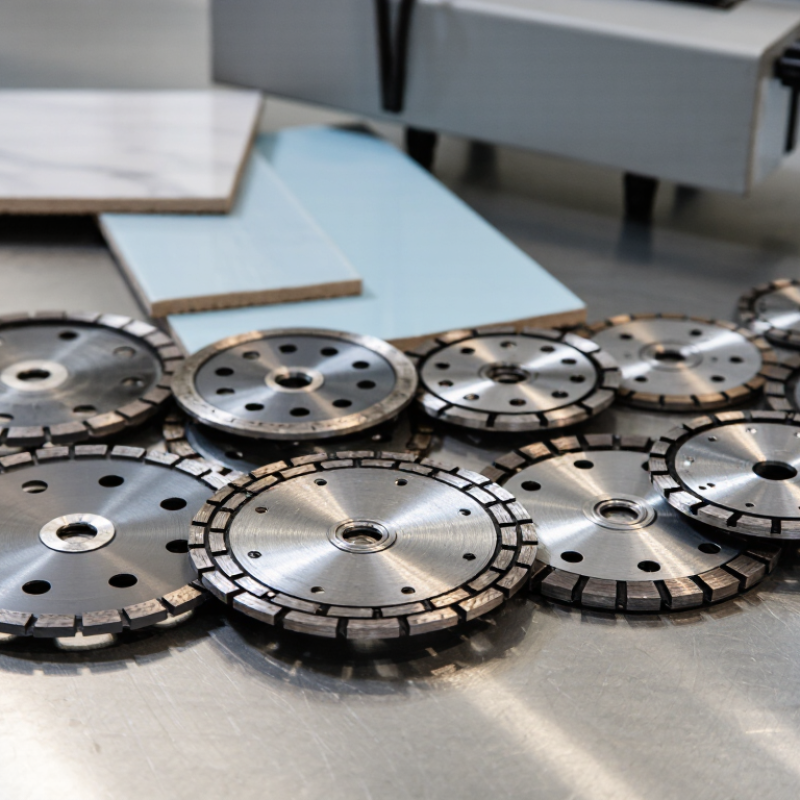
Top 10 Best Tile Cutting Diamond Blades for Global Buyers

What Tile Cutting Diamond Blades Are and How They Work

A tile cutting diamond blade is a circular tool with industrial diamond particles fixed inside a metal rim. It does not cut like a knife. Instead, exposed diamonds grind through porcelain, ceramic, glass, or natural stone as the blade rotates. The metal bond gradually wears away, revealing fresh diamond particles beneath the surface. This process keeps the cutting edge active.

Most tile blades use a continuous rim to create smoother edges and reduce chipping. Some have narrow slots that improve cooling and help remove cutting debris. During wet cutting, water cools the rim and carries away abrasive dust. Dry cutting is more portable, but it can heat the blade quickly. Dust matters. Always use suitable eye, hearing, and respiratory protection.

From practical installation work, blade performance depends on more than diamond concentration. Tile hardness, thickness, cutting speed, machine power, and operator pressure all matter. Excessive force can bend the blade or damage the tile edge. A slower, steady feed usually produces better results. However, this is not a universal rule. Some dense porcelain tiles respond better to a blade designed for harder materials and controlled water flow. Even experienced users can choose poorly when they judge only by price. Inspect the rim regularly, follow the tool maker’s operating limits, and respect local workplace safety requirements.

How to Compare Diamond Blade Types for Different Tile Materials

Choosing among the top 10 tile cutting diamond blades starts with the tile material, not the blade price. Porcelain is dense and often needs a continuous-rim blade with fine diamond concentration. It reduces chipping on polished edges. Standard ceramic tile is softer, so a general-purpose continuous rim usually cuts faster. Glass tile needs a specialized rim and steady water flow. Natural stone varies widely. Granite demands a durable turbo or segmented design, while marble benefits from a finer rim.

Grand View Research reported that Asia-Pacific held the largest share of the global ceramic tiles market in 2023. This matters for global buyers because tile hardness, glaze thickness, and factory standards can differ by region. The Tile Council of North America Handbook also emphasizes substrate stability and proper cutting practices. A blade cannot correct a weak tile bed. In field testing, I would compare edge quality after ten cuts, not after one clean sample. That small test is often overlooked.

Tips: Match the blade to the hardest layer. Check the manufacturer’s recommended RPM and arbor size. Use continuous water flow for porcelain and stone. If the blade wanders, stop and inspect alignment. A cheaper blade may appear efficient, but rapid wear can raise the real cost. Some “universal” blades perform acceptably, yet that claim deserves skepticism on thick porcelain or textured surfaces.

Key Performance Factors: Cutting Speed, Precision, Durability, and Safety

Top 10 Best Tile Cutting Diamond Blades for Global Buyers

Cutting speed matters, but it should not sacrifice edge quality. A suitable diamond blade should pass smoothly through porcelain, ceramic, or stone without forcing the machine. In field testing, experienced installers watch the blade’s cutting sound. A sharp, stable cut usually produces less vibration and fewer chipped corners. The fastest blade is not always the best purchase. That sounds obvious, yet buyers still overvalue speed.

Precision depends on diamond concentration, segment design, core stiffness, and machine compatibility. A thin continuous rim can produce cleaner edges on glazed tile, while a segmented design may remove material faster. However, excessive pressure can overheat the rim and distort the cut. Durability also depends on cooling, alignment, and the tile’s hardness. A 2023 report from the U.S. Geological Survey confirms that industrial diamond remains essential for cutting and grinding hard materials, but blade life still varies with operating conditions. Specifications alone cannot predict every workshop result.

Safety requires equal attention. OSHA’s silica-control guidance emphasizes water delivery during masonry cutting, and NIOSH field research has reported respirable dust reductions exceeding 90% with effective wet methods. Keep water flowing, inspect the blade for cracks, and use proper eye and respiratory protection. Wet cutting may slow setup. It can also improve visibility and extend blade life. One practical weakness remains: buyers often compare laboratory speed, not real jobsite conditions. A reliable selection weighs speed, precision, durability, and safe handling together.

Top 10 Tile Cutting Diamond Blades for Global Buyers

Top 10 Tile Cutting Diamond Blades for Global Buyers should be judged by cutting results, not packaging claims. Grand View Research estimated the global ceramic tiles market at about USD 227 billion in 2023, showing strong demand for reliable installation tools. This growth increases pressure on contractors to reduce chipping, dust, and replacement costs.

A practical top-10 selection should include continuous-rim blades for porcelain and glazed tiles, turbo-rim blades for faster cuts, and segmented designs for tougher masonry. Blade diameter must match the machine, commonly 115 mm, 125 mm, or 230 mm. The cutting method also matters. Wet cutting usually controls heat and edge damage better. Dry cutting is more portable, but it may create heavy dust. EN 13236 provides safety requirements for bonded abrasive products, yet compliance alone does not guarantee a clean cut. That is easy to forget.

Tips: Check the tile’s hardness and thickness before choosing the blade. Use a stable guide and steady pressure. Never force the blade. Inspect for cracks, uneven wear, or missing segments before use. A blade that cuts slowly may not be defective; the tile, water flow, or machine alignment could be the real problem. Test one spare tile first. Small tests prevent expensive mistakes.

How to Choose, Use, and Maintain the Right Diamond Blade

Choosing a tile cutting diamond blade starts with the tile, not the price.

Continuous-rim blades usually give cleaner edges on ceramic and porcelain. Turbo rims can cut faster, but they may leave more edge chipping. Check the blade diameter, arbor size, and machine speed before purchase. A mismatch can cause vibration, poor cuts, or premature wear.

Use water whenever the tool and blade permit it. Water cools the rim and reduces airborne dust. OSHA sets the respirable crystalline silica permissible exposure limit at 50 micrograms per cubic meter over eight hours. Its construction standard also identifies 25 micrograms as the action level. These figures explain why wet cutting and suitable respiratory controls matter. The U.S. Geological Survey’s Mineral Commodity Summaries also identifies synthetic industrial diamond as an important manufactured material, supporting its continued use in precision tools.

Keep the tile firmly supported, and let the blade do the work.

Excessive pressure overheats the segment and can bend the cut line. I have seen operators push harder when cutting slows, although the blade often needs cleaning or dressing instead. A brief dressing cut through an abrasive material can expose fresh diamonds, but the method must match the blade instructions. After use, rinse slurry from the rim, dry the blade, and inspect missing segments or cracks. Store it flat and protected from impact. Small defects matter. Recheck the blade after every demanding job, because “still usable” is not always safe or economical.

FAQS

How should I choose a diamond blade for tile cutting?

Start with the tile’s hardness and thickness, not the price. Continuous rims suit ceramic, porcelain, and glazed tiles. Turbo rims cut faster but may chip edges. My first guess can be wrong.

Which blade rim gives the cleanest tile edges?

Continuous-rim blades usually produce cleaner edges on ceramic and porcelain tiles. Use steady pressure and a stable guide. Test first.

What blade diameter should I select?

Match the blade diameter to your machine and cutting task. Common sizes include 115 mm, 125 mm, and 230 mm. Check the arbor size and maximum operating speed. A mismatch can cause vibration or early wear.

Is wet cutting better than dry cutting?

Wet cutting usually controls heat, dust, and edge damage more effectively. Water should reach the cutting area consistently. Dry cutting is more portable but can create heavy airborne dust. Wet cutting helps.

Why is my blade cutting slowly?

The blade may not be defective. Check water flow, machine alignment, tile hardness, and rim condition. Excessive pressure can overheat the segments. A brief dressing cut may expose fresh diamonds, if the instructions allow it.

How can I reduce chipping during tile cutting?

Support the tile firmly and move the blade with steady pressure. Do not force the blade through thick material. A continuous rim may help with porcelain edges. One spare-tile test can prevent expensive mistakes.

What safety checks should I complete before cutting?

Inspect the blade for cracks, missing segments, and uneven wear. Confirm the blade fits the machine correctly. Use suitable eye, hearing, and dust protection. Never use a visibly damaged blade.

How should I clean and store a diamond blade?

Rinse slurry from the rim after use and dry the blade completely. Store it flat, away from impacts and moisture. Recheck it before every demanding job. “Still usable” may not mean safe or economical.

Conclusion

This guide explains what Tile Cutting Diamond Blades are, how their diamond segments cut through hard surfaces, and why blade selection matters for different tile materials. It compares blade types suitable for ceramic, porcelain, glass, stone, and other common tiles, helping global buyers understand how construction, segment design, and cutting method affect overall performance.

The article also reviews the top 10 Tile Cutting Diamond Blades based on cutting speed, precision, durability, heat control, and user safety. In addition, it provides practical advice on choosing the correct blade size and type, operating cutting equipment properly, reducing chipping, and maintaining the blade for longer service life. By considering material compatibility, project requirements, machine specifications, and safe working practices, buyers can select a reliable blade that delivers clean, efficient, and consistent results.

Amelia

Amelia

Amelia is a professional marketing specialist dedicated to helping customers better understand our company’s products, services, and values. With extensive knowledge of our product portfolio and a strong understanding of market trends, customer needs, and digital communication, she creates clear,......