
Direct-from-factory diamond tooling engineered for extreme durability, low cost-per-square-meter grinding, and precise cut performance across concrete, granite, quartz, and synthetics.
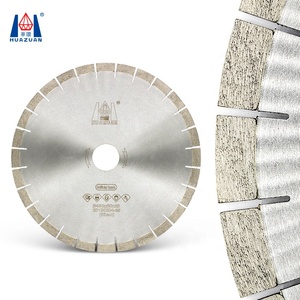
Engineered with sandwich-type silent core technology to minimize resonance, achieving ultra-clean chip-free cuts on hard quartz and engineered stone slabs.
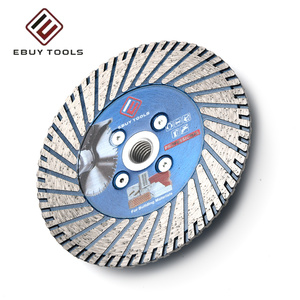
Continuous mesh turbo rim design provides accelerated cooling and fast, clean cutting through reinforced concrete, masonry brick, and natural stone.
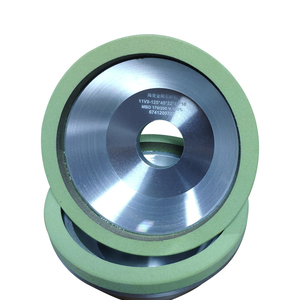
Precision-engineered resin and metal-matrix bond wheel crafted for delicate chamfering, deburring glass, fine ceramics, and non-ferrous aluminum alloys.
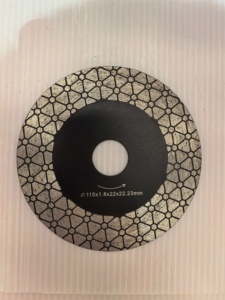
X-tooth mesh turbo rim minimizes frictional heat generation, drastically eliminating edge blowout and micro-cracking in sensitive ceramic and porcelain tiles.
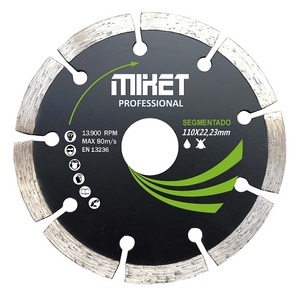
Heavy-duty laser welded diamond segments utilizing high-grade synthetic diamond grit for deep slotting and dry masonry cutting applications.
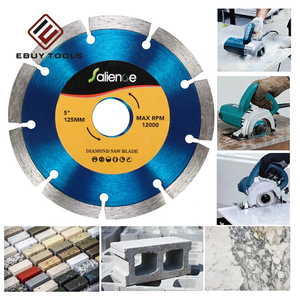
Multi-purpose diamond blade designed for angle grinders and circular saws, delivering fast cut speeds across cured concrete, block, and marble materials.
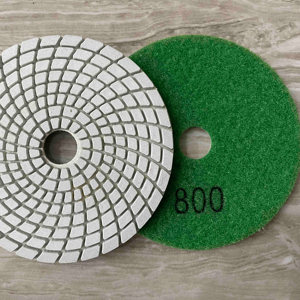
Resin-bonded flexible matrix designed for multi-stage stone edge profiling, granite countertop polishing, and concrete floor edge refining.
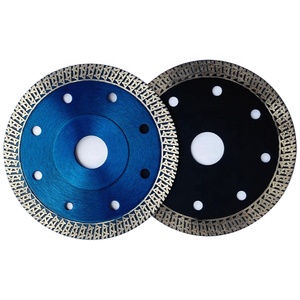
Hot-press sintered matrix structure ensures uniform diamond distribution, preventing thermal degradation during rapid dry-cutting of vitrified tiles.
In contrast to trading intermediaries that white-label off-the-shelf tools, our direct manufacturing infrastructure controls grit synthesis chemistry, matrix sintering dynamics, and segment tensioning under strict ISO9001 protocols.
We formulate soft, medium, and hard metal matrix bonds using controlled proportions of cobalt, nickel, bronze, and tungsten carbide. This guarantees uniform wear rates matched precisely to substrate abrasiveness.
Every diamond cup wheel undergoes high-speed electronic dynamic balance testing. Eliminating axial and radial runout prevents operator fatigue, reduces angle grinder gear chatter, and ensures flat surface prep.
Our automated laser welding stations fuse diamond segments directly to heavy-duty steel cores, achieving shear strength ratings exceeding 600 MPa. This eliminates segment flying risks during intense heavy-duty grinding.
Integrating Polycrystalline Diamond (PCD) tips alongside metal-bonded segments allows aggressive scraping of thick epoxy, polyurethane, elastic membranes, and carpet glues without gouging underlying concrete.
We provide global brand owners, industrial distributors, and rental fleets with custom arbor geometries, color-coded powder coatings, laser-etched branding, and customized retail packaging.
Supported by key stocking hubs in the U.S. (West Coast Irvine, CA & East Coast Covington, GA), we deliver fast-turnaround inventory replenishment for large-scale concrete floor prep and masonry projects.
When global B2B buyers and industrial tool distributors source diamond grinding tools, evaluating China Best Cup Wheels Manufacturers & Factories requires looking beyond initial unit purchase prices. The global surface preparation, floor grinding, and masonry restoration industries demand consistent material removal rates (MRR), total operating lifespan, and absolute safety compliance (e.g., EN13236 standards).
China's diamond tool manufacturing ecosystem has undergone a dramatic transformation over the past decade. The shift from manual hot-pressing to fully automated, atmospheric-controlled sintering furnaces and robotic laser welding lines has established Chinese factories as primary OEM partners for tier-one global tool brands. However, variance in quality exists across different regional manufacturing clusters. Understanding the engineering parameters that define a high-performance diamond cup wheel is essential for B2B procurement managers seeking to maximize ROI.
A diamond cup wheel functions as a self-sharpening abrasive cutting system. Synthetic diamonds—manufactured via High-Pressure High-Temperature (HPHT) synthesis—are embedded within a powdered metal matrix. As the wheel rotates against abrasive concrete, granite, or stone, the metal matrix wears away at a controlled rate, exposing fresh, sharp diamond crystal facets.
Selecting the correct diamond cup wheel requires applying the fundamental law of abrasive grinding: Match matrix bond hardness inversely to substrate abrasiveness.
| Target Substrate | Abrasiveness Index | Recommended Matrix Bond | Optimal Diamond Grit Size | Segment Configuration |
|---|---|---|---|---|
| Green Concrete (< 24 Hrs) | Very High | Extra-Hard Matrix (Cobalt/Tungsten) | 16 / 20 / 30 Grit | T-Segment / Arrow Segment |
| Cured Reinforced Concrete | Medium to High | Medium-Hard Matrix | 30 / 40 Grit | Double Row / Turbo Segment |
| Hard Granite & Engineered Quartz | Low (Hard/Glassy) | Soft Matrix (Bronze Alloy) | 50 / 60 / 80 Grit | Continuous Rim / Fine Mesh |
| Epoxy & Glue Removal | Gummy / Sticky | PCD Micro-Scraper Hybrid | Quarter-PCD + Bar Segment | PCD Chip Arrangement |
The geometric layout of diamond segments on a cup wheel body dictates airflow, debris evacuation, and grinding aggressiveness. Chinese OEM manufacturers produce specialized segment configurations tailored to specific field machinery:
The industry standard for general-purpose concrete leveling, flash removal, and surface smoothing. Dual concentric rows provide high surface area contact, delivering smooth finishes while maintaining predictable material removal on handheld angle grinders.
Designed with sharp leading edges, arrow segments slice into surface coatings and un-cured concrete with aggressive downward cutting force. The wide channels between arrow segments facilitate rapid dust evacuation when attached to vacuum shrouds.
Continuous spiral or turbo segments generate continuous air vortex turbulence during rotation. This design lowers operating temperatures by up to 25%, making turbo cup wheels optimal for dry-grinding natural stone, marble, and delicate masonry where heat cracking must be prevented.
Standard metal-bonded diamond segments fail when encountering soft, elastic coatings such as thick epoxy resins, elastomeric waterproofing membranes, mastic, and carpet adhesives. Heat generated during grinding melts the coating, causing standard diamond grit to glaze over and smear. PCD tooling solves this by using ultra-hard polycrystalline diamond scrapers that shear the coating off in flakes rather than grinding it into heat-softened sludge.
As regulatory compliance, jobsite safety standards, and labor cost pressures evolve globally, industrial procurement teams must align with emerging technology trends in diamond tool production:
Occupational safety mandates regarding respirable crystalline silica (such as OSHA Table 1 in North America and EU Directive 2017/2398) require all grinding activities to pair with HEPA dust extraction. Advanced cup wheel factories in China are utilizing Computational Fluid Dynamics (CFD) modeling to design segment air slots that funnel dust directly toward shroud exhaust ports.
High-frequency screeching from large-diameter saw blades and grinding discs presents acoustic hazards in indoor renovation projects. Modern manufacturers are embedding laser-cut vibration damping slots filled with copper wire or viscoelastic polymers, reducing noise output by up to 12 dB(A).
While traditional silver-brazed segments are susceptible to thermal failure when dry-grinding exceeds 300°C, automated fiber-laser welding melts the steel core and diamond segment together into a monolithic joint. Laser welding ensures zero segment detachment, meeting stringent international safety certifications such as EN13236 and oSa.
When selecting a manufacturing partner in China for private label diamond tools, sourcing executives should mandate the following internal Quality Assurance (QA) verification metrics:
Clear, direct answers regarding manufacturing processes, product selection, custom OEM ordering, and global supply chain logistics.
True diamond tool manufacturers control 100% of their powder metallurgy, segment sintering, laser welding, and dynamic balance inspection in-house. True factories provide complete lot-to-lot bond repeatability, custom matrix engineering for specific aggregates, direct technical support from product engineers, and OEM private-label pricing without intermediary markups.
Green concrete (cut within 1 to 4 hours of pouring) is extremely abrasive due to loose sand grains. It requires a hard metal bond matrix (to resist matrix wash) with aggressive 16/20 or 20/30 coarse diamond grit. Cured concrete is non-abrasive and hard, requiring a softer metal bond matrix that sheds worn diamonds smoothly to prevent wheel glazing.
Excessive vibration is caused by dynamic imbalance or uneven segment height wear (radial runout). Leading Chinese manufacturers utilize automated electronic dynamic balancing systems to balance every wheel to within 0.02mm tolerances before shipping, protecting machine gearboxes and preventing operator fatigue.
Yes. Full OEM/ODM factory customization includes custom arbor configurations (e.g., 5/8"-11 threaded hubs, 22.23mm, M14, magnetic floor plate mounts), custom powder-coating colors, high-resolution laser engraving of distributor branding/part numbers, and customized retail packaging.
Standard diamond cup wheels grind coatings, generating high friction heat that melts epoxy, glue, and mastic into a sticky mess that glazes the wheel. Polycrystalline Diamond (PCD) scrapers slice and lift the coating away in chips without melting, offering up to 10x faster removal speed on heavy coatings without loading up.