
Explore high-performance diamond blades and metal abrasive discs manufactured for demanding masonry, natural stone, ceramic, and structural metal fabrication.
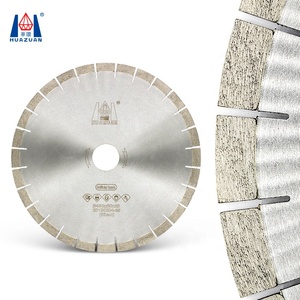
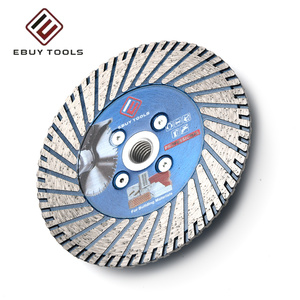
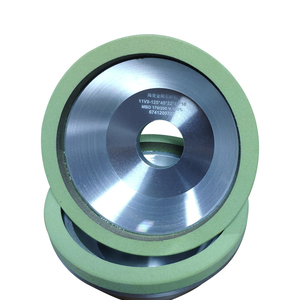
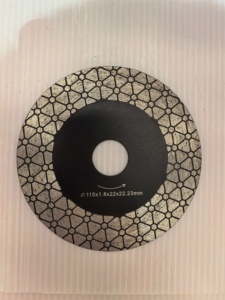
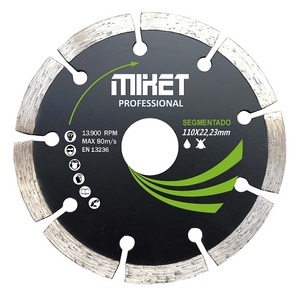
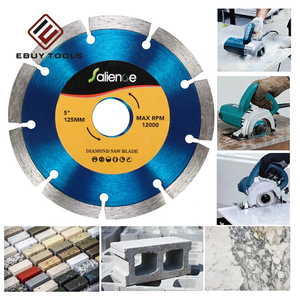
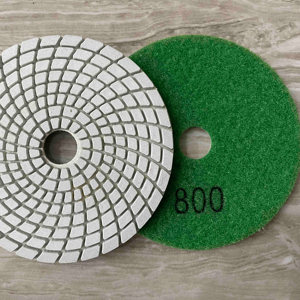
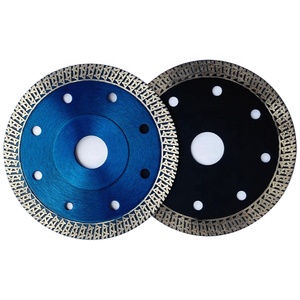
In modern industrial manufacturing and civil infrastructure construction, the demand for cutting, grinding, and surface preparation tools engineered to strict tolerance parameters has never been higher. Sourcing from top-tier metal discs manufacturers in China provides enterprise procurement officers, equipment OEMs, and industrial distributors with a major competitive advantage. However, evaluating suppliers requires a granular technical understanding of metallurgical matrix bonding, synthetic diamond powder synthesis, laser welding integrity, and dynamic core tensioning.
As a vertically integrated manufacturer operating since 2003, our facility controls 100% of the production spectrum—from synthetic diamond grit sorting and powder metallurgy blending to automated segment sintering, laser welding, and tension balancing. Unlike third-party trade resellers who purchase standard off-the-shelf stock, genuine manufacturers formulate custom metal bonds precisely matched to the specific compressive strength, aggregate hardness, and abrasive qualities of the targeted substrate.
Our manufacturing philosophy is anchored on "Truth in Engineering"—guaranteeing lot-to-lot repeatability, rigorous metallurgical verification, and direct engineering support for custom B2B applications.
We sinter and formulate metal bonds using precise ratios of Cobalt, Copper, Iron, Nickel, and Tungsten Carbide powders. This ensures that soft bonds break down at calculated intervals to expose fresh diamond edges when cutting hard non-abrasive granite, while hard matrix formulations resist premature wear when cutting highly abrasive green concrete or asphalt.
Our high-power automated laser welding lines create a chemical and mechanical bond between the segment and the high-tensile steel core that exceeds ISO 13236 safety standards. This eliminates segment detachment risks during high-horsepower, dry-cutting demolition or bridge-deck sawing operations.
Every steel core core undergoes dynamic balancing and roll-tensioning to eliminate runout, wobble, and thermal warping. For sound-sensitive urban residential environments, we incorporate multi-layer sandwich steel cores with copper foil dampening that reduces operational noise by up to 15 dB.
To eliminate global supply chain friction, we support comprehensive OEM co-branding programs, custom color epoxy coating, laser engraving, custom arbor geometries, and regional warehouse buffer stocking to ensure rapid order turnaround for high-volume distributors.
The global superabrasive and diamond tool sector is undergoing a massive technological shift driven by automation, material science innovations, and environmental safety regulations. Procurement teams must align with manufacturers investing in next-generation processing platforms:
Traditional segment production randomly disperses diamond grit throughout the metal matrix. Advanced 3D array technology (such as ZENESIS™ matrix architecture) places each synthetic diamond crystal in exact geometric grids. This guarantees uniform wear, maximizes cutting speed by up to 70%, and prevents uneven segment dishing.
Conventional resinoid bonded aluminum oxide grinding wheels wear down rapidly, generate hazardous odor/dust, and pose explosion risks. Advanced vacuum-brazed and electroplated diamond metal cutting discs (such as DiamondX® technology) maintain fixed cutting depth throughout their lifespan, lasting 30x to 50x longer on structural rebar, ductile iron, and stainless steel.
With strict OSHA silica dust standards enforcement globally, continuous mesh turbo rims engineered with ultra-thin kerfs (1.2mm - 1.4mm) reduce material displacement, minimize wattage draw on cordless power tools, and generate micro-particles easily captured by integrated shroud vacuum extractors.
B2B industrial buyers are shifting away from opportunistic spot-market buying toward long-term strategic supplier integration with Chinese direct manufacturers. Modern supply chain leaders evaluate suppliers across four key vectors:
Use the technical field guide below to select the optimal bond matrix, segment design, and disc configuration based on your target workpiece material and machine specs:
| Workpiece Substrate | Material Characterization | Recommended Bond Matrix | Optimal Disc Geometry | Cutting Condition |
|---|---|---|---|---|
| Engineered Quartz & Glass | Hard, brittle, non-abrasive | Soft Bronze/Cobalt Matrix | Silent Core / Continuous Rim | Wet Cutting Required |
| Cured Concrete & Rebar | Hard aggregate, high steel content | Medium-Soft Cobalt/Iron Matrix | Laser-Welded Keyhole Segment | Wet / Dry Capable |
| Green Concrete & Asphalt | Soft, highly abrasive sand/gravel | Hard Tungsten Carbide/Nickel Matrix | Undercut Protection Segment | Dry / Early Entry |
| Porcelain & Vitrified Tile | Ultra-dense, chip-prone ceramic | Fine-Grit Hybrid Metal Bond | 1.2mm Thin-Mesh Turbo Rim | Wet / Dry Light Trim |
| Structural Steel & Ductile Iron | High tensile strength metal | Vacuum-Brazed Diamond Layer | Solid Steel Core Diamond Disc | Dry High-Speed Cutting |
Connect directly with our engineering sales team to analyze your local substrate specifications, request factory OEM volume pricing, or order custom samples.