
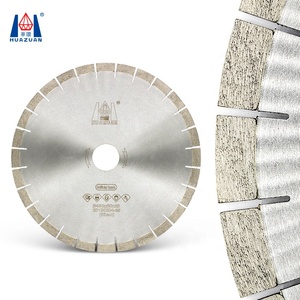
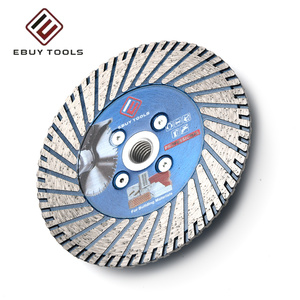
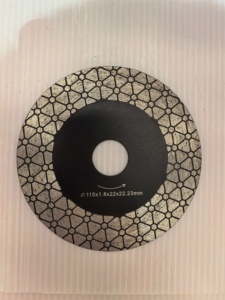
Direct factory-engineered diamond cutting discs, segment-welded asphalt saw blades, and specialized surface preparation tooling optimized for aggressive aggregate cutting.
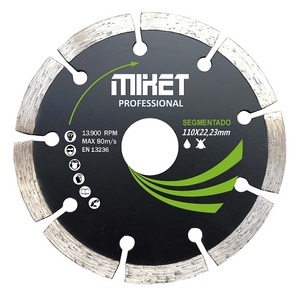
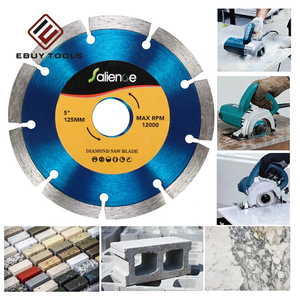
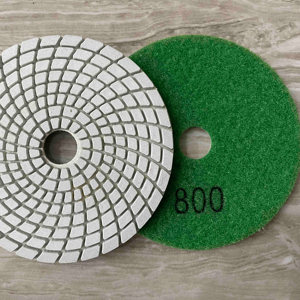
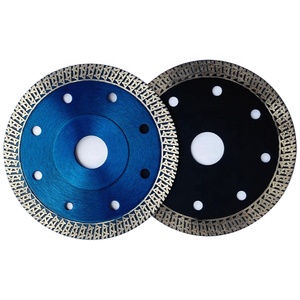
An authoritative technical breakdown for B2B procurement directors, municipal contractors, and distributor purchasing leads.
Cutting asphalt overlay, asphalt over concrete (green pavement), and uncompacted bituminous mixes represents one of the most mechanically demanding environments in heavy civil infrastructure development. Unlike cured reinforced concrete—which is highly non-abrasive but mechanically hard—asphalt mixes contain soft, highly abrasive aggregate slurry. During flat sawing or walk-behind cut-off operations, this abrasive slurry acts as a continuous liquid sandpaper, scouring the steel core directly beneath the diamond segments. This physical phenomenon, scientifically classified as core undercutting, is the primary failure mode of standard diamond saw blades used in road rehabilitation.
Technical Insight: Premier Chinese diamond tool manufacturers engineer specialized matrix alloys containing cobalt, tungsten carbide, and synthetic diamond grits featuring controlled thermal stability up to 1,100°C. To completely eliminate segment shear failures, premium asphalt cutters employ slant-drop segments and carbide protection pins laser-welded onto high-tensile 75Cr1 steel cores.
To optimize cutting efficiency and lower the total cost per linear foot (TCO), procurement officers must analyze the inverse relationship between material hardness and bond matrix hardness. Asphalt aggregate is structurally soft, yet its binder matrix releases loose silica particles during cut execution. If a contractor deploys a soft metal bond (typically engineered for hard granite or cured concrete), the metal matrix erodes at an catastrophic rate, prematurely shedding valuable synthetic diamonds before they reach their operational lifespan.
Top-tier manufacturing facilities in China utilize hot-press vacuum sintering to synthesize ultra-hard metal bond formulas. These formulations combine nickel, iron, tungsten powder, and high-purity synthetic diamond crystals (such as MBD-8 structural grade). The bond is specifically designed to withstand extreme slurry abrasion while gradually exposing sharp diamond facets at a rate perfectly synchronized with segment wear.
When evaluating asphalt cutter suppliers from China, assessing structural core protection is crucial for field safety and tool durability. Leading OEM factories incorporate three standardized architectural defenses:
Utilizing high-power Nd:YAG laser welding technology, segment-to-core joint shear strength exceeds 12.5 MPa—far surpassing international EN13236 safety thresholds to prevent segment detachment under heavy load.
Proprietary 3D controlled diamond grit distribution (similar to ZENESIS™ structural alignment) guarantees that every diamond crystal engages the asphalt cut path at uniform spacing and relief height.
Every steel core undergoes computer-controlled flattening and dynamic tensioning to resist lateral wobbling, ensuring straight joint cuts even at deep passes exceeding 10 inches.
Select optimal blade parameters based on floor saw horsepower, aggregate hardness, and target linear speed.
| Blade Diameter | Recommended Saw HP | Segment Height | Bond Matrix Type | Undercut Protection | Max RPM | Primary Application |
|---|---|---|---|---|---|---|
| 12" (300mm) | 5 - 13 HP (Handheld / Low HP) | 10mm - 12mm | Extra Hard (H-1) | Drop Segments | 6,300 RPM | Asphalt expansion joint repair, patch work |
| 14" (350mm) | 9 - 20 HP (Gas Cut-Off / Flat Saw) | 12mm - 15mm | Ultra Hard (H-2) | Slanted Drop + Carbide Pins | 5,460 RPM | Highway asphalt cutting, trench utility lines |
| 18" (450mm) | 18 - 35 HP (Walk-Behind Flat Saw) | 12mm - 15mm | Abrasive Spec (H-3) | Deep Drop Segments | 4,200 RPM | Municipal road trenching & full-depth cutting |
| 24" (600mm) | 35 - 65 HP (Heavy Diesel Flat Saw) | 15mm | High-Cobalt Sintered | Carbide Core Protection | 3,100 RPM | Airport runway asphalt & deep highway paving |
| 30" - 36" (750-900mm) | 65+ HP (Self-Propelled Saws) | 15mm - 18mm | Custom Heavy Industrial | Triple Undercut Guard | 2,100 RPM | Deep utility installation & heavy civil projects |
Our engineering team designs custom bond formulas tailored to your regional aggregate abrasiveness.
Key technological evolutions shaping Chinese diamond saw blade manufacturing over the next decade.
Urban noise regulations across North America and Western Europe are driving rapid adoption of sandwich-steel silent cores. Utilizing laser-welded copper-viscoelastic dampening layers between steel plates, silent asphalt cutters reduce operational cutting noise by up to 15 dB without sacrificing segment bonding integrity.
With global supply chain emphasis on ethical raw material sourcing, top Chinese factories are pioneering cobalt-efficient sintered alloys. By substituting micro-fine iron-nickel-copper nanostructures, next-generation blades cut total carbon footprint by 30% while retaining equal wear resistance in abrasive asphalt.
Leading factories in Henan and Zhejiang manufacturing hubs are implementing AI-assisted optical inspection systems. 100% of finished laser-welded asphalt blades undergo high-speed laser scanning for micro-fractures, side clearance runout (<0.15mm tolerance), and segment height consistency prior to packaging.
The global market for diamond cutting tools has undergone a structural transformation. Historical reliance on third-party trading intermediaries has evolved into direct enterprise partnerships with vertically integrated manufacturing plants. Direct OEM relationships provide industrial distributors and tool rental conglomerates with distinct procurement advantages:
Engineering excellence controlled from raw diamond synthesis to final dynamic testing.
Since 2003, our partner manufacturing facilities have led the industry in high-performance diamond tool engineering. Unlike catalog re-sellers, we own 100% of our production line—controlling diamond grit selection, sintering chemistry, segment pressing, laser welding, and tension balancing under strict ISO9001 and OSA safety management systems.
With dual U.S. warehousing hubs (Irvine, CA & Covington, GA) backing direct Chinese factory lines, we guarantee rapid inventory replenishment, flexible OEM private labeling, and direct access to senior technical sales engineers.
Expert answers regarding matrix bonding, undercutting solutions, OEM branding, and factory audits.
The primary difference lies in the metal bond hardness and core protection. Asphalt is soft but highly abrasive, requiring an extra-hard metal bond (high iron/cobalt/tungsten ratio) to slow matrix wear, along with drop segments to prevent undercutting. Concrete is hard and non-abrasive, requiring a soft metal bond that wears away fast enough to continuously expose fresh diamonds.
Top Chinese factories utilize three technical defenses: 1) Deep drop segments welded extended down the steel blank; 2) Hardened tungsten carbide pin inserts laser-welded into the steel core; and 3) Angled segment geometry designed to dynamically flush abrasive slurry out of the cut path.
Standard OEM private label orders (custom laser etching, custom color coating, and branded sleeve packaging) typically start at 50 units for large diameter blades (12"-36") and 200 units for small angle grinder blades (4"-9"). Sample evaluation batches can be arranged with lower thresholds.
Yes. All professional-grade diamond blades are manufactured in strict compliance with European Standard EN13236 and ISO9001 quality assurance metrics. Segment laser weld torque testing is conducted on every production batch to ensure zero field segment loss.
Absolutely. Send our technical team a description or sample of your local aggregate (e.g., hard river gravel, crushed limestone, basalt, sand-rich asphalt overlay). Our powder metallurgists will adjust the sintering matrix formula to maximize total cut footage and cutting speed for your specific region.
Click any "Get Catalog" button on this page. Our automated system connects you directly with a senior diamond tooling specialist who will transmit digital engineering catalogs, spec sheets, and FOB/CIF volume pricing within 24 hours.
Get direct factory pricing, technical spec sheets, and OEM sample test kits today.