
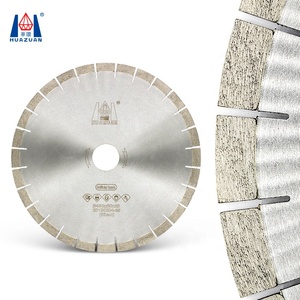
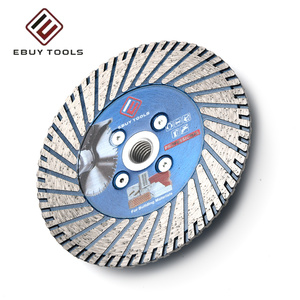
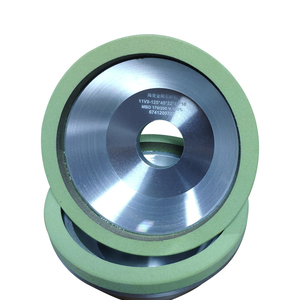
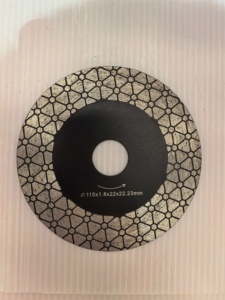
In the global diamond tool market, many brands act merely as trading intermediaries or re-labelers. As a premier China Top Wire Saws Manufacturer and industrial diamond tool factory, our core competitive moat lies in true end-to-end vertical manufacturing integration. From raw monocrystalline diamond grit synthesis grading to custom powder metallurgy, laser welding, and automated rubberized bead injection, every step of our production workflow is governed by strict ISO9001 quality protocols.
We engineer proprietary matrix formulations tailored to exact substrate abrasive indexes. By balancing cobalt, iron, nickel, and tungsten carbide binders, our sintered segments deliver optimal diamond exposure without premature erosion or glazing.
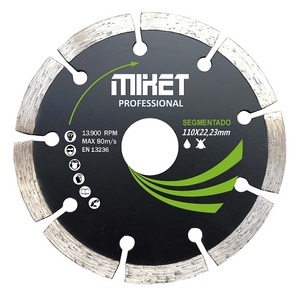
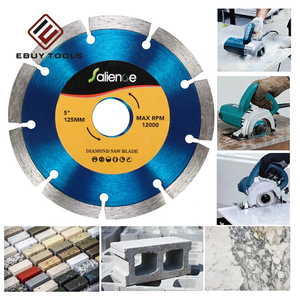
For extreme dry cutting and heavy civil engineering demolition, segment detachment is a critical safety failure point. Our state-of-the-art automated laser welding cells melt the segment base directly into the steel core, achieving joint bond strengths exceeding international EN13236 standards.
We operate fully equipped engineering laboratories capable of customizing segment heights, arbor configurations, silent core dampening layers, and wire bead densities for regional OEM brand owners and heavy civil contractors.
Diamond wire saw cutting technology has revolutionized both natural stone quarrying (granite, marble, sandstone) and heavy concrete structure modification. Unlike traditional circular saw blades restricted by cutting depth and blade diameter limitations, a high-flexibility endless diamond wire saw can cut reinforced concrete bridges, underwater steel pipelines, and massive granite blocks of virtually unlimited cross-sectional dimensions.
A professional-grade diamond wire consists of high-tensile multi-strand galvanized steel aircraft cable fitted with diamond-impregnated sintered or electroplated beads. These beads are positioned at precise intervals (typically 33 to 40 beads per meter) separated by vulcanized rubber or high-impact Thermoplastic Polyurethane (TPU) injection moulding.
Selecting the appropriate bead bond chemistry is paramount to operational yield and linear cutting velocity.
By continuously optimizing wire linear speed (20 – 38 m/s) and maintaining constant hydraulic wire tensioning (250 – 300 kgf), civil contractors can achieve kerf losses under 11mm, cutting energy consumption by up to 40% compared to heavy flame or gang-saw slicing methods.
Quarry operators and stone processing hubs are rapidly transitioning from single-wire saws and gang saws to multi-wire machines utilizing 5.3mm to 6.3mm ultra-thin diamond wires. Reducing kerf width significantly increases slab yield per stone block while minimizing stone slurry waste management fees.
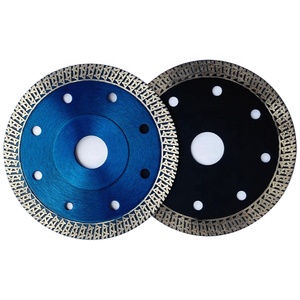
Urban infrastructure renewal projects increasingly prohibit wet slurry runoff into municipal storm drains. The industry demand is surging for specialized high-temperature-resistant diamond wire saws and thin-mesh turbo blades capable of safe, efficient dry cutting in dense urban environments.
Global buyers are shifting away from low initial purchase price purchasing toward cost-per-square-meter ($/m²) cut optimization. Premium diamond grit selection and uniform laser welding reduce tool changeover downtime, lowering labor costs and maximizing operator efficiency.
| Target Substrate | Abrasiveness / Mohs | Recommended Bond Type | Linear Velocity (m/s) | Tool Application Recommended |
|---|---|---|---|---|
| Green Concrete (1-4 hrs) | Highly Abrasive | Hard Cobalt Matrix | 35 – 42 m/s | Early Entry Triangular Arbor Saw Blade |
| Hard Granite & Quartzite | Mohs 6.5 – 7.5 | Soft Bronze / Free-Cut Matrix | 22 – 28 m/s | Rubberized Wire Saw & Silent Core Blade |
| Rebar Reinforced Concrete | Medium-High | Medium-Soft Laser Welded | 25 – 30 m/s | TPU Wire Saw / Laser Segment Blade |
| Marble & Soft Limestone | Mohs 3.0 – 4.0 | Hard Electroplated / Sintered | 30 – 38 m/s | Continuous Rim & Fine Wire Saw |
Direct procurement from a primary Chinese manufacturer eliminates middleman markups, gives you direct access to metallurgists for custom bond formulations, and guarantees lot-to-lot repeatability. China controls over 85% of global synthetic diamond grit production and advanced powder metallurgy technology, allowing us to supply world-class tools at highly competitive factory-direct pricing.
The fundamental rule of diamond tool engineering is inverse matching: use a soft bond matrix for hard, non-abrasive materials (such as hard granite or reinforced concrete) so the metal wears away at a rate that continuously exposes fresh, sharp diamond crystals. Conversely, use a hard bond matrix for soft, highly abrasive materials (such as asphalt or green concrete) to prevent the abrasive slurry from premature wear on the metal bond holding the diamonds.
Wire breakage is primarily caused by excessive linear tension, improper cooling water flow, or severe wire twisting. Utilizing high-tensile multi-strand steel cable with vulcanized rubber injection dampens mechanical vibration. Furthermore, maintaining optimal wire linear speeds (typically 25-28 m/s for concrete) and avoiding sharp inner corner cuts reduces localized metal fatigue on the core steel cable.
Silent core blades feature a sandwich construction consisting of two steel plates laminated with a central copper or acoustic-dampening viscoelastic foil. This structure absorbs high-frequency resonance during high-speed cutting, reducing operating noise levels by up to 10-15 dB while preventing micro-fracturing along delicate engineered quartz edges.
Yes. We provide complete OEM and private-label programs for international distributors and tool brands. We can customize segment heights (up to 15mm+), arbor diameters (e.g., 22.23mm, 25.4mm, 50mm, 60mm or custom pinholes), laser logo engraving, custom color coatings, and custom retail packaging tailored to your brand standards.
Our application engineers are available to review your project material, saw machine horsepower, and cut depth requirements to provide a fully documented, factory-direct tool recommendation.