
Direct factory tooling solutions engineered for extreme hardness (up to HRC65), high material removal rates (MRR), and long-life metal processing.
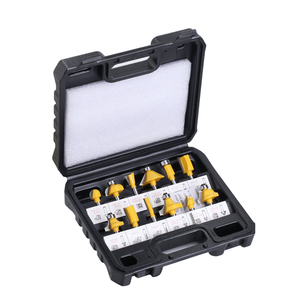
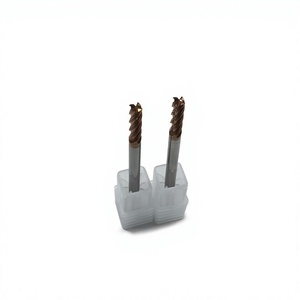
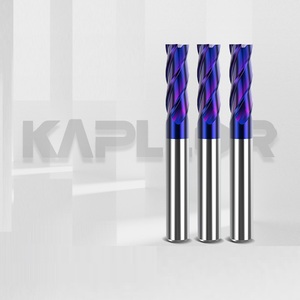
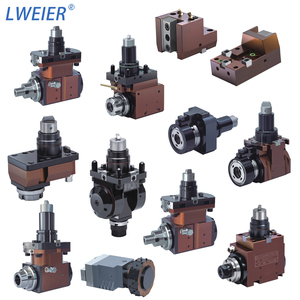
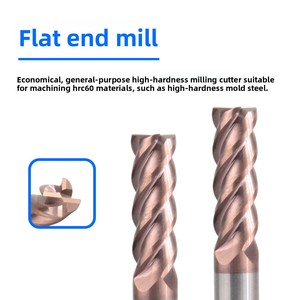
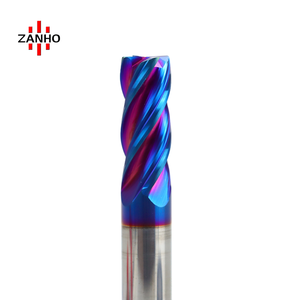
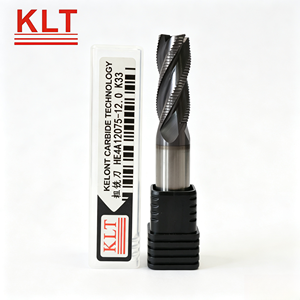
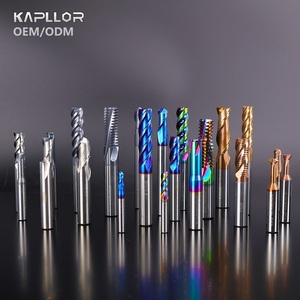
In modern high-speed CNC precision machining, selecting a cutting tool vendor extends far beyond comparing unit pricing on catalog line items. Modern automated manufacturing facilities—operating across aerospace, medical device fabrication, complex automotive die casting, and micro-electronic molding—require tool manufacturers capable of delivering unwavering lot-to-lot repeatability, microscopic dimensional tolerances, advanced physical vapor deposition (PVD) coating science, and actionable application engineering support.
This industry benchmark whitepaper analyzes the operational frameworks, metallurgical innovations, and procurement criteria necessary to qualify top-tier CNC tooling suppliers in today's globalized industrial supply chain.
Leading procurement teams no longer negotiate solely on initial tool acquisition cost. By calculating Total Cost of Ownership (TCO) incorporating tool changeover downtime, spindle load efficiencies, cycle time reductions, and re-grinding longevity, premium solid carbide end mills with nano-composite coatings frequently yield a 35% to 60% reduction in net component manufacturing cost despite a higher initial purchase price.
When auditing top CNC tool suppliers, enterprise engineering departments must evaluate candidates across four foundational manufacturing pillars:
Machining productivity is often bottlenecked by regenerative chatter—an unstable self-excited vibration that compromises surface finish and accelerates tool wear. Top CNC suppliers combat this using sophisticated geometric innovations:
By employing variable helix angles (e.g., combining 35° and 38° flutes) alongside asymmetric flute spacing, cutting forces are disrupted at periodic intervals. This breaks up resonant harmonics, allowing machine operators to double depth-of-cut (Ap) and width-of-cut (Ae) parameters while maintaining pristine surface finishes.
How smart manufacturing, high-entropy materials, and automated supply chains are reshaping tool selection for global machine shops.
Next-generation tool holders and BMT live tooling units are increasingly equipped with embedded memory chips and RFID sensors. These record real-time operational metrics, tool life consumption, vibration spectra, and temperature cycles directly into smart factory MES/ERP platforms.
PVD coating science is transitioning toward High-Entropy Alloy (HEA) nitride matrices and thick CVD diamond coatings. These coatings provide unprecedented hardness (>40 GPa) and ultra-low friction coefficients for machining abrasive carbon-fiber polymers (CFRP) and non-ferrous metals.
Driven by global ESG directives, automotive and aerospace manufacturers are moving away from flood coolants toward Minimum Quantity Lubrication (MQL) and cryogenic dry milling. Cutting tools are being redesigned with specialized internal coolant channels and thermal-barrier coatings.
Machine learning models are synthesizing cutting tool telemetry to predict catastrophic tool failure minutes before occurrence. CNC suppliers must provide rich digital twin models and FEA cutting data files (STEP/DXF/IGES) for automated CAM optimization.
Enterprise buyers are demanding vendor-managed inventory (VMI) point-of-use smart vending machines installed directly on factory floors. Suppliers who provide automated restocking algorithms and transparent usage analytics win long-term contract lock-ins.
Unlike white-label distributors who buy and re-brand generic inventory, a true vertical manufacturer controls every phase of production—from carbide powder blending to final optical inspection.
Tungsten powder selection, grain sizing, cobalt binder ratios, sintering, grinding, and coating are executed in-house under strict quality systems for repeatable lot-to-lot performance.
Direct access to experienced CNC tooling engineers who provide tool path optimization, speed/feed matching, and field troubleshooting—not scripted customer service reps.
Strategic multi-regional distribution hubs carrying deep inventory across standard and specialty diameters, ensuring rapid fulfillment for project orders.
Tailored tool geometries, specialized corner radii, custom coating formulations, private-label laser etching, and custom packaging designed around client production volumes.
Achieving optimal metal removal rates requires aligning cutting tool geometry and substrate properties with the mechanical behavior of the alloy being machined:
| Workpiece Material | Recommended Flute Count | Helix Angle | Optimal Coating | Primary Machining Challenge |
|---|---|---|---|---|
| Hardened Steel (HRC 50–65) | 4 to 6 Flutes | 45° / Variable | Nano-TiSiN / AlTiSiN | Extreme frictional heat & abrasive flank wear |
| Stainless Steel (304 / 316) | 4 Flutes | 35° / 38° Variable | AlTiN High-Temp PVD | Work hardening & gummy chip welding |
| Aluminum Alloys (6061 / 7075) | 2 or 3 Flutes | 45° or 55° High Helix | Uncoated / ZrN / DLC | Chip clogging & Built-Up Edge (BUE) formation |
| Titanium Alloys (Ti-6Al-4V) | 4 to 5 Flutes | Variable Pitch | AlTiN / Micro-thin PVD | Low thermal conductivity & tool deflection |
By enforcing these geometric matching standards, machine shops consistently achieve superior tool longevity, reduced scrap rates, and maximized CNC spindle utilization.
Expert answers regarding supplier vetting, custom tooling lead times, quality control standards, and tooling optimization.
A true CNC cutting tool manufacturer owns and operates high-precision 5-axis grinding equipment (e.g., ANCA, Walter, Rollomatic), vacuum sintering furnaces, and PVD coating chambers. They can readily provide ISO quality certificates, raw carbide grain material sheets, batch traceability reports, and direct engineering customization. Trading companies typically rely on standard catalog items with limited capability for dynamic geometry modifications or edge-prep customization.
Ultra-fine micro-grain substrates (0.2µm to 0.5µm) pack a higher density of tungsten carbide grains within the cobalt matrix. This significantly increases hardness and resistance to micro-chipping under intense cutting loads when milling hardened steels (HRC 50–65). When paired with heat-resistant coatings like TiSiN, micro-grain tools maintain sharp cutting edges much longer than standard grain tools.
For standard catalog items, orders typically ship within 24 to 48 hours from regional stocking warehouses. For specialized custom OEM/ODM carbide tools (featuring unique step diameters, non-standard corner radii, or custom PVD coatings), rapid prototype tooling can be produced and delivered in 10 to 15 business days, backed by 3D CAD modeling and tool simulation approvals.
In standard end mills with equal flute spacing, cutting teeth enter the workpiece at fixed time intervals, creating periodic force pulses that match the natural resonant frequency of the machine setup. Variable pitch geometry alters the spacing between cutting edges (e.g., 88° - 92° - 88° - 92°), breaking up the harmony of impact vibrations and damping regenerative chatter for smoother finishes and extended tool life.
Every tool batch undergoes 100% optical inspection using high-resolution non-contact measuring equipment (e.g., Zoller or Speroni tool presetters). Essential verification checkpoints include total radial runout (< 0.002mm), shank diameter tolerance within h6, coating thickness uniformity, edge hone radius consistency, and flute pitch accuracy.
Connect with our senior CNC application engineers for custom spec matching, bulk procurement discounts, or OEM/ODM tool development assistance.