
Engineered for low cost-per-cut performance, strict runout tolerances, and high thermal stability across concrete, quartz, ceramic, marble, and stone fabrication.
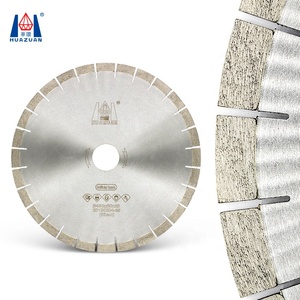
Features a sound-dampening laser-welded sandwich core and specialized soft-bond matrix for clean, chip-free cuts in ultra-dense quartz slabs.
Get Catalog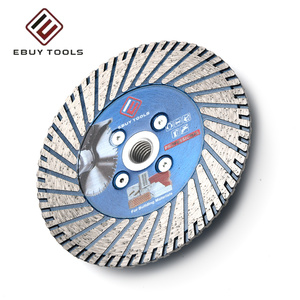
Industrial-grade continuous turbo rim design providing rapid debris removal and fast cooling during dry/wet masonry cutting.
Get Catalog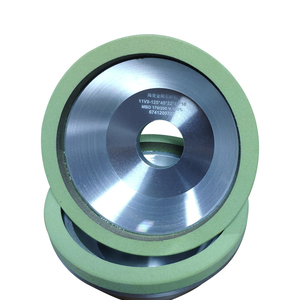
Resin and metal-bonded precision hybrid wheel designed for micro-deburring, clean beveling, and sensitive ceramic processing.
Get Catalog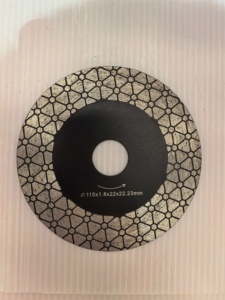
Reinforced flange core with mesh turbo geometry to eliminate edge blowout and ensure minimal material loss on vitrified tiles.
Get Catalog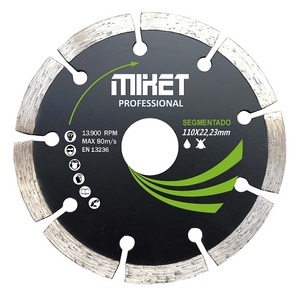
Hot-pressed keyhole segment design optimized for deep cutting in cured concrete, granite block, and abrasive building materials.
Get Catalog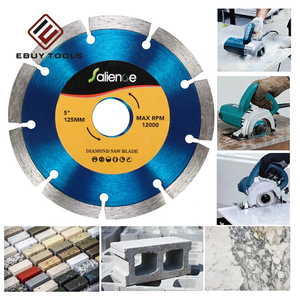
High-concentration diamond grit layer coupled with wear-resistant cobalt alloy matrix for universal jobsite cutting tools.
Get Catalog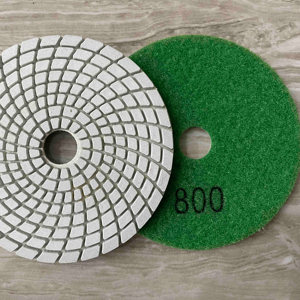
Engineered with micro-patterned resin bonding for fast scratch removal, high shine clarity, and long operational life on curved profiles.
Get Catalog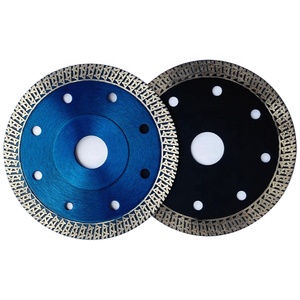
Ultra-slim profile reduces cutting resistance and power consumption, providing smooth, high-speed slitting in hard ceramic surfaces.
Get CatalogThe global industrial diamond tool and surface preparation market is undergoing a seismic shift. As architectural demands favor larger, harder engineered stone slabs, high-psi reinforced concrete, and ultra-dense vitrified porcelain tiles, standard abrasive tooling is rapidly becoming obsolete. Global B2B procurement managers, regional distributors, and project specifiers are shifting focus from initial unit purchase price to total operational cost-per-cut and total square-foot tool longevity.
Leading international diamond tool factories and exporters have transitioned from basic cold-press sintered products to highly advanced metallurgical formulations, laser-welded segment structures, and geometrically patterned synthetic diamond placement. Identifying top-tier manufacturing partners requires an in-depth understanding of synthesis technologies, bonding dynamics, and factory quality assurance protocols.
Key Technical Insight: Optimal diamond tool selection depends on matching matrix bond hardness inversely to material abrasiveness. Cutting hard, non-abrasive materials requires a soft metal/resin bond matrix to consistently expose sharp diamond grit, whereas abrasive green concrete requires a resilient, erosion-resistant hard bond matrix.
A comparative criteria evaluation for procurement directors sourcing industrial diamond tools and polishing pads.
| Evaluation Parameter | True Direct Manufacturer (e.g., Diamond Vantage) | Third-Party Exporter / Trading Agent |
|---|---|---|
| Metallurgical & Bond Chemistry Control | Complete in-house control over diamond grit concentration, grain size selection, and powder sintering matrix. | Relies on third-party factory stock formulas; minimal customization capability. |
| Lot-to-Lot Quality Repeatability | Automated cold/hot pressing and tensioning ensure consistent performance across batches. | High variability due to multi-factory outsourcing and inconsistent supplier sourcing. |
| OEM & Private Label Support | Full engineering collaboration, custom segment heights, logo laser-etching, and bespoke packaging. | Limited to standard catalog re-labeling with high Minimum Order Quantities (MOQs). |
| Technical Field Engineering | In-house application engineers available for material analysis, blade troubleshooting, and custom specs. | Non-technical sales support relying on basic marketing brochure information. |
| Supply Chain & Inventory Security | Dual-region stocking distribution hubs (e.g., Irvine CA & Covington GA) ensuring stable inventory. | Subject to global shipping lead times, extended port delays, and stockouts. |
As industrial floor grinding, stone fabrication, and civil infrastructure construction evolve, procurement specialists must align with manufacturers investing in next-generation material science. The following trends dictate supply chain competitiveness over the coming decade:
Randomly dispersed diamond synthetic grit often leads to uneven segment wear and premature grain loss. Advanced platforms like ZENESIS™ Technology utilize precise, three-dimensional geometric placement of diamond crystals. This ensures every individual diamond particle experiences equal cutting force, dramatically increasing cutting speed while extending overall blade and pad service life by up to 70%.
Traditional resinoid grinding wheels present severe safety hazards, high wear rates, and hazardous particle emissions. Innovations such as the DiamondX® Metal Cutting platform replace multi-layer abrasive wheels with vacuum-brazed synthetic diamond edges attached to high-tensile steel cores. This shift delivers 30x to 50x tool lifespan gains, zero core fracture risk, and precise cut depth preservation throughout the tool's life.
Commercial floor polishing contractors demand fewer steps to achieve specified gloss and clarity levels. Factory trends are moving toward hybrid Polycrystalline Diamond (PCD) initial transitional pads followed by high-density ceramic resin polishing pads. This evolution reduces a traditional 7-step concrete polishing process down to 4 steps without sacrificing surface reflectivity or depth of shine.
Urban municipal codes and indoor commercial renovation projects strictly enforce sound reduction limits and dust control measures. Leading diamond tool factories now produce silent-core saw blades incorporating laser-cut copper foil sandwich layers that absorb resonant vibration. Simultaneously, dry-cutting mesh turbo rims engineered for high heat dissipation eliminate the need for liquid coolants in sensitive indoor environments.
Founded in 2003, Diamond Vantage® stands out as a genuine vertical manufacturer in an industry dominated by private-label distributors. Operating under strict Truth in Engineering principles, Diamond Vantage manufactures 100% of the diamond blades, core bits, cup wheels, PCD tooling, and walk-behind concrete equipment it supplies globally.
From raw diamond grit classification to automated segment sintering, laser welding, and tension balancing, every production stage is executed in-house.
Main regional warehouses in Irvine, California and Covington, Georgia maintain massive stock levels to facilitate same-day dispatch and rapid turnaround.
Direct access to experienced product engineers who assist in material aggregate matching, horsepower tuning, and private label customization.
Whether servicing heavy civil road contractors flat sawing highway expansion joints or marble fabrication facilities shaping delicate countertops, Diamond Vantage delivers predictable, lot-controlled diamond tools engineered for the absolute lowest cost per cut.
Technical answers to common sourcing, bond specification, and application questions.