Top 10 Milling Cutters Manufacturers & Industrial Cutting Tool Engineering Benchmark

A Comprehensive Technical Whitepaper on Precision Metallurgy, PCD Matrix Integration, and Global OEM Procurement Strategies

Industrial Grade Tooling

Engineered Diamond Milling Cutters & Precision Blades

Direct from true manufacturing facilities. Formulated with vacuum-brazed diamond particles, sintered cobalt-nickel matrices, and laser-welded segment integrity for zero-runout performance.
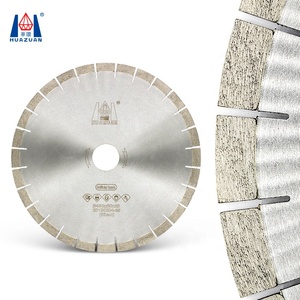
16 Inch Diamond Cutting Disc for Engineered Quartz with Silent Core

16 Inch Diamond Cutting Disc for Engineered Quartz with Silent Core

  • Core Technology: Laminated Silent
  • Bond Type: Soft Metallic Matrix
  • Application: Quartz / Hard Stone
Inquire Now
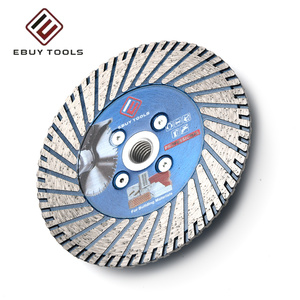
Turbo Diamond Saw Blade Cutting Disc For Building Material Marble Concrete Brick

Turbo Diamond Saw Blade Cutting Disc (4.5" - 9") for Masonry & Marble

  • Rim Design: Continuous Turbo Mesh
  • Operation: Wet / Dry Universal
  • Diameter Range: 115mm - 230mm
Inquire Now
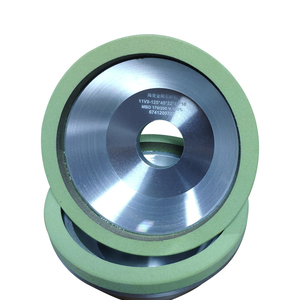
Ultra-Thin Diamond Grinding Disc with PCD/PCBN/PDC for Deburring

Ultra-Thin PCD/PCBN Metallurgical Grinding Disc for Precision Deburring

  • Abrasive Material: PCD / PCBN / PDC
  • Substrate: Resin / Metal Bond
  • Target Use: Glass, Ceramics, Alloy
Inquire Now
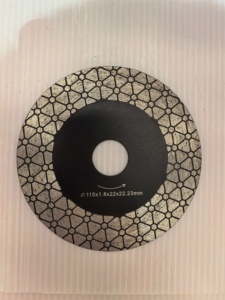
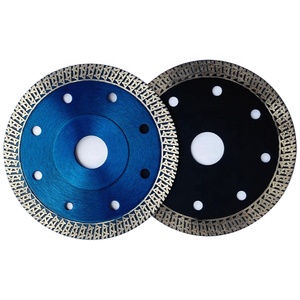
115mm 4.5 Inch Thin Mesh Turbo Diamond Cutting Disc

115mm (4.5") Thin Mesh Turbo Diamond Cutter Disc for Granite & Tile

  • Kerf Thickness: 1.2mm Ultra-Thin
  • Cooling Channels: Reinforced Mesh
  • Edge Quality: Chip-Free Precision
Inquire Now
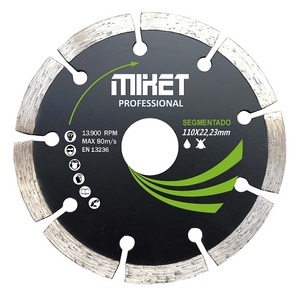
110mm Industrial Grade Segment Diamond Disc Cutting Blade

110mm Industrial Grade Segmented Diamond Milling Blade for Brick & Concrete

  • Segment Joint: Laser Welded
  • Bond Hardness: Medium-Hard Alloy
  • Compliance: Industrial OEM Spec
Inquire Now
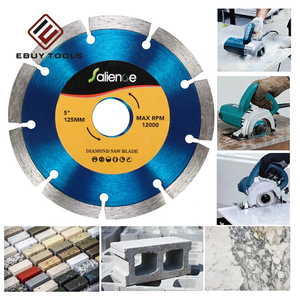
Multi-Size Diamond Blade Saw Cutting Disc For Concrete Marble Cutting

High Precision (110mm-125mm) Heavy Duty Concrete & Marble Cutting Blade

  • RPM Rating: Up to 13,300 RPM
  • Core Steel: High-Tensile 75Cr1
  • Wear Life: +40% vs Standard
Inquire Now
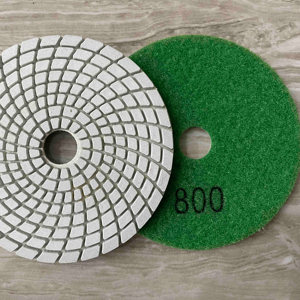
Flexible Diamond Sanding Discs

Industrial Flexible Diamond Sanding & Polishing Discs for Surface Finish

  • Grit Spectrum: 50# to 3000# Mesh
  • Pattern: Honeycomb Patterned
  • Flexibility: High Contour Adaptability
Inquire Now
Hot Press 4 Inch Super Thin Turbo Cutting Disc Diamond Saw Blade

Hot Press Super-Thin (105x1.2mm) Turbo Cutter for Vitrified Ceramic Tile

  • Manufacturing: Hot-Sintering Press
  • Arbor Fitting: 20mm / 16mm Ring
  • Kerf Stability: Zero Vibration Core
Inquire Now
Statistical Rigor & Quality Metrics

Manufacturing Capability Benchmarks

Quantifiable benchmarks distinguishing true original equipment manufacturers (OEM) from third-party resellers in industrial milling and diamond tooling production.

22+
Years In-House R&D
100%
In-House Manufacturing
<0.03mm
Dynamic Runout Tolerance
2 Hubs
U.S. Dual Coast Logistics

1. Executive Sourcing Guide: Top Milling Cutters & Industrial Cutting Tool Manufacturers

In modern high-speed CNC machining, heavy structural masonry work, and precision stone fabrication, selecting the right supplier from the vast landscape of global milling cutters manufacturers is a pivotal operational decision. Procurement managers, tooling engineers, and OEM specifiers face an evolving market where material hardness—ranging from aerospace-grade titanium and high-silicon aluminum to engineered quartz and reinforced green concrete—demands extreme tool longevity and unyielding thermal stability.

Traditional high-speed steel (HSS) milling tools and standard carbide cutters are rapidly giving way to advanced composite systems. These incorporate single-crystal synthetic diamonds, polycrystalline diamond (PCD) inserts, micro-grain tungsten carbide substrates, and metallic laser-welded diamond matrix blades. True industrial manufacturing excellence requires direct control over powder metallurgy, diamond grit sorting, cold-pressing, vacuum sintering, and laser welding.

This whitepaper provides a rigorous framework for evaluating milling cutter and diamond tool manufacturers, dissecting technical specifications, production methodologies, and global supply chain reliability.

Controlled Metallurgy

Complete control over bronze, cobalt, and nickel matrix chemistry prevents premature diamond diamond pull-out and ensures uniform segment erosion matching material abrasiveness.

Laser Welding Precision

Automated multi-axis laser welding achieves metallurgical bond fusion between the segment matrix and the high-tensile steel core, guaranteeing joint integrity under high radial torque.

Dynamic Tensioning

Every individual steel core undergoes computerized flattening and tensioning to eliminate axial flutter, reduce operator fatigue, and maintain sub-millimeter cut straightness.

2. Technical Benchmark Matrix: OEM Manufacturer Evaluation Criteria

When shortlisting high-volume manufacturing partners for standard milling cutters, end mills, face mills, or diamond saw blades, technical buyers must scrutinize parameters beyond initial unit price. The evaluation matrix below outlines critical operational metrics across leading manufacturing tiers.

Evaluation Parameter True Direct Manufacturer (Tier 1) White-Label Assembler (Tier 2) Sourcing Broker / Trading Co.
In-House Metallurgy 100% proprietary sintering & powder formulation Outsourced pre-sintered segments None (Catalog Reseller)
Runout Tolerance Standard < 0.03 mm (< 0.0012 inches) 0.08 mm - 0.12 mm Unverified / Variable
Segment Joint Strength Laser-fused beam welding (> 1200 N/mm²) Standard Silver Brazing Low-temperature solder
Custom Arbor/Kerf Options Full Engineering Customization Limited to stock sizes Fixed Standard Sizes Only
Quality System Verification ISO 9001:2015, OSA, In-Line Optical Inspection Basic Batch Sampling Visual Pre-Ship Check
Supply Chain Traceability Full raw material lot tracking to source Partial batch records No raw material insight

3. Corporate Profile & Manufacturing Superiority: The Diamond Vantage Standard

Established in 2003, Diamond Vantage stands as a benchmark true manufacturer in the industrial cutting and diamond tool sector. Unlike distributors or import re-labelers, Diamond Vantage manufactures 100% of the product lines it supplies. Operating state-of-the-art production facilities combined with dual regional U.S. logistics centers (Irvine, California and Covington, Georgia), the company delivers unmatched technical control and rapid turnarounds.

Key Engineering Competencies & Technologies:

  • ZENESIS™ Patterned Diamond Technology: Engineered spatial placement of synthetic diamond grains within the segment matrix. This calculated pattern exposes uniform sharp cutting points throughout the segment life, increasing cutting speed by up to 50% while extending operational longevity in heavily reinforced concrete and hard stone.
  • DiamondX® Advanced Metal Cutting: A revolutionary vacuum-brazed diamond blade system designed to eliminate conventional bonded abrasive wheels. Delivering hundreds of clean cuts in steel plate, rebar, ductile iron, and stainless steel with zero structural wear or hazardous dust breakdown.
  • In-House Metallurgical R&D: Tailored bond chemistry matching specific aggregate compositions across North American and international geology, ensuring optimal wear parity between bond erosion and diamond exposure.
  • Dual-Coast Warehouse Logistics: Deep inventory holds across West Coast and East Coast hubs ensure immediate order dispatch, minimizing contractor downtime and vendor stockouts.

4. Future Sourcing & Procurement Trends in Cutting Tool Manufacturing (2026–2030)

As smart manufacturing, CNC automation, and environmental compliance dictate industrial priorities, procurement directors must align with forward-thinking manufacturers who invest in key future trends:

A. Sustainable Sintering & Zero-Cobalt Matrix Formulations

Global environmental standards are pushing tool manufacturers away from traditional cobalt-heavy metallic matrices due to supply instability and toxicity concerns. Next-generation milling cutters and diamond segments utilize eco-friendly iron-copper and nickel-alloy matrices optimized for low-temperature sintering, reducing thermal energy footprints without compromising tensile strength.

B. Micro-Segment Geometry & Ultra-Thin Kerf Design

Material conservation in quartz fabrication, semiconductor slicing, and aerospace composite milling is driving demand for micro-segmented blades and sub-1.2mm kerf cutters. Reduced kerf widths minimize cutting resistance, consume significantly lower machine power (kW/hp), and yield substantially higher output per raw material slab.

C. Smart Telemetry & Dynamic Wear Tracking

The integration of RFID and micro-sensor telemetry into heavy-duty flat saw blades and milling cutters enables automated tracking of cumulative linear feet cut, rotational thermal spikes, and excessive vibration. Sourcing partners capable of supporting smart tool integration enable automated preventative maintenance in large-scale infrastructure projects.

5. Frequently Asked Sourcing & Engineering Questions (FAQ)

Clear, direct answers to essential technical and commercial questions encountered during OEM cutter and diamond blade procurement.

What differentiates a true direct manufacturer from a tool distributor?
A true direct manufacturer controls 100% of the physical metallurgical process—selecting raw diamond grit, formulating metal matrix powders, cold-pressing, vacuum sintering, laser welding, and dynamic tensioning in its own plants. Distributors purchase pre-made finished goods and re-label them, offering no direct control over lot-to-lot consistency or custom metallurgical specifications.
How do I select the optimal bond matrix hardness for my cutting application?
The fundamental engineering rule is inverse hardness matching: highly abrasive, soft materials (e.g., green concrete, asphalt, sandstone) require a hard, wear-resistant metal bond matrix. Hard, non-abrasive materials (e.g., cured concrete with river rock aggregate, quartz, granite) require a soft metal bond that wears away at an even rate to expose fresh, sharp diamond cutting edges.
Why is laser-welded segment construction critical for professional industrial cutting?
Laser welding creates a deep metallurgical bond between the diamond segment and the steel core core plate, far surpassing conventional silver brazing. Laser-welded blades withstand elevated temperatures and heavy shear stresses without risk of segment loss during dry cutting or wet cutting on high-horsepower saws.
What causes diamond blade glazing, and how is it corrected on-site?
Glazing occurs when the metal bond is too hard for the target material, preventing the matrix from eroding to release worn diamonds. The smooth, rounded diamonds skid rather than cut. To dress a glazed blade, make several dressing cuts in a soft, highly abrasive material like concrete block or asphalt to strip away the outer metal matrix layer and re-expose sharp diamond points.
Do you offer OEM custom packaging, private label branding, and custom arbor geometries?
Yes. As a true manufacturer, Diamond Vantage provides private label co-branding programs, custom segment formulations, tailored arbor sizes (e.g., flush-mount 6-hole, custom pin-hole patterns), and specialized blade thickness configurations for distributor network requirements.

Consult Our Diamond Tool & Milling Engineering Team

Provide us with your target material specs, machinery power output, and cut depth requirements. Our application engineers will formulate a precise tool recommendation and deliver an enterprise commercial quote.

Inquire Now