
Explore state-of-the-art Polycrystalline Diamond (PCD) inserts, end mills, slotting cutters, and floor preparation tooling sourced directly from premier Chinese manufacturing facilities.
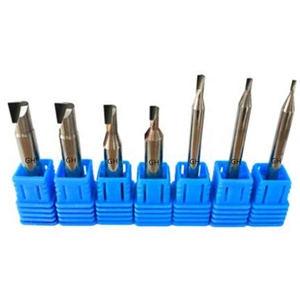
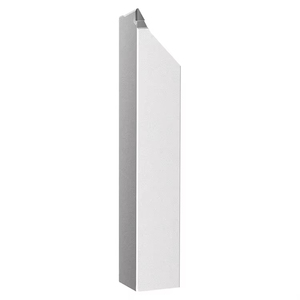
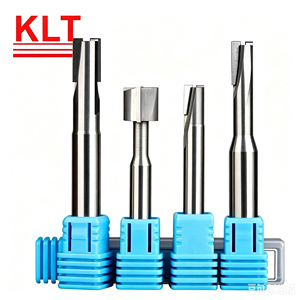
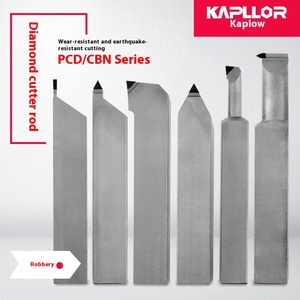
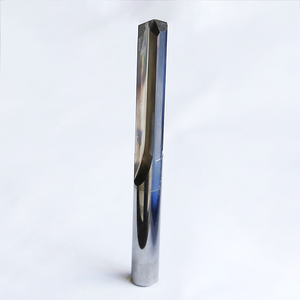
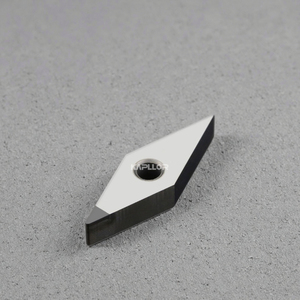
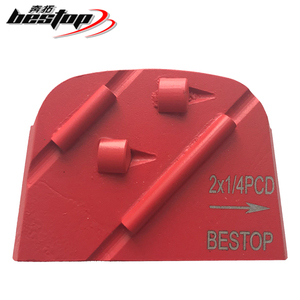
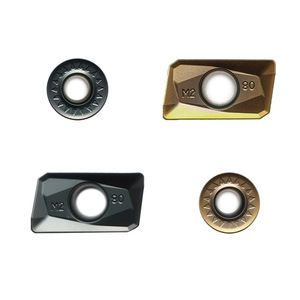
Understanding the mechanical limits, thermal degradation points, and cost-per-cut ratios when selecting Polycrystalline Diamond (PCD) versus alternative cutting substrates.
| Tool Material Grade | Vickers Hardness (HV) | Thermal Conductivity (W/m·K) | Max Workpiece Temp | Ideal Target Substrates | Relative Tool Life Index |
|---|---|---|---|---|---|
| Coarse Grain PCD (25µm) | 7,000 - 8,500 HV | 560 W/m·K | 700°C | Heavy Abrasive Composite, High-Si Al (>14%) | 50x - 80x Carbide |
| Fine/Micro Grain PCD (2µm) | 6,000 - 7,000 HV | 450 W/m·K | 650°C | Mirror Finish Optics, Non-Ferrous Polishing | 30x - 50x Carbide |
| Polycrystalline CBN (PCBN) | 3,500 - 4,500 HV | 200 W/m·K | 1,300°C | Hardened Steels (>HRC 45), Cast Iron | 15x - 30x Carbide |
| PVD/CVD Coated Tungsten Carbide | 1,600 - 2,200 HV | 80 W/m·K | 900°C | Stainless Steels, Carbon Steel, Titanium | 1x Baseline Standard |
The global precision manufacturing sector is undergoing a massive paradigm shift. As industries like electric vehicle (EV) automotive, aerospace composites, semiconductor graphite milling, and advanced renewable energy demand tighter geometric tolerances and mirror surface finishes, traditional carbide tooling is increasingly proving inefficient. Modern manufacturing hubs require Polycrystalline Diamond (PCD) tooling systems engineered for extreme abrasion resistance, ultra-low friction, and supreme dimensional stability.
SEO Director Insight: When sourcing PCD tools from top Chinese suppliers, true cost efficiency is determined not by the unit purchase price, but by the overall Cost Per Cut (CPC) and tool longevity under high-speed milling and turning conditions. High-volume manufacturing plants leveraging vertically integrated PCD factories experience up to 40% reduction in downtime.
China has established itself as the global epicentre for synthetic diamond synthesis and ultra-hard tool manufacturing. Possessing more than 70% of the world's raw diamond powder pressing capacity, leading Chinese PCD factories have integrated vertical manufacturing supply chains. This integration extends from high-pressure high-temperature (HPHT) diamond grain synthesis to 5-axis EDG (Electrical Discharge Grinding) edge shaping and vacuum laser brazing.
Key strategic advantages include:
Polycrystalline Diamond is an intergrown mass of randomly oriented diamond particles bonded together in a metal matrix (typically cobalt) via high-pressure, high-temperature sintering. The isotropic nature of PCD ensures uniform hardness and wear resistance in all directions, eliminating the cleavage planes that limit single-crystal natural diamonds.
The primary advantage of PCD lies in its unparalleled thermal conductivity (up to 560 W/m·K) and low coefficient of friction (0.1 to 0.15 against non-ferrous alloys). When machining sticky materials such as aluminum alloys, copper, ceramics, and green-state carbide, PCD prevents Built-Up Edge (BUE) formation, ensuring pristine dimensional repeatability across hundreds of thousands of components.
As smart manufacturing and Industry 4.0 automation become standard across machining facilities, purchasing strategies for PCD tools are evolving rapidly. Procurement teams must prepare for three critical upcoming shifts:
Modern PCD factories in China are transitioning from conventional diamond grinding wheels to 5-axis ultra-short pulse femtosecond lasers. Laser ablation allows engineers to carve complex chip-breaker geometries directly into the PCD face—a feat previously impossible with mechanical grinding. This results in superior chip control during high-speed CNC turning of ductile aluminum and plastics.
Multi-material automotive structures (combining cast iron blocks with aluminum heads or carbon fiber inserts) require hybrid tooling. Sourcing strategies are increasingly shifting toward suppliers offering combined PCD and PCBN tooling packages, allowing machine shops to streamline vendor management.
Environmental sustainability and raw material security are driving heavy adoption of PCD re-grinding and re-tipping services. Leading factories now offer automated tool refurbishing programs, where worn PCD tips are desoldered, re-brazed with fresh diamond blanks, and re-ground to original ISO tolerances at a fraction of the original manufacturing cost.
Combining rigorous quality assurance standards with direct-from-factory pricing and worldwide engineering consultation support.
From synthetic diamond powder selection and carbide backing preparation to 5-axis laser inspection, every tool undergoes strict ISO 9001 certified QA before dispatch.
We engineer specialized shanks, step diameters, multi-flute profiles, and custom corner radii (+/-0.002mm) tailored specifically to your CNC machine parameters.
Strategic warehousing and expedited international freight arrangements ensure your replacement tooling arrives on time, minimizing costly spindle downtime.
Clear answers to common technical queries regarding PCD tool selection, material compatibility, and supplier manufacturing capabilities.
PCD (Polycrystalline Diamond) has a chemical affinity for iron at elevated temperatures (>700°C), causing rapid diamond graphitization when cutting ferrous metals. Therefore, PCD is strictly recommended for non-ferrous materials (aluminum, copper, brass), non-metallic abrasive composites (CFRP, GFRP), graphite, and green ceramics. CBN (Cubic Boron Nitride), on the other hand, is chemically inert to iron and is the ideal superhard choice for hardened steels (>HRC 45) and cast irons.
Select grain size based on your priority between edge sharpness and impact resistance. Micro-grain PCD (2µm to 5µm) allows for razor-sharp cutting edges, yielding mirror-like surface finishes (Ra < 0.1µm) on soft aluminum and plastics. Medium grains (10µm) provide an excellent balance of wear resistance and toughness for general CNC turning/milling. Coarse grains (25µm or multimodal mixes) offer maximum abrasion resistance against high-silicon aluminum alloys (>14% Si) and heavy structural composites.
While PCD possesses exceptionally high thermal conductivity, using coolant is highly recommended during high-speed machining to flush away abrasive swarf and prevent thermal stress at the brazed joint interface. For applications requiring dry cutting (such as graphite milling to avoid slurry build-up), high-pressure air blow combined with specialized thermal-barrier tool shanks should be used.
For standard ISO PCD inserts (such as VCGT, CCGT, DCMT), MOQs start as low as 5 to 10 pieces with immediate off-the-shelf dispatch. For fully custom non-standard combination tools or complex step end mills, prototyping orders are supported from 1 to 5 pieces. Typical lead time for custom CAD drawing approval, vacuum brazing, 5-axis EDG grinding, and inspection is 7 to 14 working days.
Premier Chinese PCD factories utilize ultra-high-frequency induction vacuum brazing with silver-copper-titanium active alloy filler metals. Quality control involves ultrasonic flaw detection (to verify zero voids in the brazed layer) alongside destructive shear stress testing on batch samples, ensuring the PCD tip withstands severe interrupted cutting without delamination.
Yes, high-quality PCD tools can typically be re-ground 2 to 4 times, depending on the depth of flank wear or edge chipping suffered during machining. Re-grinding removes a minute layer (usually 0.05mm to 0.15mm) from the rake and flank faces using precision laser or spark erosion techniques, restoring original edge sharpness at roughly 20-30% of the cost of a new tool.
Connect with our senior application engineers to review your engineering drawings, select optimal PCD grain grades, and request factory-direct quotations.
Contact Us