
Explore our flagship lineup of diamond, metal-bond, ceramic, and resin chamfer wheels engineered for stone, architectural glass, ceramic tile, and metal deburring operations.

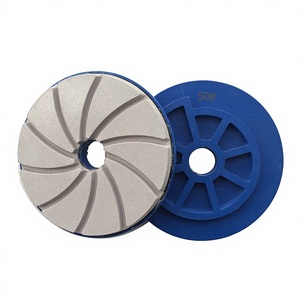
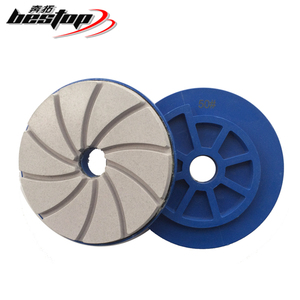
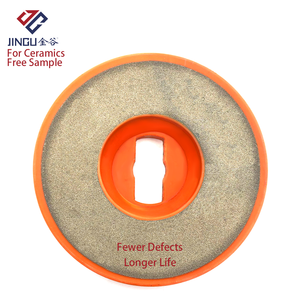
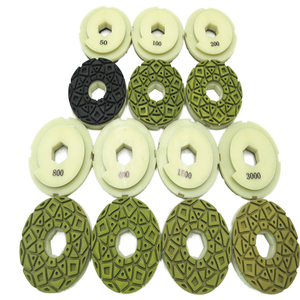
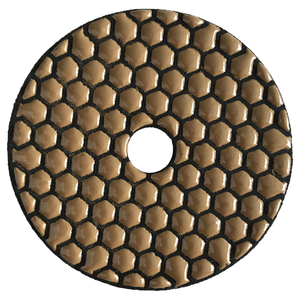
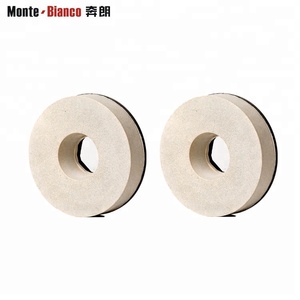
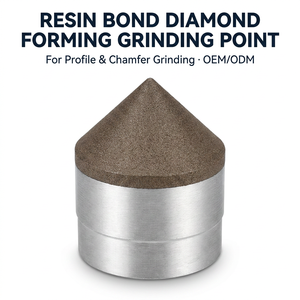
Precision edge chamfering is far more than an aesthetic operation; it is a vital engineering phase designed to mitigate mechanical stress concentrations, eliminate razor edges, prevent glass thermal shock fracturing, and ensure flawless seam assembly in architectural stone and structural fabrications. As a leading manufacturer specializing in advanced diamond and superabrasive tooling, we manufacture precision chamfer wheels engineered specifically to withstand the mechanical dynamics of automated CNC machinery, inline edge-squaring machines, manual angle grinders, and industrial robotics.
When selecting a chamfering tooling system, engineering procurement officers must evaluate three critical metallurgical and tribological variables: diamond grit grading, bond matrix chemistry, and mechanical dampening. The interaction between the abrasive grain and the work material dictates cut rate, thermal generation, and final surface roughness ($R_a$).
Technical Insight: Abrasive bond hardness must be inversely proportional to substrate hardness. Softer, highly abrasive materials (such as green concrete, soft limestone, or non-ferrous metals) require hard, wear-resistant metal matrix bonds. Conversely, dense, hard, non-abrasive materials (such as porcelain slabs, ultra-compact quartzite, and architectural glass) necessitate softer, highly friable resin or cerium oxide matrices that self-sharpen rapidly under contact pressure.
To assist procurement specialists and manufacturing process engineers in specifying the exact chamfering wheel configuration, the table below provides a empirical baseline across key industrial substrates:
| Substrate Material | Recommended Bond Chemistry | Grit Progression Range | Cooling Mode | Target Finish ($R_a$) |
|---|---|---|---|---|
| Architectural & Auto Glass | Cerium Oxide / Polyurethane Hybrid | 1200# - 3000# Micro-Grit | Flood Wet Cooling | < 0.05 µm (Optical Polish) |
| Natural Granite & Quartzite | Sintered Bronze / Cobalt Metal Matrix | 30# / 50# to 400# Metal | Wet (Required) | 0.4 µm - 0.8 µm (Pre-Polished) |
| Engineered Sintered Stone | Honeycomb Resinoid Matrix | 100# to 1500# Resin | Wet or Fine Mist | 0.1 µm - 0.2 µm (Honed Edge) |
| Porcelain & Ceramic Tile | Electroplated / Fine Silicon Resin | 200# to 800# Micro-Diamond | Dry / Wet Compatible | 0.2 µm (Chip-Free Miter) |
| Non-Ferrous Aluminum & Alloys | Open-Pore Resin / Carbide Hybrid | 60# to 180# Structural Grit | Dry with Air Blast | 1.2 µm (Deburred Edge) |
Achieving defect-free chamfers requires strict control over spindle dynamic runout. Excess vibration induces micro-fracturing along brittle edges—known in stone and glass processing as "chattering." Our manufacturing process incorporates precision cold-pressing, hot ISOPRESS sintering, dynamic balancing, and CNC core truing to guarantee radial runout below 0.02mm, significantly extending tool lifespan while protecting sensitive machine spindles.
Discover how our state-of-the-art manufacturing processes eliminate downtime and lower the total cost per foot of chamfered material.
Patterned diamond placement places synthetic diamonds in exact geometric patterns across the chamfer face, ensuring uniform wear and consistent contact pressure.
Superabrasive segments are laser-welded directly to tensioned steel cores, preventing segment detachment even under elevated shear loads during deep bevel milling.
Proprietary honeycomb resin channels channel water flow directly to the contact point, continuously clearing slurry and suppressing thermal expansion.
Standardized heavy-duty snail lock backings drastically drop changeover times on inline edge finishing machines, optimizing multi-head grinding lines.
Precision-engineered chamfer angle profiles (15°, 30°, 45°, 60°) deliver smooth transitions without chipping brittle porcelain surfaces or delicate glass laminates.
Tailored arbor configurations, dynamic balancing grades, segment heights, and custom bond formulations developed specifically for your proprietary machinery.
As global industrial manufacturing advances toward automated Industry 4.0 factories, procurement managers are shifting focus from simple initial purchase cost to Total Cost of Ownership (TCO) and process stability. Below are the key micro- and macro-economic trends reshaping the procurement of chamfering and edge-finishing tooling over the coming decade:
Traditional manual angle-grinder chamfering is rapidly giving way to automated 6-axis robotic arms and inline CNC edge processing machines. This shift requires chamfer wheels manufactured to exceptionally tight physical tolerances. Modern tooling must exhibit zero dynamic unbalance to protect sensitive spindle bearings operating at speeds up to 12,000 RPM. Synthetic diamond grit must also maintain tight particle size distributions to eliminate micro-strands during continuous automated runs.
The global construction and interior surface markets have seen explosive adoption of large-format sintered porcelain slabs (e.g., Neolith, Dekton, Lapitec). These ultra-hard materials exhibit extreme internal tension. Chamfering these surfaces using legacy diamond tooling often yields micro-cracking along edge borders, leading to slab failure weeks post-installation. Future-proof procurement strategies prioritize hybrid-bond resin-metal wheels formulated specifically with high-friability synthetic diamond crystals that dissipate contact pressure and eliminate heat buildup.
Environmental regulations regarding industrial wet slurry treatment and water recycling costs are driving demand for high-efficiency dry chamfering solutions. Manufacturers are adopting advanced thermal-stable polyimide bonds and air-cooled heat sink channels that enable high-speed edge chamfering on tiles and aluminum extrusions without liquid coolant.
Global logistics bottlenecks have exposed vulnerabilities in overseas factory-direct sourcing models. Modern procurement leads demand localized distribution hubs with verified stock depth. By maintaining major stocking facilities in both the West Coast (Irvine, CA) and East Coast (Covington, GA), Diamond Vantage ensures rapid order fulfillment, cutting transit lead times down to 24–48 hours across North America.
Since 2003, Diamond Vantage has established itself as an authoritative leader in superabrasive diamond blade, core bit, cup wheel, and custom chamfering tool design. Unlike importers and re-labelers who source generic products off the shelf, we control 100% of our manufacturing process inside our own production plants.
We perform raw synthetic diamond selection, metal powder atomization, cold-pressing, vacuum hot-sintering, laser welding, and tension balancing under our strict internal ISO-9001 quality system.
Our experienced product engineers analyze your specific operational parameters—including machine horsepower, peripheral speed, feed rates, and target material hardness—to formulate optimal custom bonds.
With fully stocked distribution centers strategically located in Irvine, California and Covington, Georgia, we guarantee quick order turnarounds and eliminate costly project delays.
Private Label & OEM Solutions: We fully support private labeling, customized arbor configurations, custom packaging, and volume rebate structures for global distributors and original equipment manufacturers (OEMs).
Below are expert answers to common technical and commercial queries submitted by industrial purchasing agents, plant supervisors, and machine operators.
Connect directly with our engineering team to evaluate your substrate material, optimize bond chemistry, and request bulk enterprise quotes.