
Explore our flagship lineup of industrial-grade hand tuck pointing trowels and laser-welded diamond mortar blades engineered for maximum durability and low cost per linear foot.
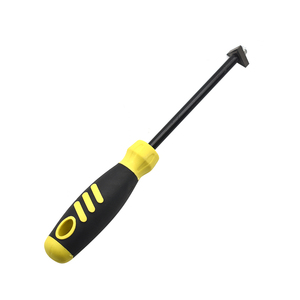
Hardened high-carbon steel blade paired with an ergonomic soft-grip handle. Built to meet strict OEM contractor specifications.
Get Catalog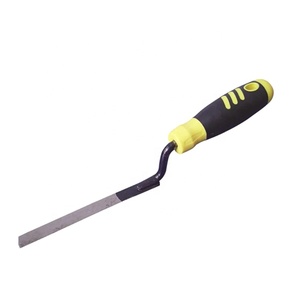
Solid forged construction designed for uniform joint packing, high abrasion resistance, and consistent mortar depth control.
Get Catalog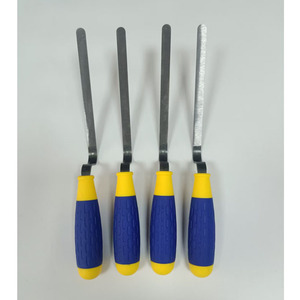
180mm heat-treated carbon steel blade with anti-slip ergonomic texture for DIY and heavy industrial masonry work.
Get Catalog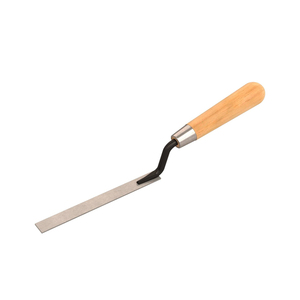
Classic hardwood contour grip matched with a flexible spring-steel blade for intricate historic brick restoration and pointing.
Get Catalog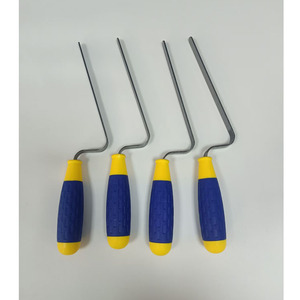
Features a reinforced blade spine and custom rubberized plastic grip for maximum tactile control during high-volume commercial jobsite use.
Get Catalog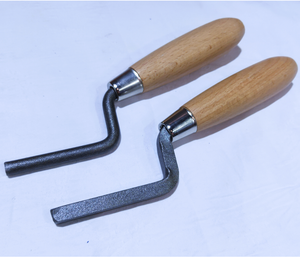
One-piece forged solid steel tuck jointer designed for smoothing block joints and removing tight mortar lines efficiently.
Get Catalog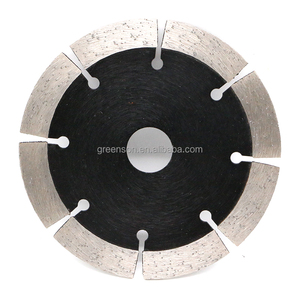
Laser-welded diamond segments designed for high-speed mortar raking, concrete grooving, and dry crack chasing in hard masonry.
Get Catalog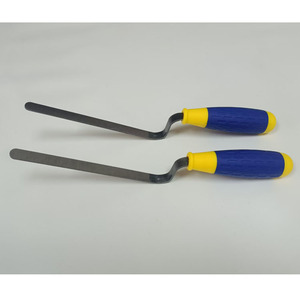
Engineered for precise strike lines. Backed by a 1-year factory warranty and tested against harsh ambient jobsite conditions.
Get CatalogUnderstanding material science, bond matrix chemistry, and structural steel heat treatment in modern masonry restoration and mortar joint preparation.
In modern civil engineering, historic masonry preservation, and commercial brick building maintenance, tuck pointing (also referred to as repointing) represents one of the most critical structural preservation processes. Over decades, atmospheric weather exposure, thermal expansion, moisture intrusion, and seismic stresses degrade mortar joints. Restoring structural integrity without damaging surrounding brickwork or stone masonry requires tools engineered to exact tolerances.
As a global OEM manufacturer and exporter operating state-of-the-art facilities with dual U.S. distribution hubs in Irvine, California and Covington, Georgia, we bridge the gap between heavy industrial diamond blade technology and hand-finished pointing ergonomics. This technical manual provides procurement officers, wholesale distributors, and masonry contractors with the foundational technical knowledge necessary to source optimal tuck pointing equipment.
Selecting the correct tuck pointing tool requires evaluating the physical density of the existing mortar matrix (ASTM C270 Type M, S, N, or O) alongside tool metallurgical composition. Using over-hardened hand trowels leads to brittle blade snapping, while under-tensioned diamond blades cause segment loss, heat fatigue, and brick edge spalling.
How advanced metallurgy delivers longer blade life, consistent joint depth, and reduced operator exertion.
Our diamond tuck point blades utilize vacuum-sintered synthetic diamond crystals uniform in grit concentration. Soft metal bonds (cobalt/bronze matrix) are engineered for hard mortar (Type M/S), while hard steel-bonded matrices protect against premature abrasion when cutting softer lime-sand mortars.
To eliminate dangerous segment detachment during dry high-RPM angle grinding, all continuous and keyhole slot tuck point blades are laser-welded directly to high-tensile spring steel cores. This ensures maximum shear strength even under extreme heat friction (up to 600°C dry operating temperatures).
Our hand tuck pointer trowels are forged from premium 50# high-carbon steel, subjected to controlled quench and temper heat cycles (Rockwell Hardness HRC 52-56). This delivers superior flexural strength and wear resistance across thousands of square feet of mortar packing.
| Specification Category | Hand Tuck Pointer Trowels (160mm–180mm) | Diamond Tuck Point Saw Blades (4"–7") |
|---|---|---|
| Primary Application | Smoothing, finishing, and packing fresh mortar into joints | Rapid raking, removal, and grooving of aged mortar |
| Core Material Specification | Quenched High-Carbon Steel / Solid Stainless Steel | 65Mn Spring Steel Core + Synthetic Diamond Segments |
| Bond & Attachment Tech | One-piece Drop Forged or Precision Welded Shank | Laser-Welded / Vacuum Sintered Diamond Segments |
| Operating RPM / Velocity | Manual Operator Ergonomics (15–30 strokes/min) | 8,000 – 13,300 Max RPM Dry/Wet Rotary Operation |
| Target Mortar ASTM Grade | ASTM C270 Type N, O, K (Soft to Medium Mortars) | ASTM C270 Type M, S, Cured Portland Mortar & Concrete |
| Ergonomic Rating | Anti-Slip Textured TPR / Contour Hardwood Grip | Dynamic Balance Tested Core for Low Vibration |
Strategic foresight into environmental regulations, dust extraction standards, and automated OEM manufacturing shifts impact commercial buyers.
Strict regulations regarding respirable crystalline silica (such as U.S. OSHA Table 1 standards) are driving demand for diamond tuck point blades with specialized sandwich-segment keyhole slots. These designs optimize airflow when paired with shroud-enclosed vacuum angle grinders, capturing over 99% of harmful airborne dust during dry joint raking.
Traditional random diamond grit dispersion results in irregular wear and uneven cutting speeds. Next-generation tuck point blades integrate 3D patterned diamond placement, ensuring every synthetic diamond grit chip engages the mortar surface at an optimal cutting angle. This increases linear footage speed by up to 40% and extends tool lifespan by 50%.
Jobsite health and safety regulations are heavily penalizing high-vibration manual tools that cause hand-arm vibration syndrome (HAVS). Factory production lines are shifting toward dual-molded thermoplastic rubber (TPR) grips with dampening inner cores that absorb repetitive recoil impacts during mortar strike finishing.
Global distributors are reducing holding costs by partnering directly with manufacturers who offer end-to-end OEM customization—from laser logo engraving and custom blade arbor sizing (e.g., 7/8"-5/8" bushings) to regional consignment inventory backed by strategic North American and European warehousing.
Unlike trading companies or catalog relabelers, we own 100% of our manufacturing process—from cold pressing and hot sintering to automated balancing and laser etching.
We directly formulate metal powders, select synthetic diamond mesh sizes, and cold-press segment geometry in-house to maintain strict lot-to-lot consistency.
Deep inventory stocks located in Irvine, California and Covington, Georgia guarantee rapid 48-hour order dispatch across North America for urgent contractor job orders.
Comprehensive OEM solutions including custom color blade painting, laser logo etching, customized blister packaging, and barcode labeling tailored to your market branding.
Access dedicated product engineers who provide mortar hardness matching, blade tension calibration, and jobsite field troubleshooting for your commercial clients.
Answers to common technical, logistics, and wholesale purchasing inquiries regarding tuck pointers and diamond mortar blades.
Single-blade diamond tuck pointers (typically 1/4" or 6.5mm width) are designed for precise single-pass joint cleaning and thin crack chasing. Double or triple wide-sandwich diamond tuck pointers (up to 3/8" or 10mm width) allow operators to remove deep, crumbling mortar joints in a single pass without needing to sweep the saw side-to-side, dramatically speeding up restoration production rates.
High-carbon steel trowels offer superior flex, blade memory, and wear resistance, making them ideal for heavy daily contractor use in standard lime-cement mortar. Stainless steel tuck pointers are specified for projects using highly acidic mortar formulas or in coastal regions where atmospheric oxidation and rusting must be prevented during storage and application.
Every diamond tuck point blade manufactured in our plant undergoes 100% automated laser weld inspection and shear tension testing. Laser welding fuses the cobalt-diamond matrix directly to the 65Mn steel core at a molecular level, providing 3x higher heat resistance and structural bond stability compared to conventional silver-brazed blades.
Our standard OEM custom private label MOQ starts at 500 units for hand trowel tools and 200 units for diamond tuck point blades. Custom laser etching, bespoke color coating, and specialized retail packaging are handled in-house with standard production lead times ranging between 15 to 25 business days depending on order volume.
Yes. We regularly custom-engineer blade diameters (ranging from 4" / 100mm to 7" / 180mm), segment widths (.125" to .375"), and custom arbors (including 7/8"-5/8" quad-hole arbors, keyway arbors, or threaded flush-mount flanges) to match specific regional power tool specs.
All production batches undergo rigorous quality control protocols, including Rockwell hardness testing (HRC) for steel cores, dynamic balance testing to eliminate high-RPM wobble, segment shear strength testing, and accelerated wear simulation in cured concrete/mortar testing blocks.