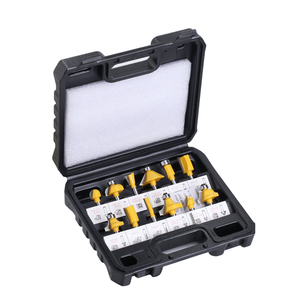
LAVIE 12pcs 6mm 1/4" 8mm Shank Router Bit Set Tungsten Carbide Tools Plastic Box Engraving Machine Milling Cutter -C
Tungsten Carbide
Multi-Shank 6/8mm
Wood & Composites
Contact Us

Engineered for maximum metal removal rates (MRR), prolonged tool life, and extreme dimensional accuracy across aerospace-grade alloys, stainless steel, and hardened tool steels.
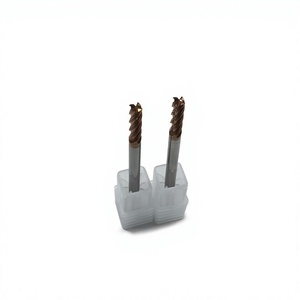
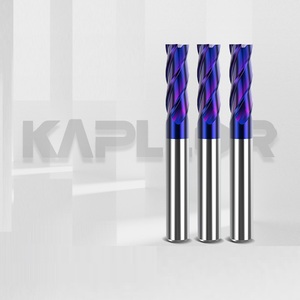
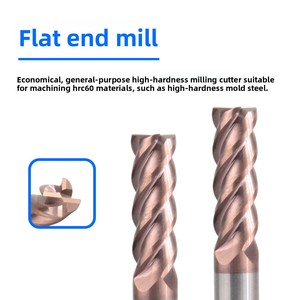
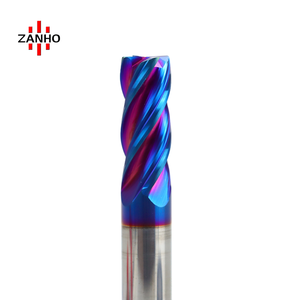
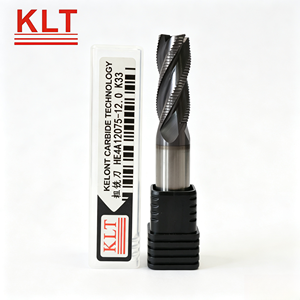
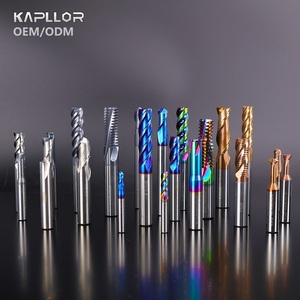
In high-stakes manufacturing centers across Massachusetts—from Route 128 to the Route 495 industrial belt—tool failure means costly downtime. We maintain 100% vertical control over carbide formulation, PVD coating chemistry, and grinding geometry.
Unlike catalog distributors who source generic relabeled tools, we press, sinter, ground, and laser-inspect 100% of our solid carbide tooling in ISO-certified plants. Every lot features verifiable micro-grain integrity (0.4µm - 0.6µm) for consistent wear resistance.
Our staff metallurgists and CNC application engineers assist Boston machine shops with dynamic chip thinning, deflection analysis, radial chip load optimization, and custom tool geometry design for exotic aerospace alloys.
With strategic fulfillment centers on the East Coast, standard orders ship with next-day or 2-day ground delivery to Boston, Cambridge, Woburn, Worcester, and Providence, guaranteeing minimal machine idle time.
We supply custom-branded tooling programs, proprietary flute geometries, and specialized coating solutions tailored for high-volume defense contractors and OEM machinery builders throughout New England.
The Greater Boston industrial region demands cutting tools capable of maintaining tight tolerances (sub-micron level) across diverse advanced manufacturing sectors.
Servicing aerospace component suppliers in Raynham, Lynn, and Bedford milling titanium alloys (Ti-6Al-4V), Inconel 718, and 17-4PH stainless steel. Our 4-flute and 5-flute variable helix end mills minimize chatter during deep pocketing and thin-wall structural machining, preventing strain hardening.
Supporting biomedical device manufacturers in Cambridge, Waltham, and Marlborough. High-precision micro end mills (down to 0.2mm diameter) and specialized DLC (Diamond-Like Carbon) coated tools deliver mirror surface finishes on PEEK, cobalt-chrome, and medical-grade titanium orthopedic implants.
Robotics firms in Kendall Square, Boston Seaport, and Framingham require rapid prototyping and high-speed machining (HSM) of 6061-T6 and 7075-T6 aluminum housings. Our 3-flute polished-flute carbide cutters prevent chip welding and ensure pristine surface aesthetics at speeds up to 25,000 RPM.
Match your work material with our optimized carbide substrate, helix angle, and coating system to maximize productivity:
| Target Material | Recommended Tool Type | Optimal Helix Angle | Coating Technology | Typical Applications |
|---|---|---|---|---|
| Titanium Ti-6Al-4V | 5-Flute Solid Carbide End Mill | 38° / 41° Variable Helix | AlTiN / nACo Nanocomposite | Aerospace structural brackets, Jet engine mounts |
| Inconel 718 / Hastelloy | 4-Flute Heavy Duty Rougher | 45° High Helix | TiSiN High-Temp Coating | Defense turbine blades, Subsea pressure housings |
| Aluminum 6061-T6 / 7075 | 3-Flute Single-End Polished End Mill | 37° / 45° Chipbreaker | ZrN or Uncoated Polished | Robotics chassis, Telecom microwave filters |
| Medical Grade PEEK | 2-Flute Micro Ball Nose Mill | 30° Low Friction Helix | DLC (Diamond-Like Carbon) | Surgical instruments, Spinal cages |
| Tool Steel H13 (HRC 50-60) | 4-Flute High-Hardness End Mill | 45° Rigid Core Helix | AlTiCrN Super-Hard Coating | Injection molds, Stamping die cavities |
To capture market share in competitive manufacturing contracts, Boston machine shops must move beyond standard tool catalogs. Deep understanding of tool dynamics yields massive reductions in cost-per-part.
Milling Nickel-based superalloys like Inconel 718 generates intense localized temperatures at the cutting edge exceeding 900°C. Standard TiN or TiCN coatings break down rapidly under these conditions, leading to catastrophic tool failure.
Our specialized TiSiN nanocomposite coatings form an amorphous silicon oxide protective layer at high operating temperatures. This layer acts as a thermal barrier, reflecting heat into the chip rather than the carbide substrate, preserving edge sharpness and preventing premature thermal cracking.
Harmonic vibration (chatter) is the primary cause of poor surface finish and micro-chipping during deep axial cuts in thin-walled defense components. Traditional equal-spaced 4-flute end mills establish a constant resonant frequency that amplifies vibration.
By engineering tools with unequal flute spacing (variable pitch) and unequal helix angles, the cutting frequency is continuously disrupted. This harmonic damping allows machine operators in Boston to increase depth of cut (Ap) by up to 40% while maintaining RMS surface finishes under 0.4µm.
High-Efficiency Milling strategies leverage small radial widths of cut (Ae) combined with large axial depths of cut (Ap) at elevated feed rates. When radial engagement drops below 30% of tool diameter, chip thinning occurs.
Using our wave-edge roughing end mills, machinists can accurately calculate compensated feed rates, dramatically increasing Metal Removal Rates (MRR) while reducing radial cutter forces and prolonging spindle bearing life on Haas, Mazak, and DMG Mori CNC centers.
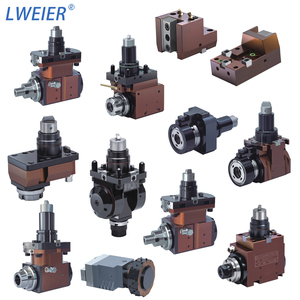
Modern turning-milling centers require rigid live tooling holders to perform complex off-axis milling, drilling, and tapping in a single setup. Poor gear mesh alignment in cheap holders causes runout exceeding 0.01mm.
Our BMT 0 Axial & Radial Live Tool Holders feature precision-ground helical bevel gears (DIN 5 quality) and dual angular contact bearings, ensuring spindle runout within 0.003mm for continuous multi-axis machining operations.
How cutting tool selection aligns with the evolving industrial landscape of Massachusetts and the broader New England region.
With regional skilled labor shortages, Boston shops are migrating toward automated cell production. This requires cutting tools with high predictability and zero early-life failure. Our ISO-certified carbide tooling delivers repeatable tool life metrics crucial for unmanned night shifts.
Federal mandates prioritizing domestic supply chain security have accelerated defense contracting along the I-495 belt. Local shops require full material traceability and high-durability tools to meet strict Department of Defense quality compliance standards.
Advances in Boston's biotech and photonics sectors demand micro-cutters for micro-fluidic channels and sensor housings. We provide micro end mills manufactured with sub-micron carbide rod substrates to withstand microscopic flexural stresses.
Direct technical answers addressing tool selection, delivery logistics, custom specs, and quality compliance for New England machine shops.
We maintain extensive inventory in our East Coast regional warehouse. In-stock solid carbide end mills, router bits, and BMT live tool holders ordered by 3:00 PM EST typically arrive at Boston, Worcester, or Southern New Hampshire locations within 1 to 2 business days via standard ground service, with overnight shipping available for emergency machine-down situations.
Yes. We work closely with defense contractors and sub-tier suppliers across Massachusetts. Our manufacturing processes adhere to strict ISO 9001 quality management systems, providing complete lot traceability, material certifications, and micro-geometry inspection reports required for military and aerospace defense contracts.
For hardened tool steels such as D2, H13, and CPM alloys, we recommend our HRC65 Solid Carbide End Mill series equipped with AlTiCrN or TiSiN nanocomposite coating. These coatings possess ultra-high oxidation resistance (up to 1100°C) and extreme surface hardness (HV 3600), allowing effective dry milling without coolant thermal shock.
Absolutely. Our engineering team designs and manufactures custom solid carbide tools based on your CAD drawings or component part specs. We offer custom flute lengths, corner radii, neck relief diameters, and specialized coatings with fast production turnaround times tailored for local OEM production lines.
BMT (Base Mount Turret) live tool holders provide a rigid, keyway-locked four-bolt interface directly to the lathe turret. Compared to VDI wedge setups, BMT holders deliver superior rigidity under heavy radial loads, allowing higher feed rates during cross-milling and off-axis drilling while reducing tool chatter and spindle bearing wear.
General-purpose tools utilize larger tungsten carbide grain sizes (1.0µm - 2.0µm) with higher cobalt content, making them flexible but susceptible to rapid abrasive wear. High-performance tools use ultra-fine or sub-micron carbide grain structures (0.4µm - 0.6µm) with optimized cobalt binder ratios, yielding significantly higher transverse rupture strength (TRS) and edge retention under severe cutting loads.
Consult with our CNC tooling engineers for a technical audit of your milling operations, custom tool quotes, or test samples for your Boston-area machine shop.