16 Inch Heavy-Duty Diamond Milling & Scarifier Silent Core Disc
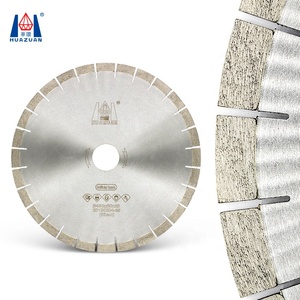
Engineered with sound-dampening laser-welded technology for heavy concrete profiling and structural slab joint slotting.
Engineered for high-impact concrete milling, epoxy coating removal, bridge deck planers, and surface profiling. Directly manufactured to withstand high-tensile shear forces.
Engineered with sound-dampening laser-welded technology for heavy concrete profiling and structural slab joint slotting.
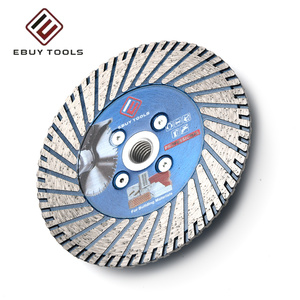
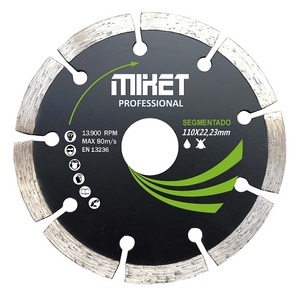
High-speed aggregate cutting wheel designed for handheld edge scarifying, mortar joint clearing, and concrete edge profiling.
Equipped with Polycrystalline Diamond (PCD) segments for non-loading removal of gummy elastomeric coatings and thick epoxies.
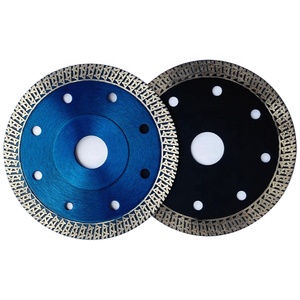
Precision cooling mesh pattern prevents thermal expansion warping during heavy continuous edge scarification and prep work.
Heavy cobalt-bonded segments formulated specifically for aggressive concrete slab leveling and severe surface profiling.
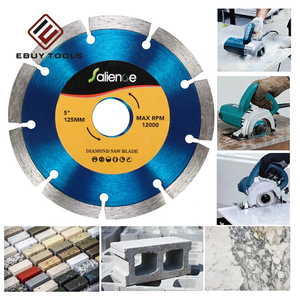
Multi-purpose diamond cutter built for fast penetration into cured high-PSI concrete slabs, bridge decks, and highway pavement.
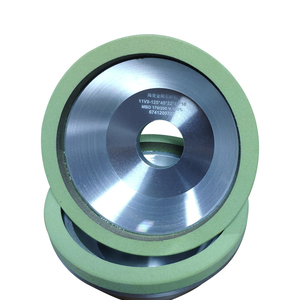
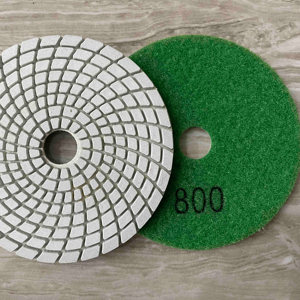
Designed for post-scarification smoothing and transition profiling on industrial concrete floors and architectural stone slabs.
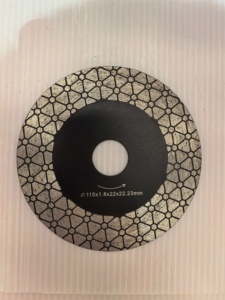
Ultra-thin kerf profile reduces machine amperage draw during precise joint expansion milling and anti-slip traction grooving.
In the North American surface preparation and concrete remediation sector, concrete scarifiers (frequently designated in Department of Transportation [DOT] specifications as concrete planers, rotary cutters, or surface milling machines) represent the primary mechanical apparatus for aggressive sub-layer removal. Unlike planetary floor grinders that rely on tangential shearing action, a concrete scarifier utilizes a high-torque rotary drum equipped with shaft-mounted cutter assemblies. As the drum rotates at high RPMs (typically between 1,000 and 1,800 RPM), centripetal force hurls hardened cutter wheels—typically featuring tungsten carbide tips (TCT) or hardened steel beam design—against the rigid concrete matrix.
This impact-driven kinetic mechanical action generates micro-fractures in the top layer of the concrete, effectively pulverizing mortar, cementitious paste, and coarse aggregates to a controlled depth ranging from 1/16 inch (1.5 mm) to over 1/4 inch (6 mm) per single pass. For commercial flooring contractors, municipal infrastructure developers, and industrial maintenance teams operating across the United States, selecting the correct factory supplier and cutter cage configuration dictates the balance between volumetric production rates (measured in square feet per hour) and per-square-foot consumable costs.
Technical Insight for US Engineers: Rotary scarification is fundamentally differentiated from shot blasting and diamond grinding by its mechanical impact profile. While shot blasting creates an ideal ICRI CSP 3 to CSP 5 profile through spherical steel shot impingement, high-torque scarifiers deliver the extreme impact energy required to fracture high-strength 6,000+ PSI cured concrete and shear off elastomeric membranes up to 1/8-inch thick without loading or melting the substrate.
A primary factor determining the total cost of ownership (TCO) in US contractor operations is cutter wheel metallurgy. Superior factory production standards mandate vacuum-sintered tungsten carbide insert tips brazed onto high-alloy fatigue-resistant steel bodies. Below is an engineering comparison of the primary cutter types manufactured for the US market:
| Cutter Assembly Type | Metallurgical Structure | Primary Application | ICRI Profile Rating | Relative Wear Life (Sq. Ft.) |
|---|---|---|---|---|
| Tungsten Carbide Tipped (TCT) Star | 6-Point Heavy-Duty Cobalt-Tungsten Matrix | Aggressive concrete profiling, heavy epoxy/urethane removal | CSP 5 to CSP 9 | 35,000 - 65,000 sq. ft. |
| Steel Beam Cutters | Heat-Treated High-Carbon Forged Steel | Light surface cleaning, oil sludge scraping, paint stripping | CSP 4 to CSP 5 | 8,000 - 15,000 sq. ft. |
| Milling Cutters (PCD Insert) | Polycrystalline Diamond / Hardened Shaft | Thermoplastic traffic line removal, sticky elastomeric coatings | CSP 6 to CSP 8 | 50,000 - 90,000 sq. ft. |
| Diamond Flail Cutters | Sintered Segmented Diamond Teeth | High-precision bridge deck planing, zero-micro-fracture prep | CSP 4 to CSP 6 | 40,000 - 75,000 sq. ft. |
Key legislative, technical, and environmental shifts shaping concrete scarification machinery procurement across North America.
The enforceability of OSHA’s Respirable Crystalline Silica (RCS) standard has fundamentally altered equipment engineering. Modern scarifiers in the US must incorporate sealed drum housings and dual 2-inch or 3-inch dust vacuum ports capable of integrating directly with OSHA Table 1 compliant HEPA dust extractors (minimum 250+ CFM with auto-pulse cleaning filter systems).
The federal Infrastructure Investment and Jobs Act (IIJA) has funneled billions into US highway deck repair, airport runway maintenance, and bridge expansion joint rehabilitation. DOTs in states such as California (Caltrans), Texas (TxDOT), and Pennsylvania (PennDOT) require concrete planers that deliver uniform CSP 6+ profiles for overlay bonding without compromising structural rebar depth.
The surge in automated mega-distribution centers (Amazon, Walmart, Target) across the US Sunbelt and Midwest demands ultra-flat floors (Superflat FF/FL tolerances). High-torque walk-behind and ride-on concrete scarifiers are used to rapidly shave joint curls, high spots, and failed polyurea joint fillers prior to diamond polishing.
Real-world engineering scenarios where concrete scarification equipment is specified over alternative preparation methodologies.
Region Focus: Northeast & Midwest Freeze-Thaw Zones (e.g., NY, OH, IL, PA)
De-icing salts and thermal expansion cause severe concrete spalling on bridge decks. Scarifiers equipped with heavy tungsten carbide cutter drums remove delaminated concrete and chloride-contaminated layers down to 1/2-inch depth. This generates an ICRI CSP 7 profile required for polymer concrete overlays and elastomeric waterproofing membranes.
Region Focus: Food & Beverage Processing Facilities (e.g., NC, GA, IA, WI)
USDA and FDA compliant food processing plants require 1/4-inch thick cementitious urethane flooring. Scarifiers cut perimeter anchor trenches (keyways) and create a deep ICRI CSP 6 profile. Without scarification, heavy thermal shock from daily steam cleaning leads to catastrophic floor delamination.
Region Focus: Metropolitan Centers (e.g., Los Angeles, Houston, Chicago, Miami)
Multi-level parking structures require permanent anti-slip safety traction. Scarifiers outfitted with spaced cutter wheels or diamond saw blades perform line grooving on steep drive ramps, ensuring vehicular traction under wet and icy conditions while meeting municipal building codes.
Unlike virtual brands and re-labeling distributors who source unverified equipment from trading intermediaries, we operate as a true vertical manufacturer. From raw diamond grit selection and metallurgy chemistry to robotic laser-welding, drum balancing, and final tensioning—100% of our production process is controlled under rigid quality management systems.
Technical and commercial clarity regarding concrete scarifier selection, drum maintenance, and procurement terms.
A concrete scarifier uses rotary impact cutters (TCT star or beam cutters) mounted on shafts to fracture and chip away concrete surfaces, producing a heavy ICRI CSP 4 to CSP 9 surface profile. A concrete grinder uses horizontal rotating diamond discs to shear and sand the surface, producing a smoother ICRI CSP 1 to CSP 3 profile. Scarifiers are chosen for aggressive material removal (>1/16"), thick coating removal, and keyway cutting.
Select cutter type based on substrate hardness and coating type: Tungsten Carbide Tipped (TCT) Cutters for hard concrete milling, epoxy removal, and heavy profiling; Steel Beam Cutters for light cleaning and paint removal; PCD Cutters for sticky, rubberized coatings that gum up standard carbide teeth. Balance cutter quantity with spacers to adjust line spacing and profile aggressiveness.
Yes. As a true direct manufacturer, we engineer replacement drums, shafts, TCT cutters, and carbide assemblies engineered to precision tolerances for all major walk-behind scarifiers used in the US rental and contracting markets, including 8-inch and 10-inch models from EDCO, Bartell Global, Husqvarna, Airtec, and Kut-Rite.
Our scarification machinery housings feature fully enclosed rubber-skirted cutter chambers combined with heavy-duty 2" or 3" vacuum ports. When connected to a HEPA vacuum meeting OSHA 29 CFR 1926.1153 Table 1 criteria (delivering adequate air velocity and auto-pulsing filter cleaning), airborne respirable crystalline silica is kept well below the Permissible Exposure Limit (PEL) of 50 µg/m³.
Standard replacement cutters, drum cages, and stock tooling ship within 24 to 48 hours from our Irvine, CA or Covington, GA stocking warehouses. Custom OEM cutter configurations or private-label distributor shipments typically carry a 2 to 4-week manufacturing lead time depending on order volume and packaging specifications.
Yes. We support custom packaging, private label branding, custom laser etching, and tailored metallurgical formulations for regional equipment distributors, brand owners, and national tool rental chains across North America.
Talk directly with our product engineers to match concrete scarifier cutter bonds, drum assemblies, or private label programs to your specific job requirements.