Engineered for extreme abrasion, green concrete contraction control, heavy-duty masonry, and stone fabrication across North African job sites.
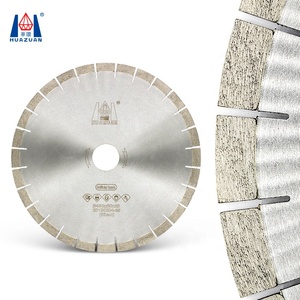
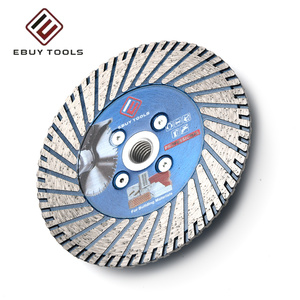
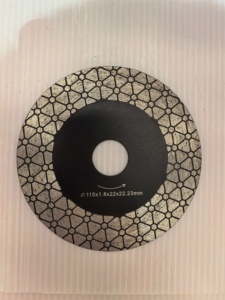
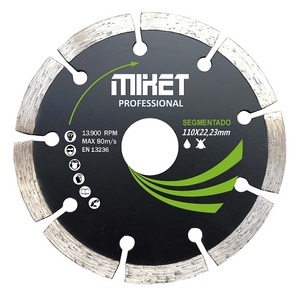
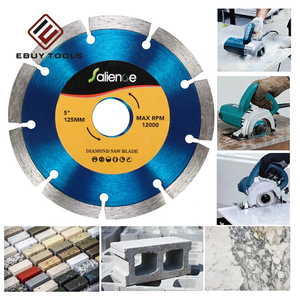
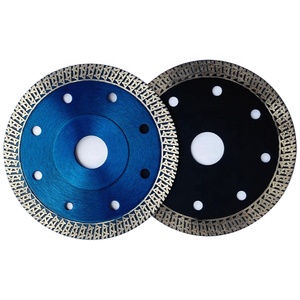
Control-joint creation in freshly poured slabs—widely recognized as "green concrete sawing"—is a critical phase in modern civil engineering and industrial floor construction. In fast-developing economic hubs across Morocco, such as Casablanca, Tangier-Med, Rabat, and Marrakech, extreme ambient thermal gradients, low relative humidity, and harsh coastal/desert exposure accelerate hydration kinetics. When concrete cures under these conditions, tensile stresses accumulate rapidly within the matrix. If relief joints are not cut early enough, random stress-relief cracking occurs, permanently compromising the structural integrity, floor flatness (FF), and floor levelness (FL) ratings of the slab.
The Early Entry Advantage: Early entry sawing takes place during the "green window"—typically within 1 to 4 hours after concrete finishing, while the slab is still green and before final set-induced stress exceeds the tensile strength of the curing paste. Achieving a crisp, non-spalled joint requires specialized diamond blade chemistry, precision-engineered arbor geometry, and matching anti-raveling skid plates.
During the initial setting phase, concrete changes from a plastic state to a rigid stone-like composite. Green concrete exhibits extremely high slurry abrasiveness because unhydrated silica sand particles are held loosely within a fragile calcium silicate hydrate (C-S-H) matrix. Conventional wet-cutting or late dry-cutting flat saws operate after 12 to 24 hours. By that time, micro-cracks have already nucleated beneath the surface.
By implementing early-entry dry cutting technology using specialized laser-welded diamond blades, contractors operate while the concrete compressive strength is between 3.5 MPa and 10 MPa (500 psi to 1500 psi). This requires specific diamond tool characteristics:
Morocco's geographical diversity presents unique aggregates that directly influence diamond matrix selection. In the northern region around Tangier and Tetouan, hard limestone mixed with silica requires a balanced medium-hard metal bond. In the Atlas regions (Marrakech, Ouarzazate) and coastal plains (Casablanca, El Jadida), contractors frequently encounter heavy quartz sands and tough basalt aggregate derived from riverbed deposits and hard rock quarries.
When cutting green concrete formulated with dense, highly abrasive crushed quartzite, standard diamond blades suffer from rapid matrix erosion—known in the industry as undercutting. Undercutting occurs when abrasive slurry washes away the steel core right below the welded segment, causing premature segment loss and severe safety risks. Our specialized Green Concrete Early Entry Blades are engineered with broad-gauge protective segments (deep-segmented protection or tungsten-carbide pins) to shield the steel core weld zone from premature wash, ensuring maximum linear meter yield per blade.
Below is an engineering comparison evaluating productivity, crack mitigation efficiency, water management, and operational expenses on large-scale logistics and highway paving projects in Morocco.
| Performance Metrics | Early-Entry Dry Cutting (Our System) | Conventional Wet Cutting | Impact on Project ROI |
|---|---|---|---|
| Sawing Execution Window | 1 to 4 hours post-finishing (Green state) | 12 to 24 hours post-pour (Cured state) | Prevents 99.8% of random thermal stress cracks |
| Joint Quality & Edge Spalling | Zero edge spalling via Skid Plate action | High risk of micro-chipping and raveling | Eliminates costly joint epoxy repair work |
| Water & Slurry Management | 100% Dry Cutting (Zero water usage) | Requires continuous water flow & slurry vacuum | Critical for water-scarce Moroccan regions |
| Linear Meter Cutting Speed | Up to 8.5 meters per minute | 2.0 to 3.5 meters per minute | Reduces labor & machine hours by over 60% |
| Core Wash Protection | Deep-segmented tungsten undercut guards | Standard laser weld without core protection | Extends overall blade service life by 35% |
Deploying advanced diamond tooling solutions tailored to North Africa’s most ambitious engineering and urban projects.
Strategic maritime expansions like Nador West Med and Tanger-Med II demand heavy-duty, high-load concrete pavement. Early-entry saw blades ensure continuous, crack-free jointing on massive container yard aprons exposed to marine salinity and extreme diurnal temperature swings.
The expansion of Morocco’s high-speed rail network (LGV Kenitra-Marrakech) and the Autoroutes du Maroc (ADM) toll plaza paving require precise slab track relief cuts. Our blades cut ultra-straight joints that prevent joint deterioration under high dynamic axle loads.
From the vast solar fields of Noor Ouarzazate to high-density industrial parks in the Kenitra Atlantic Free Zone, early-entry dry cutting satisfies demanding slab flatness specifications without requiring millions of liters of scarce process water.
With major stadium construction and urban renovations underway for the 2030 FIFA World Cup (e.g., Grand Stade de Tánger, Casablanca Megastadium), our early-entry blades provide rapid turnaround for polished concrete concourses and architectural floor spaces.
As Morocco advances its national infrastructure plan under Vision 2030, the concrete sector is experiencing significant technical changes. Understanding these industry trends is vital for project specifiers and procurement engineers:
To meet international environmental targets, Moroccan cement producers (such as LafargeHolcim Maroc and Ciments du Maroc) are adopting low-carbon cements blended with calcined clays and pozzolans. These alternative binders alter hydration rates, causing faster initial set times and higher early abrasiveness. Our engineering team continuously refines bond chemistry to match these evolving binder formulations.
Civil contracts overseen by the Ministry of Equipment and Water (Ministere de l'Equipement et de l'Eau) enforce strict tolerances for joint spacing, edge integrity, and seal installation depth. Early entry sawing produces smooth, uniform joint reservoirs that reduce sealant consumption and lower long-term maintenance costs.
Given recent climatic droughts in North Africa, water conservation on construction sites is becoming a priority. Dry early-entry sawing eliminates the thousands of gallons of water required by traditional wet sawing, aligning with sustainable building practices and reducing slurry cleanup overhead.
Unlike third-party distributors or re-labelers, our manufacturing operations control every stage of diamond tool production in-house. Since 2003, our facilities have delivered industrial-grade diamond cutting discs, early entry blades, core bits, and surface preparation tooling engineered for demanding aggregate environments.
We manage every step from synthetic diamond grit sorting and cobalt powder metallurgy to cold pressing, sintering, and automated laser welding cells.
Our materials engineers formulate customized bond matrices designed to handle specific aggregate hardness levels, from soft limestone to abrasive quartzite.
We supply private label blade lines, custom arbor configurations, specialized segment designs, and branded packaging for regional distributors.
With deep inventory reserves and dedicated export logistics teams, we offer reliable shipping directly to major Moroccan port entry points, including Tangier-Med and Casablanca.
Key technical answers for procurement managers, civil engineers, and concrete contractors sourcing diamond tools in North Africa.
Bond selection depends directly on aggregate hardness and sand abrasiveness. For soft-to-medium aggregate (like crushed limestone in northern Morocco), select a medium-hard metal bond. For highly abrasive sands or quartz aggregates (commonly found in river sands around Casablanca or Marrakech), choose a hard, erosion-resistant tungsten carbide bond matrix to protect against core wash.
In green concrete, aggregate particles are not yet fully locked by cured cement paste. The skid plate applies vertical pressure on both sides of the blade as it exits the cut, preventing the blade from dislodging aggregate edges. Replacing the skid plate when worn is essential to maintaining crisp, un-chipped joint edges.
We supply standard triangular arbors (specifically matching Husqvarna Soff-Cut style equipment), 1-inch circular arbors with drive pin holes, and custom metric arbor dimensions tailored to European and North American walk-behind saws commonly used across Africa.
While engineered primarily for dry cutting green concrete, our laser-welded segments can handle light wet cutting on soft cured concrete. However, using hard-bond early entry blades on hard, cured concrete will lead to blade glazing (polishing of the diamond segment), reducing cutting speed. For cured concrete, we recommend our specialized Professional Series cured concrete flat saw blades.
We provide complete export documentation, including Certificate of Origin (COO), Commercial Invoices, Packing Lists, Bill of Lading (BOL), and ISO 9001 quality compliance certificates. Our logistics team works with local clearing agencies to ensure smooth clearance through customs at Tangier-Med or Casablanca Port.
Our standard stocking catalog items carry flexible low MOQs. For custom private-label branding, specialized laser-etched blade art, and bespoke packaging boxes, our typical factory batch MOQ starts at 50 to 100 units per diameter specification.
Connect with our engineering specialists today to request technical product recommendations, request custom bond formulations, or secure wholesale distributor pricing for Morocco and North Africa.
Contact Us