
Directly engineered for non-ferrous alloys, high-silicon aluminum, graphite, carbon fiber (CFRP), and advanced technical ceramics.
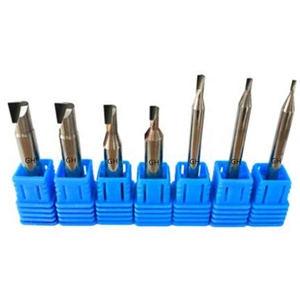
Engineered with ultra-fine grain diamond tips for burr-free routing, slotting, and profiling in abrasive CFRP, GFRP, and sintered ceramic matrix composites.
Get a Quote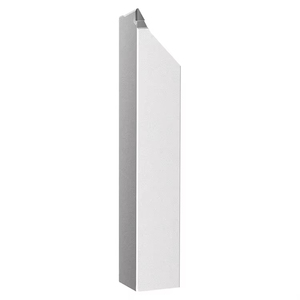
Designed for high-speed CNC lathe centers turning copper, brass, and aluminum alloys. Features extreme edge retention and micro-grooving capabilities.
Get a Quote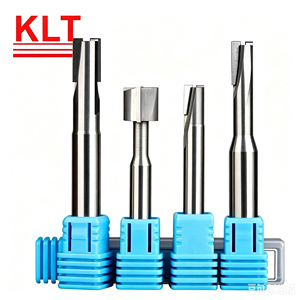
Achieves mirror surface finishes (Ra < 0.02μm) on non-ferrous metals, acrylics, and graphite electrodes. Eliminates secondary polishing cycles completely.
Get a Quote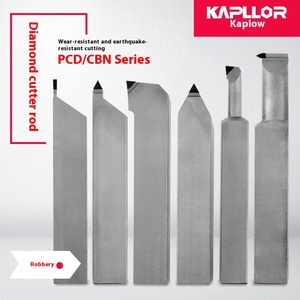
Integrated 45/60/95-degree indexable diamond insert tooling box set. Ideal for heavy-duty turning and precision finishing on hardened materials.
Get a Quote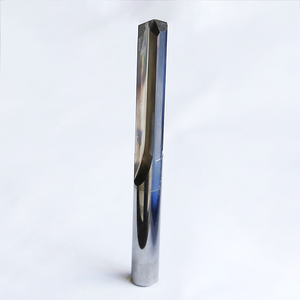
Combines drilling and precision reaming in a single operation. Features internal coolant passages for maximum chip evacuation in aluminum engine blocks.
Get a Quote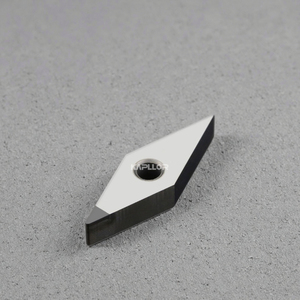
Tailor-made diamond inserts tailored for complex contours in aerospace housing components, optical lenses, and electronic enclosures.
Get a Quote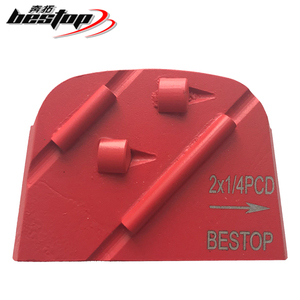
Heavy-duty floor prep tooling designed for aggressive removal of thick epoxy, polyurethane coatings, elastic mastics, and glue on concrete sub-bases.
Get a Quote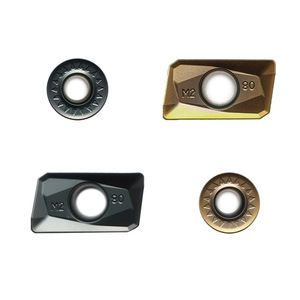
Multi-layer coated cutting tools optimized for tough stainless steel, alloyed titanium, and hardened cast iron structural machining.
Get a QuotePolycrystalline Diamond (PCD) represents the apex of superhard tool synthesis. Created through the high-pressure, high-temperature (HPHT) consolidation of micron-sized synthetic diamond grains bonded with a metallic cobalt catalyst matrix onto a solid tungsten carbide substrate, PCD tooling achieves unmatched hardness (approaching ~8000 HV) and thermal conductivity (up to 700 W/m·K).
For precision manufacturers in Osaka—spanning the high-density industrial hubs of Higashiosaka, Sakai, Kadoma, and Hirakata—maintaining extremely strict process capability indices (Cpk) while machining complex non-ferrous and composite materials is a constant operational challenge. Conventional solid carbide tooling experiences rapid abrasive wear, micro-chipping, and thermal degradation when exposed to high-silicon aluminum alloys (e.g., A390, ADC12), carbon-fiber-reinforced polymers (CFRP), and abrasive green ceramic substrates. Our specialized PCD tooling architecture addresses these failure modes directly at the atomic level.
Information Gain Insight: Unlike standard distributors who supply off-the-shelf catalog tools, a true diamond tool manufacturer controls grain size distribution (multimodal 2μm to 25μm blends), cobalt binder leaching processes, and vacuum brazing metallurgy. This ensures that every PCD cutting edge delivered to Kansai manufacturing facilities maintains zero thermal hysteresis and zero micro-delamination during high-speed milling operations.
During machining of non-ferrous materials at cutting speeds exceeding 3,000 m/min, tool tip temperatures can exceed 700°C. Standard carbide cutters soften rapidly, leading to built-up edge (BUE) formation and dimensional drift. PCD cutters maintain mechanical stability due to the ultra-strong carbon-carbon covalent bonds within the diamond lattice. Furthermore, by implementing vacuum electrical discharge machining (EDM) erosion and picosecond laser cut-profiling, our tools achieve edge radii as fine as 1.5 microns, reducing cutting forces by up to 45% and eliminating burr formation on thin-walled automotive components.
Vertical engineering integration, rigorous quality assurance, and application-specific diamond grade customization.
We do not re-label third-party tools. From raw diamond powder selection to segment sintering, laser welding, and dynamic balance testing (G2.5 @ 40,000 RPM), 100% of our tool production is executed within our owned manufacturing facilities.
Utilizing 5-axis 3D laser erosion machines, our PCD cutters feature complex 3D chipbreakers directly sculpted into the diamond surface. This drastically improves chip evacuation during deep pocket milling in aluminum alloys.
Osaka machine shops often require non-standard tool profiles for proprietary component designs. We provide rapid-turnaround custom engineering (OEM/ODM) backed by full CAD/CAM simulation and tool re-sharpening/re-tipping services.
By matching specific diamond grain size blends to material abrasiveness, our engineers prevent early edge spalling. Coarse grains provide abrasion resistance, while fine grains deliver smooth surface finishes.
Every single PCD tool undergoes 100% optical inspection using CMM coordinate measuring machines and Zoller tool setters to guarantee pitch diameter tolerances within ±0.002mm prior to dispatch.
With streamlined global shipping channels and dual-warehouse distribution hubs, we guarantee prompt delivery and dedicated technical support for Osaka's automotive, semiconductor, and industrial machinery plants.
The Greater Osaka industrial regional economy (Kansai area) represents one of the most technologically advanced manufacturing ecosystems globally. The region demands tooling solutions tailored specifically to localized production lines and strict Japanese quality standards (Monozukuri). Below are key application scenarios where our PCD tools deliver transformative productivity gains:
As major Japanese automotive OEMs and Tier-1 suppliers accelerate the transition toward Electric Vehicles (EVs), lightweighting aluminum castings (such as Al-Si die-cast motor housings, battery trays, and transmission cases) is vital. Machining high-silicon aluminum (e.g., ADC12 with 10-12% Si content) with carbide tools causes rapid tool degradation within hundreds of cycles. Our multi-flute PCD reamers and end mills provide continuous operation for over 15,000 cycles per edge, maintaining H7 hole tolerances and zero-burr sealing surfaces on EV coolant manifolds.
Osaka’s electronics manufacturing centers produce critical semiconductor processing equipment, copper-clad laminates, and graphite electrodes for EDM molding. Machining ultra-dense synthetic graphite requires tooling that resists fine abrasive dust while maintaining sharp cutting edges. Our PCD end mills and high-gloss diamond tools produce dust-free, chip-free contours with mirror-like surface roughness, preventing micro-fractures in delicate ceramic insulators and heat sinks.
Kansai's aerospace suppliers frequently machine carbon-fiber-reinforced polymers (CFRP) stacked with aluminum or titanium alloys. CFRP/Al multi-layer stacks present extreme machining difficulties due to the vastly different mechanical properties of each layer. Our PCD drill-reamers feature custom double-angle point geometries that prevent delamination at the CFRP exit plane while cleanly machining the underlying aluminum layer in a single pass.
Higashiosaka is renowned world-wide for its concentration of specialized micro-factories and precision mold makers. Machining copper alloy molds, acrylic optical lenses, and hard plastic injection dies requires tools with zero runout and high gloss capability. Our KLT PCD end mills produce direct optical-grade surfaces (Ra < 0.02μm), eliminating hand-polishing and reducing lead times for mold makers by up to 70%.
Selecting the optimal superhard tool material is critical to achieving the lowest cost-per-cut. The following empirical performance table compares PCD tooling against traditional tooling materials across key engineering parameters:
| Tool Material Grade | Vickers Hardness (HV) | Thermal Conductivity (W/m·K) | Ideal Workpiece Material | Tool Life Multiplier | Achievable Surface Finish (Ra) |
|---|---|---|---|---|---|
| PCD (Polycrystalline Diamond) | 7,000 – 8,000 | 500 – 700 | Al-Si Alloys, CFRP, Ceramic, Copper, Graphite | 25X – 50X | < 0.02 μm (Mirror) |
| CVD Diamond Coated Carbide | 8,000 – 10,000 | 300 – 500 | CFRP, GFRP, Graphite, Low-Si Aluminum | 10X – 15X | 0.10 – 0.20 μm |
| CBN (Cubic Boron Nitride) | 4,500 – 5,000 | 200 – 300 | Hardened Steels (>45 HRC), Grey Cast Iron | 15X – 30X | 0.10 – 0.40 μm |
| Micrograin Carbide (Uncoated) | 1,600 – 1,800 | 80 – 110 | General Steels, Soft Metals, Plastics | 1X (Baseline) | 0.40 – 0.80 μm |
Understanding the technological trajectory of Kansai's manufacturing infrastructure enables forward-thinking companies to adopt tooling strategies aligned with next-generation manufacturing mandates:
Japanese industrial environmental policies are driving factories in Osaka to reduce or eliminate flood coolants due to chemical disposal costs and environmental impact. MQL technology delivers tiny quantities of vegetable-based lubricant suspended in air streams. PCD tools are naturally suited for MQL and dry machining because their high thermal conductivity dissipates heat away from the workpiece cutting zone instantly, preventing thermal distortion.
With smart factories operating 24/7 un-manned lights-out production, tool reliability is non-negotiable. A broken carbide tool on an automated line can damage high-value CNC spindles and cause catastrophic downtime. PCD tools offer linear, predictable wear rates. Coupled with tool life monitoring software, Osaka manufacturers can schedule tool changes precisely without un-planned line stoppages.
The integration of composite-to-metal joining in automotive, rail, and marine applications requires tools capable of cutting multi-material structures in single passes. Next-generation PCD tools featuring multi-matrix diamond grain structures deliver high toughness at the cutter perimeter and high wear resistance at the tool tip, handling material transition boundaries seamlessly.
Clear, direct answers regarding custom tooling orders, technical support, lead times, and quality guarantees.
Yes. We regularly manufacture PCD cutters, reamers, inserts, and end mills compliant with JIS, ISO, and custom engineering blueprints. Our technical engineering team reviews tool CAD models, arbor mounting tolerances, and coolant channel configurations before production.
As a true vertical manufacturer, we control every variable: from diamond particle size sorting and sintering temperature profiles to automated 5-axis robotic grinding and 100% CMM inspection. Each production lot comes with full dimensional certificate tracking.
Standard PCD inserts and end mills are maintained in deep inventory for fast dispatch. Custom engineered tooling typically ships within 10 to 14 business days via expedited air freight directly to Osaka, complete with import customs clearance documentation.
Yes. We offer complete tool life cycle management. Worn PCD tips can be eroded, re-ground, or fully replaced (re-tipped) on the original carbide bodies at a fraction of the cost of a new tool, restoring 100% of original cutting performance.
For high-silicon alloys (Si > 10%), we recommend a coarse or multimodal PCD grain structure (10μm to 25μm blend) to maximize wear resistance against abrasive silicon particles. For fine finish requirements (Ra < 0.1μm), a sub-micron PCD grade is specified.
Click the "Get a Quote" button anywhere on this page to initiate a live inquiry with our senior tooling engineers. We provide technical consultation, tool spec matching, and trial cutter samples for qualifying high-volume production projects.
Partner with a true superhard PCD tool manufacturer. Contact our engineering team today for custom specifications, tool life audits, and competitive bulk quotes.
Get a Quote