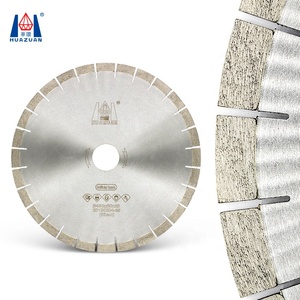

Engineered for extreme wear resistance, chip-free cutting, and high-gloss finishing across Brazilian granite, quartzite, marble, and reinforced concrete surfaces.
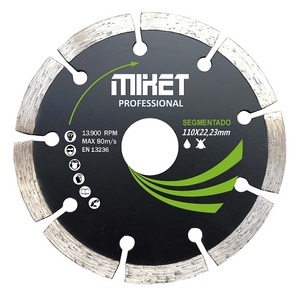
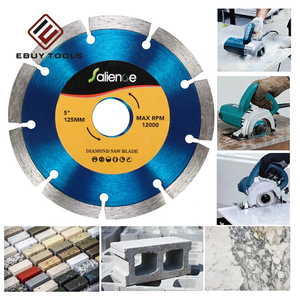
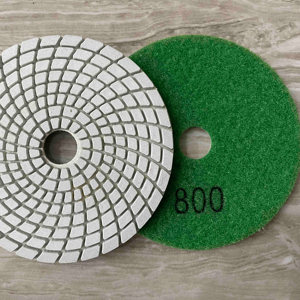
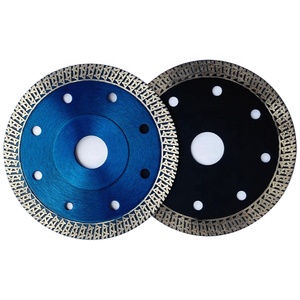
Brazil stands as one of the world's premier mining and stone-processing epicenters, globally renowned for its vast extraction of highly abrasive natural quartzites (such as Taj Mahal, Perla Venata, and Mont Blanc), dense granites (Granito Café, Preto São Gabriel), and complex metamorphic slates. Processing these ultra-hard geological formations demands an intimate understanding of diamond micro-fracturing dynamics, matrix bond erosion rates, and thermal dissipation equilibrium. Standard commercial grinding discs manufactured for soft European limestones or low-density marbles suffer from rapid diamond glazing, excessive segment undercutting, or premature matrix breakdown when applied to Brazilian minerals.
As a dedicated primary manufacturer operating with over two decades of metallurgical research, our engineering approach revolves around matching the bond matrix hardness inversely to the Mohs hardness and abrasiveness of the target substrate. When grinding dense quartzites (Mohs hardness 7+), a soft, ductile matrix composed of fine bronze, copper, and specialized cobalt alloys is essential. This allows worn synthetic diamond crystals to shed predictably under friction, continually exposing fresh, sharp diamond cutting edges. Conversely, for green concrete slab polishing in urban industrial projects across São Paulo, a hardened tungsten-carbide infused metal matrix is deployed to resist the aggressively abrasive slurry generated during early-stage honing.
The core efficiency of a high-performance polishing disc relies heavily on grit purity, thermal stability, and diamond concentration within the segment layer. We utilize high-grade synthetic monocrystalline diamonds grown under extreme high-pressure high-temperature (HPHT) conditions. These crystals possess superior friability control and thermal resistance up to 1,200°C.
Through our proprietary ZENESIS™ patterned diamond technology, individual diamond particles are precisely arranged in three-dimensional matrix patterns rather than randomly dispersed. This controlled spatial distribution ensures constant mechanical contact pressure per diamond point, eliminating micro-vibrations, reducing tool bounce, and yielding a 35% faster removal rate while lowering power consumption on automated CNC bridge saws and multi-head line polishing machinery (such as Breton, Simec, and Pedrini systems widely used in Espírito Santo stone parks).
Brazil's expanding infrastructure, commercial real estate growth, and robust natural stone export sector create distinct mechanical demands across different geographic manufacturing hubs. Our engineered polishing discs and cutting blades are specifically calibrated to excel in these key localized environments:
Centered in Cachoeiro de Itapemirim and Vitória, stone processors handle massive volumes of granite and quartzite slabs for export. Our 16-inch silent core diamond blades and 7-stage resin polishing discs deliver mirror-like gloss values (>90 GU) on automated line polishers without edge chipping or micro-fissuring.
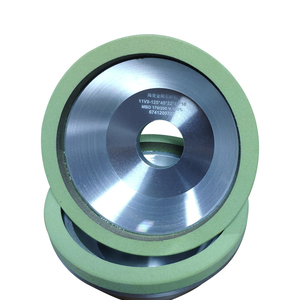
Logistics centers, shopping malls, and industrial facilities in Greater São Paulo require high-durability concrete floor polishing compliant with ASTM E1155 flatness standards. Our metal-bond PCD grinding heads and resin-transition cup wheels rapidly strip epoxy coatings and hone hard power-troweled slabs efficiently.
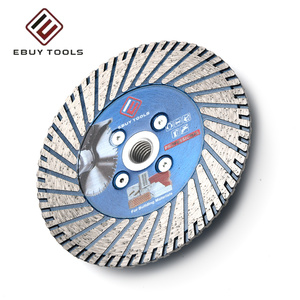
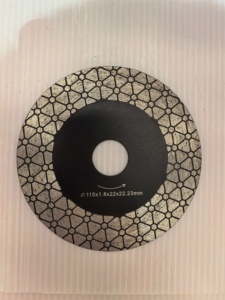
Modern residential and commercial construction across Southern Brazil relies heavily on large-format porcelain tiles (Porcelanato). Our ultra-thin mesh turbo blades (115mm/125mm) provide clean, chip-free dry and wet miter cuts (45-degree meia-esquadria) with hand-held angle grinders.
| Disc Type / Category | Bond / Matrix Type | Target Substrate | Recommended RPM | Cooling Method | Gloss Yield (GU) |
|---|---|---|---|---|---|
| Metal-Bond PCD Segment Disc | Cobalt-Tungsten Matrix | Green Concrete / Epoxy Coating | 1,200 – 1,800 RPM | Dry / Wet | N/A (Coarse Prep) |
| 16" Silent Core Quartzite Disc | Soft Sintered Bronze Alloy | Quartzite (Taj Mahal, Mont Blanc) | 1,450 – 2,100 RPM | Wet (Water Cooling) | Clean Edge Cut |
| Ultra-Thin Mesh Turbo Blade | Electroplated / Hot-Pressed Resin | Porcelain Tile / Ceramic / Glass | 10,000 – 12,000 RPM | Dry / Wet | Chip-Free Finish |
| Flexible Resin Polishing Pads | High-Polymer Crosslinked Resin | Granite / Marble / Engineered Stone | 2,500 – 4,000 RPM | Wet (Optimal Gloss) | 85 – 95+ GU |
Navigating the Brazilian market for industrial diamond tools requires more than just high-quality hardware; it demands strict compliance with regional customs regulations, logistical efficiency, and total cost-per-square-meter optimization. Importers, tool distributors, and large stone processing yards in Brazil face stringent economic metrics under the tax umbrella of ICMS, PIS/COFINS, and NCM customs classifications.
Imported diamond polishing discs and cutting blades typically enter Brazil under NCM code 6804.22.00 (Millstones, grindstones, grinding wheels and the like, of agglomerated synthetic or natural diamond). Tariff optimization relies on choosing a verified direct manufacturer capable of producing precise shipping documentation, Certificates of Origin, and technical safety test compliance according to EN 13236 standards. By buying direct from our factory, Brazilian procurement managers eliminate distributor markups, offsetting import duties and achieving a lower overall cost-per-unit.
With stricter workplace safety standards established by Brazil's Ministry of Labor (NR-15 occupational exposure regulations regarding respirable crystalline silica), construction sites in urban areas like Rio de Janeiro and Curitiba are increasingly mandating zero-dust dry grinding solutions. Our advanced dry-polishing flexible discs incorporate specialized heat-dissipating filler resins and multi-channel air-flow geometries. When paired with standard vacuum extraction shrouds, these discs effectively eliminate airborne silica dust while maintaining long service life without resin scorching or discolored stone burn marks.
To streamline your purchasing decisions, our technical engineering team has compiled detailed answers to the most common questions raised by procurement managers, machine operators, and regional distributors across Brazil.
Unlike trading brokers or re-label distributors, we own and control 100% of our manufacturing process. From raw diamond powder quality testing and matrix powder metallurgy to automated cold pressing, high-vacuum sintering, laser welding, and tension balancing—every step is verified within our ISO 9001:2015 certified facilities.
Send us your substrate requirements, target machine specs, or OEM branding request. Our engineers respond within 24 hours.
Contact Us