
Engineered for extreme wear resistance, continuous feed velocity, and precision dimensional tolerances across Romanic granite, reinforced concrete, quartz, and marble applications.
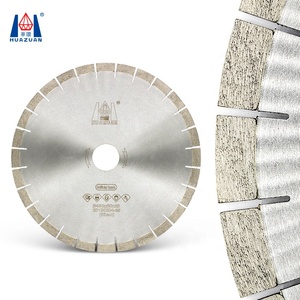
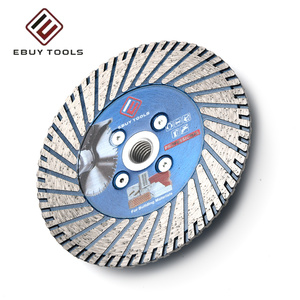
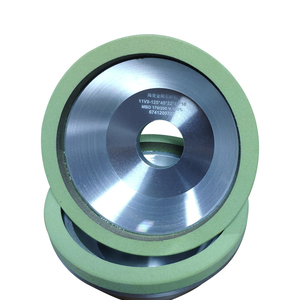
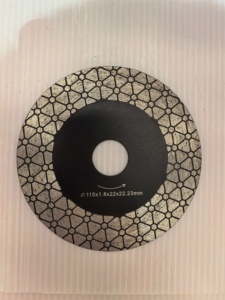
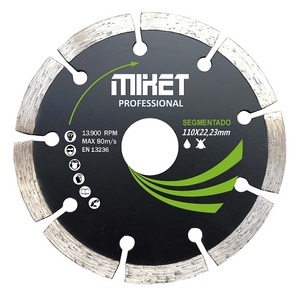
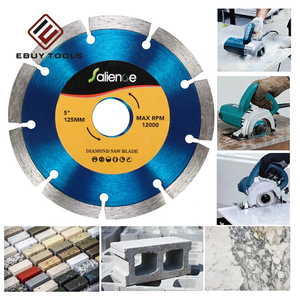
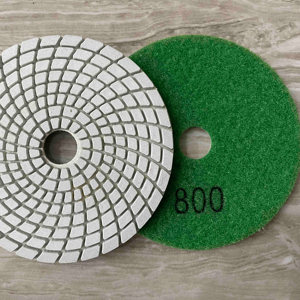
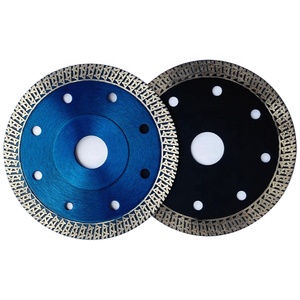
The Romanian construction and mining sectors are undergoing a profound technological transformation driven by EU infrastructure modernization grants, strict environmental sound-and-vibration regulations, and the expansion of heavy civil engineering works. As Romania accelerates key national infrastructure initiatives—such as the construction of the A7 Moldavia Motorway, complex railway bridge retrofits across the Danube Basin, and deep underground transit expansions in Bucharest and Cluj-Napoca—contractors are increasingly discarding traditional pneumatic drilling, explosive blasting, and heavy hydraulic breaking in favor of continuous diamond wire saw cutting systems.
A diamond wire saw functions by threading a high-tensile steel cable embedded with vacuum-brazed, sintered, or electroplated diamond beads through pre-drilled access holes around a mass of stone or heavily reinforced concrete. Driven by hydraulic or electric flywheel drive units at linear speeds ranging from 20 to 45 meters per second, the diamond wire generates a continuous, low-noise kerf capable of severing structures of unlimited thickness with precision tolerances measured down to the millimeter.
For quarry operators in Romania’s major dimensional stone basins—such as the renowned Rușchița pink and white marble deposits in Caraș-Severin, the Simeria limestone fields in Hunedoara, and the hard granite and andesite quarries across the Carpathian Range—diamond wire saws have become the definitive baseline standard. Compared to traditional flame-jet cutting or explosives, diamond wire sawing increases usable stone block yield by up to 40%, eliminates micro-fracturing within the extracted marble blocks, dramatically reduces environmental dust emissions, and lowers energy consumption per cubic meter of stone produced.
The operational efficiency and economic cost-per-cut ($/m²) of a diamond wire saw or diamond disc blade are governed by matrix tribology—the microscopic balance between diamond crystal degradation and metallic bond matrix erosion. As a vertically integrated manufacturer, our facility formulates specialized metal powders (including cobalt, nickel, tungsten carbide, copper, and iron alloys) combined with synthetic monocrystalline diamonds of extreme compressive strength (such as high-grade Ti-coated SDA100+ series grit).
When cutting highly abrasive materials common in Romania—such as green concrete with river gravel aggregates from the Olt or Siret rivers, or quartz-rich granites—the surrounding metallic matrix must possess exceptional abrasion resistance to prevent premature diamond loss (undercutting). Conversely, when cutting dense, non-abrasive materials like hard cured concrete filled with high-density steel rebar or compact marble, a softer, self-sharpening matrix is deployed. This allows the metallic binder to wear away at a controlled rate, continually exposing fresh, razor-sharp synthetic diamond crystal cutting points.
| Substrate Material (Romania Market) | Dominant Aggregate / Hardness | Recommended Diamond Wire Type | Optimal Bead Density (Beads/m) | Linear Wire Speed (m/s) |
|---|---|---|---|---|
| Rușchița & Transylvanian Marble | Calcite / Mohs 3.0 - 4.0 | Electroplated / Plastic Injection Wire | 36 - 40 beads/m | 35 - 40 m/s |
| Carpathian Granite & Andesite | Quartz, Feldspar / Mohs 6.5 - 7.5 | Sintered Cobalt-Tungsten Matrix | 40 - 42 beads/m | 22 - 28 m/s |
| Heavily Reinforced Civil Concrete | High Rebar Ratio (>32mm Rebar) | Vacuum Brazed & Rubberized Wire | 40 beads/m | 20 - 25 m/s |
| Engineered Quartz & Ceramic Slabs | Synthetic Resin + Quartz / Mohs 7.0 | Silent Core Laser Welded Blades | Continuous Segmented Rim | 30 - 38 m/s |
Our direct factory supply network provides specialized cutting equipment custom-engineered for Romania’s diverse geographical and structural challenges. Below are the primary application domains where our diamond wire saws, core bits, and diamond blades deliver superior performance:
Enabling bench-cutting heights over 15 meters in Rușchița and Simeria stone reserves. Rubberized diamond wire cables withstand high tension and extreme ambient temperature fluctuations typical of Romanian winters and summers.
Facilitating non-destructive severance of reinforced concrete bridge piers along the Danube, Argeș, and Mureș rivers. Enables large structural section removals without micro-cracking remaining support abutments.
Low-noise, vibration-free utility modifications, deep floor sawing, and vault re-engineering in Bucharest, Timișoara, Iași, and Cluj-Napoca under tight metropolitan environmental guidelines.
Navigating the Romanian market requires a granular understanding of local macroeconomic forces, regulatory updates, and technological transitions. Key industry trends include:
A. Strict Compliance with EU Green Transition Directives: Romania’s alignment with European Union environmental standards has led to rigorous monitoring of construction site carbon footprints, slurry waste management, and operational noise thresholds. Modern rubber-injected diamond wires eliminate cable fraying and steel strand exposure, preventing hazardous metal particulate release while maintaining closed-loop water cooling compatibility.
B. Adoption of High-Powered Electric & High-Frequency Sawing Machines: Traditional diesel hydraulic drive packs are rapidly giving way to compact, high-frequency electric wire saw machines (ranging from 15kW to 40kW outputs). These units require diamond wires that can sustain higher starting torque without sleeve slippage or diamond bead deformation.
C. Growth in Slab Fabrication & Porcelain Processing: As real estate development flourishes in Romanian urban hubs, local stone fabricators demand ultra-thin diamond blades (such as 1.2mm mesh turbo blades and silent core quartz discs) capable of performing zero-chip cuts on large-format sintered porcelain slabs (e.g., Neolith, Dekton) and engineered quartz surfaces.
Unlike third-party trading intermediaries who re-label outsourced tooling, our enterprise maintains 100% vertical control over every step of the manufacturing lifecycle. Founded on rigorous metallurgical principles, our brand delivers true factory-direct engineering to the Romanian market.
Rubberized diamond wire is universally recommended for heavy reinforced concrete demolition and hard rock quarrying because vulcanized synthetic rubber firmly grips the steel cable, sealing it completely against abrasive water slurry and preventing internal wire corrosion during sharp bend angles. Plastic-injected wire is ideal for softer non-abrasive marble quarrying (like Rușchița), providing excellent cost efficiency. Spring-assembled wire is typically reserved for dry cutting or specialized stationary block dressing applications.
For soft to medium marble (such as Rușchița or Simeria limestone), set linear speed between 35 and 40 m/s with moderate wire tension. For hard, silica-rich Carpathian granite or heavily reinforced structural concrete containing high-gauge steel rebar, reduce the wire speed to 20 - 25 m/s. Lower linear velocity prevents diamond glazing and allows the metallic bond matrix to shed micro-layers correctly, keeping the diamond beads sharp.
We handle full international export documentation including Certificates of Origin (Form E/EUR.1), CE conformity attestations, and ISO quality management certificates. Sea freight shipments arrive through the Port of Constanța (approx. 22-28 days transit), while urgent sample orders or job-site replacements are delivered via door-to-door express air freight directly to Bucharest (OTP) or Cluj (CLJ) customs hubs.
Every batch of raw metal powder and synthetic diamond grit undergoes computerized gravimetric dosing and spectrographic analysis. Sintering temperatures, pressure cycles, and tensioning curves are digitally logged per production run. Each finished saw blade and diamond wire batch undergoes automated laser shear testing and dynamic balancing before shipment, guaranteeing identical cutting performance across all restocks.
Yes. River aggregate in certain Romanian river valleys (such as the Siret and Olt basins) contains extremely hard quartz and flint pebbles that cause rapid tool wear. Our metallurgical engineers adjust the bond formula by adding cobalt and micro-tungsten carbide additives, pairing them with ultra-tough Ti-coated diamond grit to resist impact micro-chipping under high torque.
Connect directly with our senior application engineers to calculate your project cost-per-cut, receive free diamond tool sample testing, or request our 2026 Eastern European Distributor Catalog.